Novak Conversions Jeep Wrangler TJ engine mounts

WranglerFix PCM and HPTuners

If you look in the pull down Tool menu under Math Parameters there is a fuel trims tab with combines trims separated by bank. Yes using pratio or map as an axis does allow you to identify areas of cruise, power decel, etc.. I mention decel because your DFCO is mostly likely still enabled which can skew things and you also have a few values around 10% + in these areas that I didn’t want to be confused in the conversation. If you log by bank you’ll see a variation between them.

OK. I found a video from HP Academy that was talking more in depth about injector scaling and the relationship with fuel trims.

After watching his video, he did an idle steady state test and a 3200rpm steady state test and discussed the difference that the injector setting play in the AFR across those two points. I then did an idle only log and wound up with about -2% LTFT+STFT. Then I did a steady 3500rpm drive and logged it and saw an average -4% LTFT+STFT.

During one of my 3500rpm attempts I dropped over a little knoll in the road and suddenly my numbers shot really negative so I moved to a new rpm cell, got ~-4% then let off a little and it dipped again. This is the Decel fueling you were talking about, right?

Thank you for your patience. I'm learning and I think my hang up was I don't know how everything interacts yet. I knew the trims didn't look like I expected but didn't know how to express the exact issue.

Theres a really long interstate hill climb not far from town that I can see I'm going to be driving up A LOT in the near future to get steady load logs.
 
  • Like
Reactions: Juggernaut
Today's changes.

Added timing to the start table. +3 degree on hot and cold start.

Increased the Intake Volume by 76cc to account for the TB spacer. (varying reports of necessity online but figured I might as well)

Bumped WOT timing table by 3 degrees.

Upped the injector PW Offset up 5%.

Results: Fuel trims got very funny with the offset adjustment. I did a pretty good test drive and they really didn't trend in the direction I was looking for them to.

Also picked up some spark knock at WOT around 3600rpm on a steep hill in 3rd gear.

I came home, reset the offset table to original and dropped the WOT table back to stock. On the following test drive trims went back where they were and I still have a touch of spark knock I was able to capture with a quick log during the knock. I'm going to pull a couple degrees from that part of the spark tables and hopefully cure that.

I'm doing my tuning on regular since it's what I plan to run until I really modify the engine enough to need something else.

It appears my B2 O2 is failing. Response is getting very slow and I had a pending performance code on it last week. What is the preferred brand for those here? NTK was the "go to" for Nissan. These I think are cheap Bosch from AutoZone.
 
Driving to town today and while on a slight incline running 65mph in OD, around 34% throttle it kept popping into PE or Open Loop? Fuel trims would both zero out. I can't find anywhere to change the PE limits to keep that from happening or I don't understand the enable conditions. Anyone have any insight for that?

cruise PE.png
 
Driving to town today and while on a slight incline running 65mph in OD, around 34% throttle it kept popping into PE or Open Loop? Fuel trims would both zero out. I can't find anywhere to change the PE limits to keep that from happening or I don't understand the enable conditions. Anyone have any insight for that?

View attachment 633153

What's the Power Enrichment throttle threshold in your tune? If it's way low you will be in open loop far too often. Ideally the voltage threshold should be set just before the maximum possible pedal position. Effectively, it should only come on when you're basically standing on the gas pedal.
 
  • Like
Reactions: Rickyd
What's the Power Enrichment throttle threshold in your tune? If it's way low you will be in open loop far too often. Ideally the voltage threshold should be set just before the maximum possible pedal position. Effectively, it should only come on when you're basically standing on the gas pedal.

I like to have PE at full throttle and with no delay. So that when you mash the gas it does what it's supposed to!

I don't know if chrysler uses a delay but chevrolet does and its annoying.
 
  • Like
Reactions: Steel City 06
What's the Power Enrichment throttle threshold in your tune? If it's way low you will be in open loop far too often. Ideally the voltage threshold should be set just before the maximum possible pedal position. Effectively, it should only come on when you're basically standing on the gas pedal.

I see a WOT threshold but not a PE? Same?

PE table.png
 
I see a WOT threshold but not a PE? Same?

View attachment 633169

That's correct. Given it's set at 3.7+ volts, that probably isn't your problem then. You might actually check that the pedal actually hits 3.7843+ volts when full throttle. Watch the voltage through VCM scanner with the engine off and key on as you increase the pedal position. Ideally you want to pass that threshold just before pedal to the metal. Too soon and you'll run in open loop. Too late and you'll have more detonation risk.

I like to have PE at full throttle and with no delay. So that when you mash the gas it does what it's supposed to!

I don't know if chrysler uses a delay but chevrolet does and its annoying.

The factory tune does have a delay, but I always disable mine by setting the VSS min to 160 mph. Then it's simply learning the habit of 90% throttle vs 100% for normal driving.

Ideally you want to do 95%+ of your driving in closed loop, and only use PE when absolute max power is needed, or if detonation is occurring. Pedal to the metal happens to be a fairly good fit for that.
 
  • Like
Reactions: TerryD and Rickyd
That's correct. Given it's set at 3.7+ volts, that probably isn't your problem then. You might actually check that the pedal actually hits 3.7843+ volts when full throttle.

I was curious if it was some kind of "lean cruise" situation but I don't see any options related to that and I think the EPA put the brakes on "lean cruise" in the 80s due to catalytic function. I know it was an option in most 80s GM ECMs but are never active.
 
I was curious if it was some kind of "lean cruise" situation but I don't see any options related to that and I think the EPA put the brakes on "lean cruise" in the 80s due to catalytic function. I know it was an option in most 80s GM ECMs but are never active.

You are most likely hitting cat over temp protection. It will put you in open loop to add fuel to bring the temp down. Fairly common. You can set the threshold higher to move it out if the way.
 
I was curious if it was some kind of "lean cruise" situation but I don't see any options related to that and I think the EPA put the brakes on "lean cruise" in the 80s due to catalytic function. I know it was an option in most 80s GM ECMs but are never active.

@Juggernaut hit what is probably happening in your situation.

TJs do not have lean cruise, though it is possible to enable Multiple Displacement System (MDS, also known as cylinder deactivation) via HP Tuners. I've never experimented with it and would probably caution against it.

They do have a limited amount of deceleration fuel cut-off (DFCO) programmed in for emissions reasons, but the fuel economy part of it is pretty much disabled via the tune. I have experimented with enabling the more aggressive version of this extensively, and find it makes a big difference in engine braking and in fuel economy overall. The problem is HP Tuners doesn't have access to the one parameter I need to prevent the engine from stalling out in very select scenarios.

If I could figure out the stalling issue I would absolutely recommend enabling DFCO for everyone, but I can't recommend it given the stalling quirk for safety reasons. (I still use it regardless.) It's possible this tuning quirk is unique to the Wranglerfix PCMs as opposed to all NGC3 PCMs, but I have no way to know for sure. If I could get access to professional PCM software I'm pretty sure I could fix it right away.

(For anyone reading this thread for info on the Wranglerfix, there is nothing wrong with the Wranglerfix PCM. The stalling is a direct result of me messing with the DFCO tune with HP Tuners.)
 
  • Like
Reactions: TerryD
You are most likely hitting cat over temp protection. It will put you in open loop to add fuel to bring the temp down. Fairly common. You can set the threshold higher to move it out if the way.

Instead of potentially cooking my new cats, could I just pull some timing for that spot in the table and reduce the calculated temperature so it stays in closed loop?
 
Instead of potentially cooking my new cats, could I just pull some timing for that spot in the table and reduce the calculated temperature so it stays in closed loop?

The unfortunate problem of the catalytic over-temp protection is that it is self-defeating with the average driver. Over-temp protection enriches the fuel-air mixture and pulls timing, which cuts power. This would work, except that a driver will notice this loss of power and press the pedal down even more. Then you have a higher volume of hotter and richer gas flowing through the converters than you had to start, so it’s actually worse for the catalytic converters.

Focus on keeping a clean (stoichiometric) tune and actually advancing timing wherever you can make power out of it.
Stoichiometric tuning will help prevent the catalytic converter from building up carbon (or oxidation, if too lean).

Timing has a triple whammy. (1), more advanced timing (up to MBT at least) will decrease the amount of fuel-air mixture required to generate the same power. So in a normal drive scenario, the converter ends up having to process less exhaust gas mixture overall. (2), the fuel-air mixture stays in the piston longer and thus burns more completely. So fewer emissions products make it to the converter. (3), more advanced timing increases the fraction of heat lost through the coolant system and reduces the amount of heat lost through the exhaust, cooling it further.

Overall, whenever you’re in closed loop, keeping it stoichiometric and advancing timing tends to improve emissions rather than hurt them.

The caveat here is that disabling over-temp protection may accelerate the failure of already failing catalytic converters. It can also rapidly destroy them if the engine is misfiring for any reason and it is not quickly addressed. (Large slugs of unburned stochiometric fuel-air mixture + very hot cat = mini explosions.) Properly functioning catalytic converters should not be affected at all provided that the engine is firing correctly every time.

My overtemp protections are all set to 3,002F.
 
The unfortunate problem of the catalytic over-temp protection is that it is self-defeating with the average driver. Over-temp protection enriches the fuel-air mixture and pulls timing, which cuts power. This would work, except that a driver will notice this loss of power and press the pedal down even more. Then you have a higher volume of hotter and richer gas flowing through the converters than you had to start, so it’s actually worse for the catalytic converters.

Focus on keeping a clean (stoichiometric) tune and actually advancing timing wherever you can make power out of it.
Stoichiometric tuning will help prevent the catalytic converter from building up carbon (or oxidation, if too lean).

Timing has a triple whammy. (1), more advanced timing (up to MBT at least) will decrease the amount of fuel-air mixture required to generate the same power. So in a normal drive scenario, the converter ends up having to process less exhaust gas mixture overall. (2), the fuel-air mixture stays in the piston longer and thus burns more completely. So fewer emissions products make it to the converter. (3), more advanced timing increases the fraction of heat lost through the coolant system and reduces the amount of heat lost through the exhaust, cooling it further.

Overall, whenever you’re in closed loop, keeping it stoichiometric and advancing timing tends to improve emissions rather than hurt them.

The caveat here is that disabling over-temp protection may accelerate the failure of already failing catalytic converters. It can also rapidly destroy them if the engine is misfiring for any reason and it is not quickly addressed. (Large slugs of unburned stochiometric fuel-air mixture + very hot cat = mini explosions.) Properly functioning catalytic converters should not be affected at all provided that the engine is firing correctly every time.

My overtemp protections are all set to 3,002F.

As usual, great info. I just increased my thresholds a little and upped the rate values so it has to increase a lot faster to set the COT off. I also bumped my timing a little through the midrange. No other real changes except a little cleanup of some stuff I did before.

Since I'm well inside 10% on fuel trims and don't turn high RPM for extended periods, I guess my cats are relatively safe at the moment. I'm starting to shop for a WBO2 so I can really dial it in and be ready for some future changes. The 14point7 Spartan 3 has my eye for the moment.

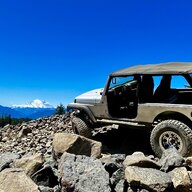
Supposed to go wheeling this weekend. I'm going to charge my laptop and carry it along in case I need to make any adjustments. I need to look into a HP mobile charger. If my laptop is under 85%, it doesn't want to write the tune to the ECM.
 
  • Like
Reactions: Steel City 06
  • Like
Reactions: TerryD
Depending on which drill battery system you're locked in, most drill battery companies make small inverters like this one:
https://www.homedepot.com/p/Milwauk...for-M18-Batteries-Tool-Only-2846-20/313297952

Very handy for running a laptop in the car. Also surprisingly useful for running a soldering iron for soldering on a car if you aren't right next to an outlet. (Or running wifi during a power outage...)

I actually have a small Jackery I use to charge my RC crawlers at gatherings with other RC guys. I have seen those drill battery inverters though. Pretty skookum. I'm a Milwaukee fan boy at seeing the abuse they deal with at work.
 
Since I'm well inside 10% on fuel trims and don't turn high RPM for extended periods, I guess my cats are relatively safe at the moment. I'm starting to shop for a WBO2 so I can really dial it in and be ready for some future changes. The 14point7 Spartan 3 has my eye for the moment.
I ended up with the PLX Devices SM-AFR. I like the size and form factor pretty well. I installed it up high behind the glove box. Don't find the narrowband output useful though I did route that to the Prolink. You can output a gauge simultaneously, but I don't care about the gauge, just want to log off it when needed.

https://www.rubiconownersforum.com/...ith-hp-tuners-prolink.119317/?post_id=1389015
 
  • Like
Reactions: TerryD
Test drive this evening and so far the extra 2 degrees in the middle of the table is nice. My wife was with me and even then it didn't unlock the converter on the interstate on the inclines where it has struggled before.

I've got to run some logs and see where I can add some more timing on the lower rpm stuff like crawling or moving around town.

I'm hoping the rain stops and I can try the incline out where I've been dropping into COT.
 
  • Like
Reactions: Rickyd
The change to the COT table fixed my open loop on that incline.

I also added high test to my 1/2 tank of regular to make something close to mid grade for the ride tomorrow just in case the timing is a little excessive and it could knock with the higher IAT and increased heat soak. If it works out OK, I'll try some other trails on regular and carry some octane booster as a backup.
 
  • Like
Reactions: Steel City 06
If you've zeroed out the Power Enrichment delay, that gives you an easy "out" if you hear pinging or detonating while driving under heavy load. Simply floor the pedal all the way and PE will enrich the mixture and stop pinging.

Not a long-term solution obviously but super easy to do when you're driving up a hill or on the highway.
 
  • Like
Reactions: TerryD
Novak Conversions Jeep Wrangler TJ engine mounts