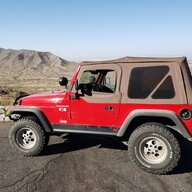
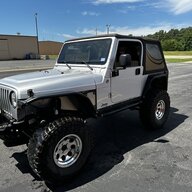
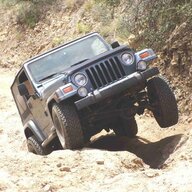
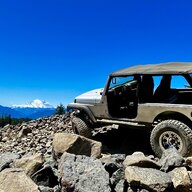
Back in the eighties, I put a set of 33’s on my F150 4x4. They were touching the ground only about 2/3 of the width of the tire, so I aired down to make them appear to touch the pavement all the way across. I then took about a 500 mile trip. When I got home, the center of the tires were very noticeably worn. After that I ran about 37 psi cold and they lasted quite a long time.
37 PSI worked because the F150 (even in the 80s) is a heavier vehicle and you were riding around on probably LT metric tires if I had to guess. Even if they were flotation (inch sizes), 37 isn't too crazy because of the weight of that truck. You wouldn't want to do that on a Jeep just because the door sticker says 35.
There are 4 classes of tire size and they all have different load capacities at different pressures. If your approach with the Jeep is to run 37 psi simply because the door sticker says 35, that may work on some tires and that may go over quite poorly on others. You will probably not like that pressure on most of the LT flotation tires.
I run 37 psi in my tires, but that is because they are an LT215/75R15 and that is what maintains the correct load based on the stock 30" tire pressure recommendation from Jeep. If I had 35x12.5, I'd be down around 20-22, if I had 33's, 22-24, 31's, 25, 30's, 29.
It really just comes down to the size/load of the tire and what vehicle they're carrying. Some Jeeps will say 35 on the sticker, some 29, because they came with different tires. If you had a Jeep with the 30" stock tire package, then you'd be riding around at 31 psi on every tire because the door sticker said 29....when really different sizes should be adjusted accordingly based on what they can carry.
Also, I think this was addressed later but under inflation would wear the the outside edges of the tire, not the centers. Over inflation would wear the centers, but it takes a lot of over inflation to get to that point. Handling, braking, and ride quality all go out the window long before over inflation kills the tire.