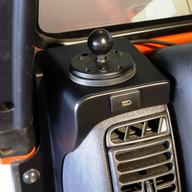
Novak Conversions Jeep Wrangler TJ engine mounts

Please help me solve the oscillating vibration crisis by providing some basic info on your Jeep

curious about something for the respondents with 241 transfer case,
@Longwhitejeep
@Steel City 06
@Mike_H
@joelachr
@Dr. Internet
@oldjeepman
@NOTNSUV
@TheBoogieman
@L J
@jjvw
@psrivats
@1515art
@sab

Is the factory dampener on the 241 removable? and is yours removed or do you still have it?

View attachment 372417
Mine is still present. I don't believe them to be removable...kinda like a harmonic damper crank pulley. We'll see though. Parts are showing up tomorrow to rebuild my 241 due to a bad front output bearing (and stretched chain, most likely).
 
  • Like
Reactions: PRNDL
Mine is still present. I don't believe them to be removable...kinda like a harmonic damper crank pulley. We'll see though. Parts are showing up tomorrow to rebuild my 241 due to a bad front output bearing (and stretched chain, most likely).

Never had one so I wasn't sure if it's part of the yoke flange, pressed onto the shaft in front of the flange, or what, and I could see how changing it out to a yoke might be a 241 mod to get more driveshaft length. This response sounds like the dampener is indeed tegrated in the yoke flange such that running something like a 1310 yoke gets rid of the dampener...

I am currently running a 1310 yoke with a conversion u joint at the case end since my used case didn't have the damper. This thread and a few others led me down the path to source a damper before they were even harder to find than they are now. I have a used damper on the bench I sourced from ebay. I am currently running the stock lj Rubicon driveshaft for now.

#kidstealallmyjeepmoney
 
curious about something for the respondents with 241 transfer case,
@Longwhitejeep
@Steel City 06
@Mike_H
@joelachr
@Dr. Internet
@oldjeepman
@NOTNSUV
@TheBoogieman
@L J
@jjvw
@psrivats
@1515art
@sab

Is the factory dampener on the 241 removable? and is yours removed or do you still have it?

View attachment 372417
Mine is still present as well. I believe to remove it, you have to press it off the shaft, meaning you have to disassemble the transfer case.

I've thought about cutting it off, but it has a 50/50 shot of making it worse vs better.

No reason you couldn't drill holes in it to make it lighter and higher resonant frequency or do the opposite and add weight to make it a lower resonant frequency.

A shorter output shaft could go a long way to improving driveline angles. That said, I know of exactly zero kits, so I suspect it would be custom fabrication.

I believe it has a rubber center isolator just like the harmonic damper on the engine, so theoretically it will fail eventually.
 
It's just an assembled output flange. Comes off just like any other output. Swapping to a regular output does make the driveshaft a touch longer or put another way by maybe 2 inches.

20221101_193213.jpg


20221101_193202.jpg


Biggest thing is make sure you get an output specific to this case. I am currently running a jb conversions 1310 output. I snagged the damper for when I regear to try out if I developed vibes.

I need to clean my workbench 😄
 
  • Like
Reactions: freedom_in_4low
  • Like
Reactions: freedom_in_4low
  • Like
Reactions: zebra12
As someone who's never laid hands on either one, what about that photo indicates it's a Ram Man conversion vs the standard conversion with a Warn hub?

The fact that it is done on the factory 5x4.5 wheel. They were the only people offering that AFAIK. Most installers would have some concern with the wheel strength/integrity drilling that out so close to the lugs ...

The facebook comments .. and the lack of responses to any of them is quite telling. BBB page too. Best to stay away, I think.

https://www.bbb.org/us/tx/fort-worth/profile/brake-service/the-ram-man-0825-235980452
 
Last edited:
1. Yes, 55-65
2. TBD
3. 2003 TJ Rubicon
4. Stock F/R 44, 4.10
5. 265/75R16 currently, also present with previous 245/75R16
6. NV3550 5-speed
7. 241
8. Stock transfer case skid
9. Stock gas tank skid
10. No lift
11. None, stock driveshafts, both rebuilt, Centramatics

I replaced the transmission mount on mine recently and was able to drive it up to 70+ today for the first time since.

It has noticeably less vibrations and the harmonic seems to be gone. I had it up near 80 with less vibration than I previously had at lower speeds. I'll have the tires balanced in the next week and see if that further improves the ride at highway speeds.

I also changed the transfer case fluid while I had the skid off but I doubt that had any effect. I noticed when putting the skid back on with the new transmission mount that I had to lift the transmission further to get the skid plate back up into position. I suspect the old mount was allowing the driveline to sag and affecting the angle of the shafts. This may not provide any help here except removing an outlier from the data.
 
Not much activity in this thread for a while so I've got some craziness to introduce to stir things up.

So the other day I found myself in the comment section on a drag racing Facebook page where people were talking drive line angles...generally in the context of a standard single cardan shaft.

What I found was that they were cautioning the OP to avoid dead-straight zero operating angles and having between 1 and 3 degrees of angle at each end, with the usual recommendation of having the pinion half to 1 degree low for rotating into alignment when loaded, and had a Spicer recommendation to back it up. In a other place I stumbled across a guy claimed to have found a Ford spec of having the pinion 0.7 below parallel, but that would be somewhat vehicle dependent depending on aero drag, bushing durometer and vertical separation at the axle.

At any rate, the reason given for running a minimum 1 degree was twofold:

1. To exercise the joint so the needles stay lubricated
2. Because having just a little angle introduces a tiny amount of bind that takes up slack in the u-joint, preventing vibration.

It's the second one I'm interested in, because we tend to target 1deg static to get 0 degrees under load for the rear joint in a DC setup because that logically makes sense with respect to the angular velocity characteristics of a u joint. I began to wonder if a small variation in yokes means some caps have a virtually imperceptible amount of looseness that contributes to these stubborn vibes when run at zero angle combined with speeds beyond 3300rpm, and does this explain why @mrblaine sometimes finds success with the pinion being outside of the range of normal recommendation.

The eventual question that this led me to is...why not try a shaft with DC joints at BOTH ends, and lower the pinion back to parallel with the t case output which on my LJ would put each joint into the 1-3 degree range recommended by Spicer. Really it doesn't even matter what the relative angle is at that point as long as the shaft is phased correctly. Obviously not a likely option for the short shaft on a TJ, but my shaft is 29" long so I have plenty of length to play with if I don't find a reason to believe this is a stupid waste of time.

@Shawn at Tom Wood's

Also in consideration is a 32rh swap and regear to 4.11 so the vibes don't kick in until almost 90.

Because both of these options sound more attractive to me than adjusting the pinion angle 30 times in a truck stop and then probably dealing with all the wheel and tire shenanigans that I'm gonna need to do hubs.

 
Not much activity in this thread for a while so I've got some craziness to introduce to stir things up.

So the other day I found myself in the comment section on a drag racing Facebook page where people were talking drive line angles...generally in the context of a standard single cardan shaft.

What I found was that they were cautioning the OP to avoid dead-straight zero operating angles and having between 1 and 3 degrees of angle at each end, with the usual recommendation of having the pinion half to 1 degree low for rotating into alignment when loaded, and had a Spicer recommendation to back it up. In a other place I stumbled across a guy claimed to have found a Ford spec of having the pinion 0.7 below parallel, but that would be somewhat vehicle dependent depending on aero drag, bushing durometer and vertical separation at the axle.

At any rate, the reason given for running a minimum 1 degree was twofold:

1. To exercise the joint so the needles stay lubricated
2. Because having just a little angle introduces a tiny amount of bind that takes up slack in the u-joint, preventing vibration.

It's the second one I'm interested in, because we tend to target 1deg static to get 0 degrees under load for the rear joint in a DC setup because that logically makes sense with respect to the angular velocity characteristics of a u joint. I began to wonder if a small variation in yokes means some caps have a virtually imperceptible amount of looseness that contributes to these stubborn vibes when run at zero angle combined with speeds beyond 3300rpm, and does this explain why @mrblaine sometimes finds success with the pinion being outside of the range of normal recommendation.

The eventual question that this led me to is...why not try a shaft with DC joints at BOTH ends, and lower the pinion back to parallel with the t case output which on my LJ would put each joint into the 1-3 degree range recommended by Spicer. Really it doesn't even matter what the relative angle is at that point as long as the shaft is phased correctly. Obviously not a likely option for the short shaft on a TJ, but my shaft is 29" long so I have plenty of length to play with if I don't find a reason to believe this is a stupid waste of time.

@Shawn at Tom Wood's

Also in consideration is a 32rh swap and regear to 4.11 so the vibes don't kick in until almost 90.

Because both of these options sound more attractive to me than adjusting the pinion angle 30 times in a truck stop and then probably dealing with all the wheel and tire shenanigans that I'm gonna need to do hubs.

A double DC would be added cost and complexity in a situation where it isn't needed. That's the main reason.

IF one were to do a double DC, I'd raise the pinion even more so that both DCs were at the same angle. Seems like this could be a solution for too-steep short shafts.
 
I've been tagged so here I am. I don't have the ambition to read the whole thread and catch up on the whole conversation so forgive me if my reply is a bit out of context. Here's the thing with a double cardan shaft at each end of the shaft, it is a heavy drive shaft, there is a lot more weight spinning around at high speeds. The seemingly unsolvable vibrations that so many of these TJ discussions are about are usually high speed vibrations. Those high speed vibrations are usually not caused by angles, they are caused by mass x speed. When people re-gear to numerically higher gears they are increasing the speed value in that mass x speed equation. Converting to a multiple double cardan shaft would increase the mass value in that equation. Force quadruples every time the speed doubles. If A.I. did the math right for me that means a 25% increase in drive shaft speed (caused by changing from 4.11 to 5.13 gears for example) would increase the intensity of any drive shaft vibrations by 56.25%. Remember, nothing is perfectly straight and nothing is perfectly balanced. There are tolerances in each part of the system. A few thousandths of an inch of play in the transfer case output bearing plus a few thousandths of an inch of eccentricity in the transfer case yoke, plus a few thousandths of an inch of eccentricity in the drive shaft plus a half an ounce of imbalance in the shaft can all add up to a drive shaft imbalance.

We do build shafts with a double cardan at each end, https://4xshaft.com/collections/jeep-xj-products/products/jeep-xj-multiple-double-cardan-front-shaft but these are really just for situations where you can't adjust the pinion angle enough to get proper geometry for a double cardan shaft. Front shafts, where the steering caster limits the amount of pinion adjustment. Often we will find that when a person installs this type of shaft in the front of an XJ they trade a low speed angle related vibration or shudder for a high speed dynamic vibration, due to the extra weight of the drive shaft. It becomes a lesser of two evils sort of thing and I don't think that the XJ guys are re-gearing as low (numerically high) has many of you TJ guys so their drive shaft speeds are often not as high.

Regarding the pinion angle specs, we do recommend between 1-3 degrees joint angle at the pinion end of shaft. Closer to 1 is ideal for coil spring and control arm suspension like a TJ and closer to 3 degrees is ideal for leaf spring vehicles like a YJ, due to axle wrap. I think it is funny that someone said they found a Ford spec of .7 degrees. That sounds like something Ford would do. Side note, if you want to go down a deep rabbit hole of drive shaft vibrations and Ford's engineering you can find one here https://www.ranger5g.com/forum/threads/one-piece-driveshaft.21381/ Maybe .7 degrees makes sense to the engineer sitting at a computer but in real life it is not realistic to achieve such perfection. Once you get your pinion angle set you can bounce up and down on the back bumper and the suspension will settle slightly differently and now your angles are off by a fraction of a degree again. The thing I always like to point out with angle adjustment is that tuning drive shaft vibrations is sort of like tuning an instrument. It can be more of an art than an engineering science. Sometimes you have to adjust, test, and then re-adjust as necessary. But because there are so many moving parts in a vehicle, all of which contribute to vibrations, if multiple adjustments of pinion angle don't yield the desired results it is either as good as it is going to get and/or the problem is something(s) else.

You mentioned hubs. That has some potential to reduce vibrations because you would be reducing the number of things that are moving, specifically the front drive shaft. Or it could be a waste of money. 🤷‍♂️
 
I've been tagged so here I am. I don't have the ambition to read the whole thread and catch up on the whole conversation so forgive me if my reply is a bit out of context. Here's the thing with a double cardan shaft at each end of the shaft, it is a heavy drive shaft, there is a lot more weight spinning around at high speeds. The seemingly unsolvable vibrations that so many of these TJ discussions are about are usually high speed vibrations. Those high speed vibrations are usually not caused by angles, they are caused by mass x speed. When people re-gear to numerically higher gears they are increasing the speed value in that mass x speed equation. Converting to a multiple double cardan shaft would increase the mass value in that equation. Force quadruples every time the speed doubles. If A.I. did the math right for me that means a 25% increase in drive shaft speed (caused by changing from 4.11 to 5.13 gears for example) would increase the intensity of any drive shaft vibrations by 56.25%. Remember, nothing is perfectly straight and nothing is perfectly balanced. There are tolerances in each part of the system. A few thousandths of an inch of play in the transfer case output bearing plus a few thousandths of an inch of eccentricity in the transfer case yoke, plus a few thousandths of an inch of eccentricity in the drive shaft plus a half an ounce of imbalance in the shaft can all add up to a drive shaft imbalance.

We do build shafts with a double cardan at each end, https://4xshaft.com/collections/jeep-xj-products/products/jeep-xj-multiple-double-cardan-front-shaft but these are really just for situations where you can't adjust the pinion angle enough to get proper geometry for a double cardan shaft. Front shafts, where the steering caster limits the amount of pinion adjustment. Often we will find that when a person installs this type of shaft in the front of an XJ they trade a low speed angle related vibration or shudder for a high speed dynamic vibration, due to the extra weight of the drive shaft. It becomes a lesser of two evils sort of thing and I don't think that the XJ guys are re-gearing as low (numerically high) has many of you TJ guys so their drive shaft speeds are often not as high.

Regarding the pinion angle specs, we do recommend between 1-3 degrees joint angle at the pinion end of shaft. Closer to 1 is ideal for coil spring and control arm suspension like a TJ and closer to 3 degrees is ideal for leaf spring vehicles like a YJ, due to axle wrap. I think it is funny that someone said they found a Ford spec of .7 degrees. That sounds like something Ford would do. Side note, if you want to go down a deep rabbit hole of drive shaft vibrations and Ford's engineering you can find one here https://www.ranger5g.com/forum/threads/one-piece-driveshaft.21381/ Maybe .7 degrees makes sense to the engineer sitting at a computer but in real life it is not realistic to achieve such perfection. Once you get your pinion angle set you can bounce up and down on the back bumper and the suspension will settle slightly differently and now your angles are off by a fraction of a degree again. The thing I always like to point out with angle adjustment is that tuning drive shaft vibrations is sort of like tuning an instrument. It can be more of an art than an engineering science. Sometimes you have to adjust, test, and then re-adjust as necessary. But because there are so many moving parts in a vehicle, all of which contribute to vibrations, if multiple adjustments of pinion angle don't yield the desired results it is either as good as it is going to get and/or the problem is something(s) else.

You mentioned hubs. That has some potential to reduce vibrations because you would be reducing the number of things that are moving, specifically the front drive shaft. Or it could be a waste of money. 🤷‍♂️

No need to catch up beyond just my most recent post, I just put it here because it's relevant to the thread, rather than starting anew. To distill it down to the important points:

1. The 1-3 I found wasn't just the pinion vs the output, it was the nominal operating angle of both joints. So if the output was perfectly horizontal 0, the pinion might be at -1 and the shaft at 1-3. The point was advising against having any joint at zero angle, or said another way, the shaft in a straight line with the output.
2. If a u-joint likes to have 1 degree of operating angle, conventional wisdom says we can't really do that with a DC shaft because if the pinion u-joint is not at zero, there's not another joint to cancel out the angular velocity difference.

Ergo, the point of this thought experiment isn't to reduce angles but actually to add angle at the pinion so that no joint is running straight-on.


Your observation with the XJ's running double-double-cardans in the front however is well taken. That was the main concern I was thinking of - since the two joints don't perfectly cancel one another out there's going to be some of that acceleration and deceleration, and then we'd be doubling it. If they end up having that high speed vibration in XJ's then it's probably not worth the expense of building the driveshaft to try this out.
A double DC would be added cost and complexity in a situation where it isn't needed. That's the main reason.

a great reason for most rigs. I'm only entertaining it as a consideration for rigs with seemingly unsolvable high speed vibrations.

IF one were to do a double DC, I'd raise the pinion even more so that both DCs were at the same angle. Seems like this could be a solution for too-steep short shafts.

Same angle like A? I think to have the best chance at eliminating vibes you'd want it set up like B.

1729709263894.png
 
Novak Conversions Jeep Wrangler TJ engine mounts