Novak Conversions Jeep Wrangler TJ engine mounts

Need Help With Lower Control Arm Sizing

Unless you are trying to do some JeepSpeed stuff or some rock bouncing you really do not want or need the extra weight or hassle of trussing the axles. Adding control arm skids, weld washers and gussets to control arm mounts are all that is required.

Cool that you are getting some shop credit for working on your ride. Since it is involving actual frame repair your money would be best served investing in some of the frame repair sections that are available. That way you can get everything returned back to where it is to begin with. Then take some time to get out and use it. As your skills increase the Jeep will tell you what you need to modify next.

Thats all very useful information, i greatly appreciate your time.

So I think im not going to worry about changing my arms then, although I do still want to experiment with the rear triangulation for the uppers. Ill take more measurements but with packaging it definitely sounds like ill need a body lift.

Ill look at some more threads about gusseting and suspension, and focus more on my inner C’s and mounts, and ill do more research on suspension geometry since im clearly just getting into it.

I think you just answered all my questions, so again, thank you!
 
Thats all very useful information, i greatly appreciate your time.

So I think im not going to worry about changing my arms then, although I do still want to experiment with the rear triangulation for the uppers. Ill take more measurements but with packaging it definitely sounds like ill need a body lift.

Ill look at some more threads about gusseting and suspension, and focus more on my inner C’s and mounts, and ill do more research on suspension geometry since im clearly just getting into it.

I think you just answered all my questions, so again, thank you!

So there are companies out there that wishbone the upper links https://full-traction.com/detail.php?b=1&m=3&t=4&p=678#n and this does help in some aspects but they all have one problem. They do not address that you need to raise the frame side mount some and reinforce it or you end up with not as good geometry and torn brackets from the frame. Which at that point means you have wasted time and money.
 
So there are companies out there that wishbone the upper links https://full-traction.com/detail.php?b=1&m=3&t=4&p=678#n and this does help in some aspects but they all have one problem. They do not address that you need to raise the frame side mount some and reinforce it or you end up with not as good geometry and torn brackets from the frame. Which at that point means you have wasted time and money.

Okay, ill look into those a little, but either way I go im doing more research on antisquat. Ive nailed down how to calculate my instant center and a little on how antisquat actually works but Im still relatively clueless, clearly...

Im gonna treat the rear triangulation as getting my feet wet in suspension geometry, I feel that its more manageable and a better learning curve than building a whole 4 link(and cheaper). Thank you for being patient, your clear cut and respectful answers helped me quit being stubborn.
 
So there are companies out there that wishbone the upper links https://full-traction.com/detail.php?b=1&m=3&t=4&p=678#n and this does help in some aspects but they all have one problem. They do not address that you need to raise the frame side mount some and reinforce it or you end up with not as good geometry and torn brackets from the frame. Which at that point means you have wasted time and money.

I might go with something like that to make one less mount to service, but id definitely need to reinforce the brackets. Im doing the front first so ill have some time to research.
 
To say you dont need to change your control arms is a bit of a lie. With what you intend to do, IE NOT rock crawling, but more just mid speed offroad (it's a jeep, they don't really do high speed anything) with some bumps and jumps, your shocks are where you should spend money. Suspension geometry being what it is, you wouldn't benefit much from long arms. The triangulated 4 link rear helps drop some weight from the rear panhard bar but you probably gain it back in link weight so 6 in one hand, half dozen in the other, but it'll be one less thing to bind if you're gonna do any technical offroad stuff.

The main reason you would want long arms is for suspension articulation on rocks and in high flex stuff, at least for the most part. Unless you're doing 80 mph+ off road your factory link geometry even with a 4" lift wouldn't be that bad, I ran my factory links on a 4" lift for rock crawling for 16 years and never really had issue except that I'd eat the ever living shit out of my heims in no time flat and had to replace them like once a year minimum. Long arms give better suspension component life, better articulation, better handling characteristics offroad in high flex. In my case where I'm swapping in 1 tons and building custom suspension to hold it all in, long arms make sense.

If you're gonna be jumping to any real degree (more than a couple inches) your dana 30 front is piss weak and I do recommend a truss, sleeves, or both if you are a belt and suspenders kinda guy like me. Reinforce the links, jumping does like to tear links when you land hard and bottom out. Ask me how I know. Spend money on good shocks, I wouldn't stop short of a good set of fox adjustable bypass, should run you bout 430 per shock if you want good ones with impact dampening for regular bottoming out or 300 ish per without it. The dana 44 rear is a fair bit stiffer and could probably handle jumping and stuff pretty well but if you are triangulating the rear, truss it too while you're in there, hedge your bets.

I'd recommend welding the tubes to the differentials on both over at least 25% (ideally all) of the circumference of the tube (if you're comfortable welding ductile or cast iron, I believe on the 30 and 44 they're both cast iron like the 35, but once you get into dana 60, sterling 10.25/ 10.5, etc they start having ductile and nodular iron housings for more strength over just plain cast iron, trick is preheat, weld with good rod specified for welding to nodular/ ductile/ cast depending on your parent material, post heat and wrap with welding blankets for very slowed cooldown and clean your surfaces really well before welding). It's uncommon with dana axles, but possible, (and very common with sterling, corporate and other axle manufacturers) to spin your tubes in the differential when doing crazy stuff offroad and that makes for a really bad day.

Most anything you find for prebuilt stuff for tjs is mid arm, not really long arm, and for mid arm 2" OD .250 wall lowers is sufficient, if jumping and doing high technical stuff I do recommend 1.75 OD .125 wall upper at least (but I also hedge my bets, and got tube stiffeners from barnes 4wd for all my links as I, once again, like belt and suspenders and it don't cost me much to do it).

It's the internet, the signal to noise ratio is pretty shit, and you'll catch all sorts of flack for asking questions on the internet from guys who rarely contribute meaningfully and are just out to put ya down but there's plenty of good people on these forums too that'll have a lot to teach you. Mr Blaine is a regular of forums and that man is a wealth of knowledge few others in the world of offroad could contend with. Whether it's tj forum, pirate 4x4, or any of the myriad others out there, hang in there, guys will be willing to pass on some knowledge. Just make sure you research really well what they say. Like in this, gotta really know your instant , roll and gravity centers, antisquat/antidive, etc and it helps to understand metallurgy a little bit, like knowing chromoly from ductile from mild, etc.
Keep with it, you'll be ok.

 
To say you dont need to change your control arms is a bit of a lie. With what you intend to do, IE NOT rock crawling, but more just mid speed offroad (it's a jeep, they don't really do high speed anything) with some bumps and jumps, your shocks are where you should spend money. Suspension geometry being what it is, you wouldn't benefit much from long arms. The triangulated 4 link rear helps drop some weight from the rear panhard bar but you probably gain it back in link weight so 6 in one hand, half dozen in the other, but it'll be one less thing to bind if you're gonna do any technical offroad stuff.

The main reason you would want long arms is for suspension articulation on rocks and in high flex stuff, at least for the most part. Unless you're doing 80 mph+ off road your factory link geometry even with a 4" lift wouldn't be that bad, I ran my factory links on a 4" lift for rock crawling for 16 years and never really had issue except that I'd eat the ever living shit out of my heims in no time flat and had to replace them like once a year minimum. Long arms give better suspension component life, better articulation, better handling characteristics offroad in high flex. In my case where I'm swapping in 1 tons and building custom suspension to hold it all in, long arms make sense.

If you're gonna be jumping to any real degree (more than a couple inches) your dana 30 front is piss weak and I do recommend a truss, sleeves, or both if you are a belt and suspenders kinda guy like me. Reinforce the links, jumping does like to tear links when you land hard and bottom out. Ask me how I know. Spend money on good shocks, I wouldn't stop short of a good set of fox adjustable bypass, should run you bout 430 per shock if you want good ones with impact dampening for regular bottoming out or 300 ish per without it. The dana 44 rear is a fair bit stiffer and could probably handle jumping and stuff pretty well but if you are triangulating the rear, truss it too while you're in there, hedge your bets.

I'd recommend welding the tubes to the differentials on both over at least 25% (ideally all) of the circumference of the tube (if you're comfortable welding ductile or cast iron, I believe on the 30 and 44 they're both cast iron like the 35, but once you get into dana 60, sterling 10.25/ 10.5, etc they start having ductile and nodular iron housings for more strength over just plain cast iron, trick is preheat, weld with good rod specified for welding to nodular/ ductile/ cast depending on your parent material, post heat and wrap with welding blankets for very slowed cooldown and clean your surfaces really well before welding). It's uncommon with dana axles, but possible, (and very common with sterling, corporate and other axle manufacturers) to spin your tubes in the differential when doing crazy stuff offroad and that makes for a really bad day.

Most anything you find for prebuilt stuff for tjs is mid arm, not really long arm, and for mid arm 2" OD .250 wall lowers is sufficient, if jumping and doing high technical stuff I do recommend 1.75 OD .125 wall upper at least (but I also hedge my bets, and got tube stiffeners from barnes 4wd for all my links as I, once again, like belt and suspenders and it don't cost me much to do it).

It's the internet, the signal to noise ratio is pretty shit, and you'll catch all sorts of flack for asking questions on the internet from guys who rarely contribute meaningfully and are just out to put ya down but there's plenty of good people on these forums too that'll have a lot to teach you. Mr Blaine is a regular of forums and that man is a wealth of knowledge few others in the world of offroad could contend with. Whether it's tj forum, pirate 4x4, or any of the myriad others out there, hang in there, guys will be willing to pass on some knowledge. Just make sure you research really well what they say. Like in this, gotta really know your instant , roll and gravity centers, antisquat/antidive, etc and it helps to understand metallurgy a little bit, like knowing chromoly from ductile from mild, etc.
Keep with it, you'll be ok.


What seemed to be repeated a couple of times was long arms aren’t necessary for my application and that shocks are far more important. I heard that rancho shocks are pretty good and relatively cheap, so do you think that would be good enough or should I save up and bite the bullet for bypass shocks?

I welded a 1/2” steel truss to the front axle and gusseted the inner C, and it has a heavy duty diff cover. The truss goes over the diff and attaches at each side, as im not very comfortable welding steel to cast, but do you think I should weld the housing to the tube? I never considered it with the 4.0’s lackluster power, but Im new to this world

I dont have much money to throw around, which is why i havent gotten to trussing the rear and triangulating it, but when i get some, shocks seem like a much better investment.

I greatly appreciate the advise, it got me on the right track to research and learn about my suspension.
 
What seemed to be repeated a couple of times was long arms aren’t necessary for my application and that shocks are far more important. I heard that rancho shocks are pretty good and relatively cheap, so do you think that would be good enough or should I save up and bite the bullet for bypass shocks?

I welded a 1/2” steel truss to the front axle and gusseted the inner C, and it has a heavy duty diff cover. The truss goes over the diff and attaches at each side, as im not very comfortable welding steel to cast, but do you think I should weld the housing to the tube? I never considered it with the 4.0’s lackluster power, but Im new to this world

I dont have much money to throw around, which is why i havent gotten to trussing the rear and triangulating it, but when i get some, shocks seem like a much better investment.

I greatly appreciate the advise, it got me on the right track to research and learn about my suspension.

Definitely weld the tubes to the differential, I would also weld the truss to the differential in a few places too, remember preheat too about 400-450 ish, weld with good rod (not 7018, stuff will be specific for cast and probably will be reverse polarity) and wrap really well once welded for slow cooling too prevent cracking. The 4.0 is low ish horsepower but torquey, and when you get to spinning wheels and suddenly grabbing traction again, it's not hard to have a lot of rolling force grab and spin tubes. It's cheap insurance. The truss will do a lot to hold it together, but I hedge my bets every chance I get. Better to do it and not need it than to wish you had when it spins on you and screws things all the way up.

Save the money and buy really good shocks. I wouldn't settle for less than fox or bilstein, both are very good. King I've heard can be a mixed bag, never personally dealt with falcon either. But I know fox and bilstein are good stuff. Good job on the inner Cs, and when you get to replacing your ball joints alloy USA makes some good ones for not much more than factory cost. If it's worth doing, it's worth doing right. If it's worth doing right, it's worth overdoing.
 
Definitely weld the tubes to the differential, I would also weld the truss to the differential in a few places too, remember preheat too about 400-450 ish, weld with good rod (not 7018, stuff will be specific for cast and probably will be reverse polarity) and wrap really well once welded for slow cooling too prevent cracking. The 4.0 is low ish horsepower but torquey, and when you get to spinning wheels and suddenly grabbing traction again, it's not hard to have a lot of rolling force grab and spin tubes. It's cheap insurance. The truss will do a lot to hold it together, but I hedge my bets every chance I get. Better to do it and not need it than to wish you had when it spins on you and screws things all the way up.

Save the money and buy really good shocks. I wouldn't settle for less than fox or bilstein, both are very good. King I've heard can be a mixed bag, never personally dealt with falcon either. But I know fox and bilstein are good stuff. Good job on the inner Cs, and when you get to replacing your ball joints alloy USA makes some good ones for not much more than factory cost. If it's worth doing, it's worth doing right. If it's worth doing right, it's worth overdoing.
Ill make shocks a priority then, and ill do a little more research too on the good brands. When i get to trussing the rear axle, ill weld the tubes to the housing. I know they make special high nickel rods, so ill have to get those and do some practicing beforehand. Im working in tuning my bumpstops and installing a body lift and mml for more clearance on the truss, so ive come a long way from where I started with this jeep.

Again, thank you for the advise, ive learned to open my mind.
 
What seemed to be repeated a couple of times was long arms aren’t necessary for my application and that shocks are far more important. ...

The issue with long arms is not that they are unnecessary for your application, it is that a typical bolt on long arm is trading one geometry problem of lifted short arms for a different geometry problem from the long arms. And arm length has nothing to do with these geometry problems.

And yes. Shocks are far more important. Not enough people are understanding the overarching importance of good shocks and how they impact every aspect of how the Jeep functions. Good shocks can be enjoyed every single time the Jeep is driven, everywhere it is driven.

... I heard that rancho shocks are pretty good and relatively cheap, so do you think that would be good enough or should I save up and bite the bullet for bypass shocks?

...

Rancho is bottom of the barrel with very minor differences between it and anything else available as a bolt in shock.

The difference between Rancho and bypass shocks is tens of thousands of dollars, plus the cost of fabrication to fit them.

...

I welded a 1/2” steel truss to the front axle and gusseted the inner C, and it has a heavy duty diff cover. The truss goes over the diff and attaches at each side, as im not very comfortable welding steel to cast, but do you think I should weld the housing to the tube? I never considered it with the 4.0’s lackluster power, but Im new to this world
...

This is a lot of misplaced effort.

If you are bending axle tubes, you need bigger axles. All your truss does is add weight you do not want.

Spinning the housing is not at all common. If this is something you are accomplishing, this is another indication you need bigger axles.

The inner C issue is a JK problem due to the heavier weight of the vehicle. No one was concerned about the inner Cs before 2007.

...
I dont have much money to throw around, which is why i havent gotten to trussing the rear and triangulating it, but when i get some, shocks seem like a much better investment.

I greatly appreciate the advise, it got me on the right track to research and learn about my suspension.

If you want the best value for your efforts, focus on proper setup and building to make the various systems work well together to the best of your understanding. Build to make the Jeep handle well on the street, so that it will handle well off road. After that, building around good shocks that function properly will change everything about the Jeep for the better. This will require fabrication of shock mounts to start. And this will not be inexpensive.
 
Last edited:
The issue with long arms is not that they are unnecessary for your application, it is that a typical bolt on long arm is trading one geometry problem of lifted short arms for a different geometry problem from the long arms. And arm length has nothing to do with these geometry problems.

And yes. Shocks are far more important. Not enough people are understanding the overarching importance of good shocks and how they impact every aspect of how the Jeep functions. Good shocks can be enjoyed every single time the Jeep is driven, everywhere it is driven.


Rancho is bottom of the barrel with very minor differences between it and anything else available as a bolt in shock.

The difference between Rancho and bypass shocks is tens of thousands of dollars, plus the cost of fabrication to fit them.


This is a lot of misplaced effort.

If you are bending axle tubes, you need bigger axles. All your truss does is add weight you do not want.

Spinning the housing is not at all common. If this is something you are accomplishing, this is another indication you need bigger axles.

The inner C issue is a JK problem due to the heavier weight of the vehicle. No one was concerned about the inner Cs before 2007.


If you want the best value for your efforts, focus on proper setup and building to make the various systems work well together to the best of your understanding. Build to make the Jeep handle well on the street, so that it will handle well off road. After that, building around good shocks that function properly will change everything about the Jeep for the better. This will require fabrication of shock mounts to start. And this will not be inexpensive.

I will agree, shocks can get insane expensive. Coilovers can be several thousand dollars per pair, bilstein triple bypass shocks are 1100 per shock roughly (pre tax and shipping). Packaging them into the jeep requires additional work too, you can get ones that fit in the factory location that are single bypass remote reservoir for about 430 per from fox that are bolt in and these are infinitely better than rancho or some cheap crap, but won't be as good as a set of shocks you got that have enough travel to match your existing setups travel bottom to top, (plus just an inch or so extra so you don't bottom out on the shock, bad for the shocks to hard bottom out) and taking the time to install new shock towers and dealing with fitment and packaging to make it all work. It's quite involved if you let it be, but changes the whole feel of your ride. Markedly. And tuning the shocks alone can take you into the weeds just trying to figure it out enough to get the best performance and most comfortable/ well performing ride possible.

I don't think trussing the axle is wasted effort, but I do rock crawl more. The best thing about the dana 30 is it's lightweight compared to a 1 ton axle like I'm swapping into mine. Downside is, it's lightweight. Less metal, less material and narrower diameter tubes, less strength overall and more prone to bending which (in my experience) jumping is a seriously easy way to bend shit and find out exactly how tough your build is structurally. As for spinning tubes, it's as I said, much less common with dana axles, more common with sterling and corporate axles and yes, spinning tubes can be an indicator of too small of an axle, as is blowing out ring/pinion sets and bending tubes. For the 4 angry squirrel 4 cylinder and the better (but still low HP) 4.0 I6 what's on the jeep is relatively ok, the 30 is weaker than the 44 for sure, the 44 you (OP) have in the back is pretty stout for the weight of your jeep and stuff, it'll put up to even the torque of the 4.0 I6 no problem, but the 30 front is certainly a weak point. You're LESS likely to break a ring and pinion in the front than you are in the rear, but it's not impossible. My biggest concern is bending the tubes which is not an insubstantial possibility if you are in fact jumping to any real degree. Even little bends are a problem that will eventually lead to failure of the axle shafts, tweaking of and damage to the diff (likely bearings of the carrier) and failures there can grenade the whole diff and damage the locker/limited slip/open carrier.

Long arms if done wrong trade one problem for another. Best way to do them is custom build them, with a body lift to give clearance for good mounting of upper and lower link mounts and design the system entirely from scratch so it solves your issues with antisquat/antidive etc etc. But in OP's case is unnecessary as you aren't rock crawling or anything real technical that merrits the extra cost and labor. Save your money, put into better shocks. As for welding up the tubes and trussing and stuff, better to do it, it's cheap insurance. Costs couple dollars in rod/ wire/gas and some time. I did it to my factory 35 and 30 when I got the jeep, just in case. Never had an issue with it and the little bit of extra unsprung weight didn't hurt anything (and might have helped with rock crawling a little bit but that may be placebo effect)
 
I will agree, shocks can get insane expensive. Coilovers can be several thousand dollars per pair, bilstein triple bypass shocks are 1100 per shock roughly (pre tax and shipping). Packaging them into the jeep requires additional work too, you can get ones that fit in the factory location that are single bypass remote reservoir for about 430 per from fox that are bolt in and these are infinitely better than rancho or some cheap crap, but won't be as good as a set of shocks you got that have enough travel to match your existing setups travel bottom to top, (plus just an inch or so extra so you don't bottom out on the shock, bad for the shocks to hard bottom out) and taking the time to install new shock towers and dealing with fitment and packaging to make it all work. It's quite involved if you let it be, but changes the whole feel of your ride. Markedly. And tuning the shocks alone can take you into the weeds just trying to figure it out enough to get the best performance and most comfortable/ well performing ride possible.

I don't think trussing the axle is wasted effort, but I do rock crawl more. The best thing about the dana 30 is it's lightweight compared to a 1 ton axle like I'm swapping into mine. Downside is, it's lightweight. Less metal, less material and narrower diameter tubes, less strength overall and more prone to bending which (in my experience) jumping is a seriously easy way to bend shit and find out exactly how tough your build is structurally. As for spinning tubes, it's as I said, much less common with dana axles, more common with sterling and corporate axles and yes, spinning tubes can be an indicator of too small of an axle, as is blowing out ring/pinion sets and bending tubes. For the 4 angry squirrel 4 cylinder and the better (but still low HP) 4.0 I6 what's on the jeep is relatively ok, the 30 is weaker than the 44 for sure, the 44 you (OP) have in the back is pretty stout for the weight of your jeep and stuff, it'll put up to even the torque of the 4.0 I6 no problem, but the 30 front is certainly a weak point. You're LESS likely to break a ring and pinion in the front than you are in the rear, but it's not impossible. My biggest concern is bending the tubes which is not an insubstantial possibility if you are in fact jumping to any real degree. Even little bends are a problem that will eventually lead to failure of the axle shafts, tweaking of and damage to the diff (likely bearings of the carrier) and failures there can grenade the whole diff and damage the locker/limited slip/open carrier.

Long arms if done wrong trade one problem for another. Best way to do them is custom build them, with a body lift to give clearance for good mounting of upper and lower link mounts and design the system entirely from scratch so it solves your issues with antisquat/antidive etc etc. But in OP's case is unnecessary as you aren't rock crawling or anything real technical that merrits the extra cost and labor. Save your money, put into better shocks. As for welding up the tubes and trussing and stuff, better to do it, it's cheap insurance. Costs couple dollars in rod/ wire/gas and some time. I did it to my factory 35 and 30 when I got the jeep, just in case. Never had an issue with it and the little bit of extra unsprung weight didn't hurt anything (and might have helped with rock crawling a little bit but that may be placebo effect)

welcome to the forum
 
welcome to the forum

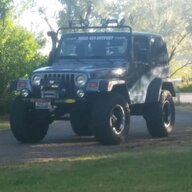
Thank you, happy to be here. Long time lurker but finally decided to make a profile and actually participate. Professional equipment technician here with engineering background in school and been a mechanic for 15 years professionally. Have a 99 sport I picked up at the age of 15 that I built up and rock crawled for the last 18 years or so with my father, he recently passed and I've since decided life's too damn short and I might as well spend the money, build it the way I really want it, and go wheeling some insane shit like I really mean it.
 
Novak Conversions Jeep Wrangler TJ engine mounts