P

You are using an out of date browser. It may not display this or other websites correctly.
You should upgrade or use an alternative browser.
You should upgrade or use an alternative browser.

Let's see if this works
- Thread starter mrblaine
- Start date

P
PNW_LJ
Guest
The very easy way to work through the problem is just turn right a small amount to let the left side drop and then quickly turn left and get back into it.
Does one drive forward in between turns or not?
I haven’t tried this, but it seems like turning the wheel back left without moving forward, would just put you back where you were.
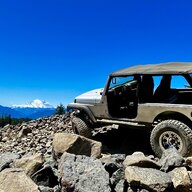
What's going on that's making that front driver tire go up so much that would be eliminated if he straightened up? I can't see enough of the passenger front tire to see how much his uptravel is limited.
Last edited:
P
PNW_LJ
Guest
What's going on that's making that front driver tire go up so much that would be eliminated if he straightened up? I can't see enough of the driver front tire to see how much his uptravel is limited.
Looks like passenger rear is in a rut.
I struggle to grasp why turning the wheel makes the front come down, but it’s apparent in the video.

What's going on that's making that front driver tire go up so much that would be eliminated if he straightened up?
Rear right (passenger) is sinking into a hole. Getting the front right up a bit will start to push the front left down and help lift the rear right up and out.
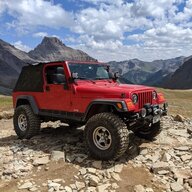
I've experienced the left front lift but I've never tried turning right to counter it because in the situations I've had it, that would make the right side climb even faster. Not arguing against it, that's just why I never tried it. Guess I have something up my sleeve for next time.
I also haven't really wrapped my mind around the mechanics of it. I was thinking the axles vs chassis reaction to driveshaft torque but the times I had it were with an open front diff, which with a wheel in the air shouldn't be able to offer any resistance for the torque to act against.
I also haven't really wrapped my mind around the mechanics of it. I was thinking the axles vs chassis reaction to driveshaft torque but the times I had it were with an open front diff, which with a wheel in the air shouldn't be able to offer any resistance for the torque to act against.

I hatehow painfulfacebookmakes it to share thingsin general.


And then it turns out that once @PNW_LJ graciously posted up the video so everyone could actually see it, its a shitty vertical video that's so far away that its hard to make out what's going on anyway! With that said, that situation would scare the crap out of me!
What's going on that's making that front driver tire go up so much that would be eliminated if he straightened up? I can't see enough of the driver front tire to see how much his uptravel is limited.
Nothing to do with uptravel. The lift is caused by too much resistance at the right front tire. It can be climbing something pretty steep or what we run into more often is the side of the tire against a flat face of a rock or similar. It is torque transfer to the chassis from the drivetrain that cause the left side to lift. If you can reduce the resistance at the right front, the left will come right down as you can see in the video.
Watch the video and the correlation between the left lift and steering angle. You can clearly define that turning right lowers the left side, turning left raises it.I've experienced the left front lift but I've never tried turning right to counter it because in the situations I've had it, that would make the right side climb even faster. Not arguing against it, that's just why I never tried it. Guess I have something up my sleeve for next time.
Torque and resistance, nothing more. Also why there is a pretty cool way to combat the overall effect by using a reversed rotation rear output on a special transfer case.I also haven't really wrapped my mind around the mechanics of it. I was thinking the axles vs chassis reaction to driveshaft torque but the times I had it were with an open front diff, which with a wheel in the air shouldn't be able to offer any resistance for the torque to act against.
Yes, no, maybe, depends on what the other tires are doing. But no, you aren't really turning, you are just turning the steering wheel. You can see that the right front only has to turn a couple of inches to have a dramatic effect on how much the left lifts.Does one drive forward in between turns or not?
We have obstacles that are basically a vertical face that the side of the tire winds up against that it really needs to climb. With the auto, you can ease into the throttle, lift the left front, repeat that to see how high you can get it and how fast it will drop if you get off the throttle quickly. After a few tests, then you can ease it way up high, give it a tiny bit of right turn to drop it and while it is on the way down, use the chassis's downward momentum to bump into the throttle and get the right front to climb. As soon as it does, get back left and continue on.
Little bits of momentum, a feel for what it is doing, and the awareness that just a tiny bit of right or just lowering the force on the right front by easing the steering wheel to the right a small bit all helps to learn what the rig can do and how to stay out of trouble. Myself and a fair number of the folks I wheel with wouldn't even slow down much through that spot in the video. As soon as the left started up, we'd ease back right until it dropped, back left and drive right through it.I haven’t tried this, but it seems like turning the wheel back left without moving forward, would just put you back where you were.
Nothing to do with uptravel. The lift is caused by too much resistance at the right front tire. It can be climbing something pretty steep or what we run into more often is the side of the tire against a flat face of a rock or similar. It is torque transfer to the chassis from the drivetrain that cause the left side to lift. If you can reduce the resistance at the right front, the left will come right down as you can see in the video.
So, many times when I’m wheelin or spotting someone I just straighten up or tell them too. Then it goes right up no problem. Same idea? Torque resistance reduced?
So, many times when I’m wheelin or spotting someone I just straighten up or tell them too. Then it goes right up no problem. Same idea? Torque resistance reduced?
If it is the same as what is happening in the video, then yes, if not, then no.
Not always, but it is also very common to lift the left front just going straight up a climb when the right front meets resistance. A way to visualize the forces is to contemplate a Jeep hanging straight up and down fully suspended by a winch cable from the front bumper. You could walk up to it and rotate it around the cable easily with one hand. Same rig sitting flat on level ground on the tires and you'd be hard pressed to dislocate one side more than an inch or so lifting with one hand in the middle of it.I also haven't really wrapped my mind around the mechanics of it.
As the chassis moves further from flat in the front, the less force it takes to rotate it.
And then it turns out that once @PNW_LJ graciously posted up the video so everyone could actually see it, its a shitty vertical video that's so far away that its hard to make out what's going on anyway! With that said, that situation would scare the crap out of me!
Sometimes the message is far more important than the messenger. This is one of those times.
Sometimes the message is far more important than the messenger. This is one of those times.
Agreed. Even a shitty video is better than none.
Not always, but it is also very common to lift the left front just going straight up a climb when the right front meets resistance. A way to visualize the forces is to contemplate a Jeep hanging straight up and down fully suspended by a winch cable from the front bumper. You could walk up to it and rotate it around the cable easily with one hand. Same rig sitting flat on level ground on the tires and you'd be hard pressed to dislocate one side more than an inch or so lifting with one hand in the middle of it.
As the chassis moves further from flat in the front, the less force it takes to rotate it.
Went back and watched the video of the first time I encountered this in July 2019...I had the wheels turned a little bit passenger and all four on the ground, left tire didn't lift until I turned left. I just hit the dump button (clutch) and backed out of it and took another line, carried a little momentum and walked right up it.
What's really interesting is what I wrote in the description when I posted it...apparently I was at least somewhat aware of the right vs left thing but hadn't processed it enough to remember it when you started this thread.
The name blurted from my panicked wife's mouth reveals who in the family she values most.
 (our youngest who was 1 at the time)
Funny, I think every time I've had this happen somebody was videoing it.
Here's me doing it again in 2020, this time with a rear E-Locker engaged but still open front. Wheels look pretty much straight but I never tried turning right since making passenger climb even more seemed counterintuitive in the moment.
and here's my buddy Alex doing it on the same obstacle in 2022. He actually bounced it high enough that the right tire came off the ground as well, as we all collectively skipped a heartbeat and he soiled his pants. He has a detroit locker in the rear and a truetrac in the front, also longarms.
All three of my examples were with the right rear tire in a hole with an abundance of grip.
All three of my examples were with the right rear tire in a hole with an abundance of grip.
Why is there always a hole for the right rear to drop into?
Why is there always a hole for the right rear to drop into?
in my specific examples, bad line selection as I had figured out getting my front axle to follow my chosen line but not so good with the rear. When follow-up attempts were successful, they involved staying out of the hole. I haven't had this happen in a while because I intentionally avoid putting specifically my right rear tire in a hole, moreso than any of the others. I'm certain at some point I'll find a scenario where it's unavoidable though, and before this thread I'd probably have ended up winching through after a couple of failed attempts, but now I have a new tool in my belt.
in my specific examples, bad line selection as I had figured out getting my front axle to follow my chosen line but not so good with the rear. When follow-up attempts were successful, they involved staying out of the hole. I haven't had this happen in a while because I intentionally avoid putting specifically my right rear tire in a hole, moreso than any of the others. I'm certain at some point I'll find a scenario where it's unavoidable though, and before this thread I'd probably have ended up winching through after a couple of failed attempts, but now I have a new tool in my belt.
Alright, since you always seem to insist on doing it this way, why are there always holes at the right rear that are lower/deeper than the other side on obstacles where the width of the obstacle does not allow enough shift to either side to get a different line? The answer is very pertinent to this discussion.
Similar threads

- Replies
- 7
- Views
- 805


- Replies
- 18
- Views
- 1,678


- Replies
- 4
- Views
- 421
- Replies
- 3
- Views
- 992

- Replies
- 1
- Views
- 816
