
A ball-end carbide in a die grinder is the ticket:


You are using an out of date browser. It may not display this or other websites correctly.
You should upgrade or use an alternative browser.
You should upgrade or use an alternative browser.

All things welding
- Thread starter AirborneTexasRanger
- Start date


I’m working on 16g sheet metal and getting what I think is a good continuous arc and superficialmetal deposition, but not enough penetration. How should I adjust the settings?

The right side is the so-called bead, the left shows the lack of penetration after I ground it flush.
Or maybe it’s a bad ground? The clamp is a bit mangled although I ground it down to shiny metal.

The right side is the so-called bead, the left shows the lack of penetration after I ground it flush.
Or maybe it’s a bad ground? The clamp is a bit mangled although I ground it down to shiny metal.

I’m working on 16g sheet metal and getting what I think is a good continuous arc and superficialmetal deposition, but not enough penetration. How should I adjust the settings?
View attachment 606312
The right side is the so-called bead, the left shows the lack of penetration after I ground it flush.
Or maybe it’s a bad ground? The clamp is a bit mangled although I ground it down to shiny metal.
View attachment 606313
I'm no expert but I wouldn't try to run a bead on sheet metal. Have the welder high enough so you can make quick tack welds with full penetration and jump around. Going slow enough to keep the piece cool if warping matters

AirborneTexasRanger
988 Suicide & Crisis Lifeline, Help is available.
Original poster
Lifetime Supporting Member
I’m working on 16g sheet metal and getting what I think is a good continuous arc and superficialmetal deposition, but not enough penetration. How should I adjust the settings?
View attachment 606312
The right side is the so-called bead, the left shows the lack of penetration after I ground it flush.
Or maybe it’s a bad ground? The clamp is a bit mangled although I ground it down to shiny metal.
View attachment 606313
Increase volts or decrease wire feed speed.
There's a lot of carbon build up on your ground which could cause problems, easy way to check is if you see arc strikes where you are attaching your ground clamp to the work piece. A wire brush should clean that up or you can just get a new one. They're relatively cheap
I'm no expert but I wouldn't try to run a bead on sheet metal. Have the welder high enough so you can make quick tack welds with full penetration and jump around. Going slow enough to keep the piece cool if warping matters
How many seconds ballpark is a ‘tack’ in a case like this? 0.5? 1? Less than three?
AirborneTexasRanger
988 Suicide & Crisis Lifeline, Help is available.
Original poster
Lifetime Supporting Member
How many seconds ballpark is a ‘tack’ in a case like this? 0.5? 1? Less than three?
Long enough to get good fusion without melting away the base metal, you don't want to keyhole it. Probably 1 second or less but if you're blowing through then your volts are too high or your wire feed speed is too low
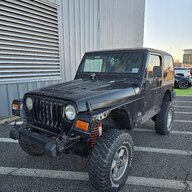
Hey by any chance could you help me with my engine mount welds ?
AirborneTexasRanger
988 Suicide & Crisis Lifeline, Help is available.
Original poster
Lifetime Supporting Member
Hey by any chance could you help me with my engine mount welds ?
Yes, what's the issue you're having?
I've been trying to practice for my engine mounts i planned on welding in. I bought a lincolm 210mp and well flat and horizontal doesn't seem to be an issue but vertical is kicking my butt. I recently tried the upwards triangular motion with a better result but I'm still trying to figure out the welder without burning a whole threw my frame. I'm welding 1/4in steel (holley engine mounts 3/16 steel (tj frame ears) thank you!


AirborneTexasRanger
988 Suicide & Crisis Lifeline, Help is available.
Original poster
Lifetime Supporting Member
I've been trying to practice for my engine mounts i planned on welding in. I bought a lincolm 210mp and well flat and horizontal doesn't seem to be an issue but vertical is kicking my butt. I recently tried the upwards triangular motion with a better result but I'm still trying to figure out the welder without burning a whole threw my frame. I'm welding 1/4in steel (holley engine mounts 3/16 steel (tj frame ears) thank you!
View attachment 613863
View attachment 613864
View attachment 613865
View attachment 613866
You're kinda all over the place. Try to focus on your technique without changing the settings on the machine. I think the machine is set where it needs to be. Try different patterns and see what works best for you. I typically use a zig zag motion to limit the amount of time spent in the middle.
AirborneTexasRanger
988 Suicide & Crisis Lifeline, Help is available.
Original poster
Lifetime Supporting Member
They key to learning to weld is only changing 1 variable at a time.

Any of y'all guys into welding rigs? This one's mine I been working on this for about two years. 2000 GMC c3500 I bought for 4k. It had 160k miles, super loose steering and shitty brakes. Came with the flatbed though.

I got (almost) everything fixed up over time, but before that I saw a miller trailblazer for sale for cheap 800 miles away. Decided to risk it and attempt to drive the truck out there. At that point I had only gotten the steering fixed and got new tires. The first day I made it 600 miles by the time it got dark, it was raining hard all day and at some point in the day the cheap GMC headlight circuit melted. Luckily the truck didn't catch on fire. I managed to find a hotel about a mile away, I had to drive through Tampa traffic to the hotel with no lights. Got ripped off, hotel was 250$ a night. Made it the rest of the way in the morning, and bought the welder. I made it home with no issues luckily.
Here's where I got the truck today. I got 50ft leads(gonna get more soon), two bottle + acetylene storage, miller 12vs wire feeder, and just about any power tool you could want. It's not clean like all these welding rigs you see now, but it works just as good


I got (almost) everything fixed up over time, but before that I saw a miller trailblazer for sale for cheap 800 miles away. Decided to risk it and attempt to drive the truck out there. At that point I had only gotten the steering fixed and got new tires. The first day I made it 600 miles by the time it got dark, it was raining hard all day and at some point in the day the cheap GMC headlight circuit melted. Luckily the truck didn't catch on fire. I managed to find a hotel about a mile away, I had to drive through Tampa traffic to the hotel with no lights. Got ripped off, hotel was 250$ a night. Made it the rest of the way in the morning, and bought the welder. I made it home with no issues luckily.
Here's where I got the truck today. I got 50ft leads(gonna get more soon), two bottle + acetylene storage, miller 12vs wire feeder, and just about any power tool you could want. It's not clean like all these welding rigs you see now, but it works just as good
They key to learning to weld is only changing 1 variable at a time.
I’m experimenting with my used Lincoln WeldPak100 and trying to learn what a satisfactory weld looks like, and if my welder is even functioning properly.
I did this with a couple coupons, approx 14g to ~11g steel. I’m sure the bead is terrible and I’ll work on that, but what do the patterns on the other sides mean re: penetration and strength?
I’m wondering if this is basically correct, or if i have something wrong with the setup, like a bad ground clamp/connection, too much/too little gas, wrong wire, etc.
AirborneTexasRanger
988 Suicide & Crisis Lifeline, Help is available.
Original poster
Lifetime Supporting Member
I’m experimenting with my used Lincoln WeldPak100 and trying to learn what a satisfactory weld looks like, and if my welder is even functioning properly.
I did this with a couple coupons, approx 14g to ~11g steel. I’m sure the bead is terrible and I’ll work on that, but what do the patterns on the other sides mean re: penetration and strength?
I’m wondering if this is basically correct, or if i have something wrong with the setup, like a bad ground clamp/connection, too much/too little gas, wrong wire, etc. View attachment 619057
View attachment 619058
View attachment 619059
Your bead doesn't look bad & there's not a lot of spatter which is good. Whenever I'm inspecting welds I always manually wire brush to get rid of any loose debris & use a flashlight from multiple angles.
Those patterns on the back is just the heat affected zone (HAZ) basically where the base metal got hot. They can be used as an indicator of what the weld is doing, but it's mostly inaccurate information.
Edit: If you want to see if you are getting enough penetration on a fillet weld like that do this break test.
Or this for a groove weld
Last edited:
Your bead doesn't look bad & there's not a lot of spatter which is good. Whenever I'm inspecting welds I always manually wire brush to get rid of any loose debris & use a flashlight from multiple angles.
Those patterns on the back is just the heat affected zone (HAZ) basically where the base metal got hot. They can be used as an indicator of what the weld is doing, but it's mostly inaccurate information.
Edit: If you want to see if you are getting enough penetration on a fillet weld like that do this break test.
View attachment 619071
Or this for a groove weld
View attachment 619074
at first I was getting a ton of spatter, very inconsistent on/off arcing, but turning up the voltage to max gave a more continuous arc.
I’m experimenting with my used Lincoln WeldPak100 and trying to learn what a satisfactory weld looks like, and if my welder is even functioning properly.
Looks like a decent start, you just need to fine tune your settings and travel speed. That's some very small wire so try bumping the voltage down maybe 2 notches and turn wire feed speed up until it makes a sizzling sound.
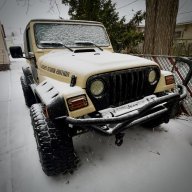
I've only welded once and that was waaay back in '08 while I was in Iraq. However, I couldn't pass up this deal at HF during their parking lot sale on the "as is" table. 20% off the sticker price came out to $83.99. I'll do some practice welding on some scrap metal I've got laying around the yard this weekend since I only have 5 days to make sure it works as it should. Either way, should be fun!! There's definitely some things that I could've used one for in the past.


Dealing with porosity and could use help.
1/8" material
Clean grounds
Clean welding surface (flap disc'd)
Wire speed 285
19 v
Gas on, flow at 14, no leaks
Problem is I am experiencing a lot of porosity. These are short, small welds but anything longer is just as bad.
Thoughts?

1/8" material
Clean grounds
Clean welding surface (flap disc'd)
Wire speed 285
19 v
Gas on, flow at 14, no leaks
Problem is I am experiencing a lot of porosity. These are short, small welds but anything longer is just as bad.
Thoughts?
AirborneTexasRanger
988 Suicide & Crisis Lifeline, Help is available.
Original poster
Lifetime Supporting Member
Dealing with porosity and could use help.
1/8" material
Clean grounds
Clean welding surface (flap disc'd)
Wire speed 285
19 v
Gas on, flow at 14, no leaks
Problem is I am experiencing a lot of porosity. These are short, small welds but anything longer is just as bad.
Thoughts?
View attachment 650208
That's most definitely a shielding gas issue. Check for leaks or obstructions along the entire line from the bottle all the way to the end of the nozzle. The leak could also be inside the machine.
Could also be that the gas is getting blown away by a fan or something like that
Last edited:
Similar threads

- Replies
- 27
- Views
- 6,666


- Replies
- 15
- Views
- 2,986
