Novak Conversions Jeep Wrangler TJ radiator

65th Anniversary Edition Restoration & Build

Time for another update! A few weeks back I had my alignment checked and noticed the passenger front camber was at -2.0 degrees. I was fairly confident my axles weren't bent, so I figured this meant I had a bad ball joint. Since I was going to be taking a decent bit of the front end apart, I decided to order a bunch more parts to refresh the Jeep while I was there. After research, I ordered the following parts:
- Spicer 706944X ball joints
- Spicer 5-760X u-joints for front axle
- Timken HA597449 unit bearings
- Black Magic 477 brake pads
- Centric premium brake rotors
- Centric remanufactured brake calipers
- Centric KIT500D drum brakes
- Crown sway bar bushings front & rear
- Crown endlinks front & rear
- Crown bumpstops front & rear

While the sway bar bushings didn't look terrible, the original endlinks were extremely worn out so it was great to finally get around to replacing those.
IMG_7126.JPG
IMG_7127.JPG
IMG_7162.JPG


Similarly, the original bumpstops were all but disintegrated...
IMG_7160.JPG
IMG_7161.JPG


On to the more intensive repairs... top ball joints came out fine with the tool I borrowed but I did need to make another trip to auto parts store to rent a different ball joint adapter for the lowers.
IMG_7150.JPG


U-joint removal proved quite difficult, luckily a friend helping out taught me to use a vice, sockets and hammer which made the process much more doable.
IMG_7146.JPG
IMG_7152.JPG


Unit bearing replacement was a no brainer. Had to come off anyways to replace the u-joints.
IMG_7158.JPG


I'd never worked on drum brakes before but with the age of the Jeep, I wanted to replace them for peace of mind. I'd heard horror stories of replacing drums so had it in my head the process would be very difficult. Honestly I was pleasantly surprised how smoothly these went (again, with the assistance of someone with experience). Would I rather service disk brakes? Absolutely. But I do think drums have a reputation for being more complicated than they really are.
IMG_7170.JPG
IMG_7169.JPG


Old shoes definitely still had life left in them, but one of the wheel cylinders was leaking pretty good so I'm glad I replaced everything anyways. Here's a little before and after for the front brakes.
IMG_7142.JPG
IMG_7172.JPG


I haven't fully broken the brake pads in yet, but even still they perform excellently so far. I called Mr. Blaine before ordering to inquire about a big brake kit and he actually talked me out of it since I wouldn't utilize them properly on stock sized tires and warned the rotors may glaze over. It's refreshing to talk with someone so honest. I'll likely upgrade to the Vanco 15 kit when I lift the Jeep but for now I think these upgraded pads will be more than enough.

Anyways, got an alignment done yesterday and it looks like the camber issue is fixed! Need to trim the extended bumpstops I installed up front since they're far too long at stock height, but otherwise all seems to have went well. I've been approaching this build with the mindset of doing maintenance before mods and I realize this thread is starting to look more like a restoration than a build haha. Luckily, the list of maintenance the Jeep needs is quickly shrinking. Hopefully soon I can start with the fun upgrades!
 
Jeep has been making this annoying knocking sound at low speeds since I got it. More recently, I noticed the whole Jeep would begin to vibrate over 70mph. After looking around under the Jeep, I found that there was play in several of my driveshaft u-joints. I ordered up 5 of the Spicer 5-1310X. I debated doing this job myself, but got a fair quote from a 4x4 shop to do the swap for me so I opted to give myself a break. Once I picked up the Jeep it was immediately noticeable how much smoother the ride was. I had a feeling there were more vibrations than usual but was truly shocked how big of a difference the new u-joints made. No more knocking sound and smooth as a TJ should be at any speeds!

One of the small annoyances I've been dealing with is a broken heater control dial. Looks like the blue plastic piece on the back of the dial broke many years ago and it made adjusting the temperature very tedious. We have a 3D printer at work so I figured I'd try printing a replacement for a quick experiment. The printed dial fit great and I printed a couple more so all three dials matched.

IMG_7516.JPG


I'd also been meaning to do a more thorough job cleaning up my wheels and finally made some time a few weeks back to do so. I used a pressure washer, some wheel cleaner and followed up with a hand polishing compound. The results aren't perfect but definitely a lot better than they were. I'm hoping to get the wheels properly polished and repaired in the future. I'd also love to find some center caps in better condition since my spare is missing and a few are delaminating pretty badly. Here's a quick before and after.

IMG_7425.JPG
IMG_7423.JPG
IMG_7427.JPG


When I got the Jeep, I changed almost every fluid. Somehow, I neglected to change the clutch fluid and when I checked its condition a few weeks back decided it needed done. Quite a bit of contamination! I followed a tutorial someone had posted here previously and the process was pretty straightforward. I will say that I ended up needing to pour and flush the fluid around 10 times before I was happy with color of the fluid in reservoir. Clutch pedal feels a bit firmer now that I've flushed all the crap out of the system.

IMG_7534.JPG

IMG_7537.JPG

IMG_7538.JPG

IMG_7540.JPG


I also flushed the power steering fluid again while I was at it. That's been working just fine but the fluid was still a bit browner than I'd like. A couple flushes with fresh ATF today and the color is solid red.

Took the doors off for the first time this morning! Tons of fun, reminds me a lot of riding a motorcycle.

IMG_7552.JPG
 
Great write-up, great-looking jeep! I appreciate folks like you that document the process so well and take lots of photos along the way. It is an inspiration for others working on their rigs.
 
  • Like
Reactions: TimV
Time for another big update! A few days ago, I picked my Jeep up from getting a completely new paint job. I kept it the original color (Jeep Green Metallic). Here are some progress pictures an employee at the shop sent me.

Resized_20250523_101032_42524910240226.JPG
Resized_20250527_085152_42474667248146.JPG
Resized_20250527_150432_42395485266295.JPEG
Resized_20250529_141108_42249309996979.JPEG
Resized_20250529_141138_42182674563898.JPEG


I took this opportunity to fully refresh the exterior of the Jeep as well. Every weather seal is brand new as are almost all trim pieces. New side mirrors, turn signal housings, door and tailgate handles, even the hood bumpers are all brand new. I'm very happy with this decision as some inexpensive parts went a long way to really making the end result look complete. The door / tailgate jambs and under hood were also repainted. Basically the only thing I didn't do is have the engine pulled to spray the engine bay itself. Here's some pictures of the finished product!

IMG_8171.JPG
IMG_8172.JPG

IMG_8173.JPG

IMG_8174.JPG
IMG_8175.JPG
IMG_8176.JPG
IMG_8177.JPG
IMG_8179.JPG
IMG_8181.JPG


I also had the windshield replaced since the previous one was very pitted and it needed to be removed anyways during the paint prep. I took this opportunity to tint the full windshield with 50% nano-ceramic and also tinted the side windows with 35%. I haven't re-installed my soft top yet, but these should be a fairly close match to the 31% VLT that Bestop claims.

Lastly, I had the shop handle a few repairs for me while it was there. My shifter stick had a bit of surface rust that they cleaned up and followed with a coat of gloss black paint. I also had my pool ball paint matched to the same green as the exterior.

IMG_8188.JPG


My spare tire carrier also had a decent amount of surface rust. Almost every OEM carrier I saw online looked the same so I opted to have this re-finished as well.

IMG_8138.JPG


I'm extremely happy to have this stage of the build done. Next I'd like to work on cleaning up the interior. I've got some very exciting plans for a full custom sound system upgrade. Thanks for reading!
 
Last edited:
I really liked this upgrade! And then you removed it.... :( Think of the aerodynamics and improved MPG! You really had something and tossed it away...


;)


Looks gorgeous! Paint and color came out great!

Hope you keep it topless the next couple months to enjoy it in the warm weather (y)
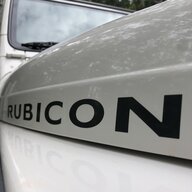
Haha right? Almost had a race Jeep build going there...

Thank you though! Definitely will be keeping the top off for the summer, way too fun driving it like this!
 
  • Haha
Reactions: FarFire70
Time for another big update! A few days ago, I picked my Jeep up from getting a completely new paint job. I kept it the original color (Jeep Green Metallic). Here are some progress pictures an employee at the shop sent me.

View attachment 621990View attachment 621991View attachment 621992View attachment 621993View attachment 621994

I took this opportunity to fully refresh the exterior of the Jeep as well. Every weather seal is brand new as are almost all trim pieces. New side mirrors, turn signal housings, door and tailgate handles, even the hood bumpers are all brand new. I'm very happy with this decision as some inexpensive parts went a long way to really making the end result look complete. The door / tailgate jambs and under hood were also repainted. Basically the only thing I didn't do is have the engine pulled to spray the engine bay itself. Here's some pictures of the finished product!

View attachment 621995View attachment 621996
View attachment 622006
View attachment 621998View attachment 621999View attachment 622000View attachment 622001View attachment 622002View attachment 622003

I also had the windshield replaced since the previous one was very pitted and it needed to be removed anyways during the paint prep. I took this opportunity to tint the full windshield with 50% nano-ceramic and also tinted the side windows with 35%. I haven't re-installed my soft top yet, but these should be a fairly close match to the 31% VLT that Bestop claims.

Lastly, I had the shop handle a few repairs for me while it was there. My shifter stick had a bit of surface rust that they cleaned up and followed with a coat of gloss black paint. I also had my pool ball paint matched to the same green as the exterior.

View attachment 622004

My spare tire carrier also had a decent amount of surface rust. Almost every OEM carrier I saw online looked the same so I opted to have this re-finished as well.

View attachment 622005

I'm extremely happy to have this stage of the build done. Next I'd like to work on cleaning up the interior. I've got some very exciting plans for a full custom sound system upgrade. Thanks for reading!

I’m painting my half doors this summer and I’m so worried I’m gonna go “well, might as well paint the rest of it since it’s 20 years old!” 😆
 
A few weeks back I noticed a worsening oil leak from the front CCV grommet on my valve cover. Mopar still stocks some of the pieces needed to overhaul the CCV system so I was able to use all new OEM parts for this job. The rear elbow is the only major part Mopar no longer offered but my existing one looked fine so opted to keep it vs. chancing an aftermarket alternative. Replacing these parts is a super straightforward job, but be aware that the rubber and plastic may be old and brittle. I managed to snap my front elbow when trying to remove it. No big deal since I had planned to replace it anyways. If you're planning to do this job yourself, I suggest an angled pick to pull the grommets out. Mine took quite a bit of force to remove but the right tool helped immensely.

IMG_8624.JPG
IMG_8623.JPG
IMG_8626.JPG
IMG_8625.JPG
IMG_8627.JPG
IMG_8629.JPG


I also got around to removing my sport bar cover. The vinyl was extremely faded and torn in a few spots. Turns out the foam padding underneath wasn't in the best shape either so I opted to remove that as well. Unfortunately, some areas of my sport bar were never painted and only coated in primer. The wiring for the soundbar pods is also visible with the cover off.

IMG_8740.JPG


Has anyone done something different to cover the sport bar? I see that Bestop offers a new cover but that does not include foam. I likely will not be re-installing the soundbar pods so may try to remove the wiring. If not, I can loom it to help it blend in better but would love to hear suggestions on covering the non-painted sections of the rollbar.

Lastly, I mentioned previously that I have plans for a sound system upgrade. The 5 1/4" speakers I have in mind for the dash location are quite a bit larger than stock I wanted a way to test fit them prior to ordering the speakers. I 3D printed a dummy speaker in the same dimensions of the speakers so I could physically test fit it in the dash. It's a very tight fit (magnet clearance with the vent tubing) but I believe I can make them work! I don't believe I'll have enough depth to build a sealed enclosure so these will have to be installed infinite baffle. It will definitely be a challenge to create a proper baffle to separate the front and rear waves... I'll likely try printing numerous styles to see what results I can get.

Here's one of the many reasons why the sound is so bad. Who needs a surround anyways?

IMG_8738.JPG
IMG_8739.JPG


I'm tentatively planned to install an amplifier under each of the front seats. The amps I'm leaning toward are not marine rated, and while I don't plan on driving with the top off in poor weather, sometimes, shit happens. That being the case, I'd like float the amps slightly off the ground so any water that makes its way under the seat won't run onto them. I've also considered mounting an amplifier or two behind the dash, though this would definitely limit the size of amp I could fit. I think if need be, one could be mounted behind the glove box and another under the steering column.

Talking subwoofers, I'm throwing around a few ideas. I'd appreciate any feedback from those of you who've upgraded your systems.

The first route I'm considering is building a replacement center console to house a single shallow 12". This would require the entire center console to become a sealed enclosure, so no more storage space or rear cupholders. This would also place the subwoofer extremely close to the drivers seat which usually makes for poor low end response at the ear. I know these Jeeps are small vehicles, but getting the subwoofer a few feet further away could make a huge difference in performance.

With that in mind, the second option would be building an enclosure inside the bottom of the rear seat. I love the idea of how stealthy this would be, and it means I wouldn't be losing valuable storage or cargo space. I came across a couple very old posts showing other TJ owners doing something similar. Unfortunately, I couldn't find any measurements for those. I think there's likely enough airspace for a pair of shallow 10" subwoofers. This is my favorite option as of now, but I need to do some math to figure out what kind of airspace I'd have to work with to make sure this is viable.

The last route I could go is a more traditional box behind the rear seat. This definitely allows for the most airspace and I could either fit a pair of full depth 10" subwoofers downfiring or a pair of shallow 12" subwoofers firing forwards. While this would very likely perform the best, I don't love the idea of having a box in plain view like that. This would also eliminate what little cargo space the Jeep has. For those reasons, I'm mostly against this option.

Again, I'd love to hear some thoughts from anyone who has installed subwoofers in their TJ. Which route would you go? Also please chime in with any ideas on my sport bar situation. Thanks all!
 
Last edited:
  • Like
Reactions: JMT
In preparation for my sound system build, I wanted to upgrade the underhood wiring. I know that I will eventually be running a high output alternator so opted for 1/0 wiring. I briefly considered building my own "big 3" kit, but decided to go for the big 7 kit by Jeep Cables since my existing wiring had visible corrosion in places and I wanted the peace of mind that overhauling all of the main power & ground wires would give.

For those not familiar with these kits, they are compromised of the following:
+ Battery to PDC
+ PDC to Fuse
+ Fuse to Alternator
+ Battery to Starter
- Battery to Engine Block
- Battery to Firewall
- Cylinder Head to Firewall

The old battery terminals had seen better days...

IMG_9875.JPG


The positive battery terminal bolt was seized and snapped shockingly easily when I tried tightening it slightly to break it loose.

IMG_9880.JPG


The original engine block ground. This is on the passenger side.

IMG_9877.JPG


And the new engine block ground, along with the other original ground that was not replaced.

IMG_9903.JPG


This is the passenger side firewall ground.

IMG_9878.JPG


Sanded the surrounding area and the bolt.

IMG_9897.JPG


New passenger firewall ground mounted and covered the outside in dielectric grease

IMG_9899.JPG


This is the driver side firewall ground.

IMG_9884.JPG


Once again, sanded the bolt & firewall surface. This location is also shared by the hood ground so I cleaned those terminals up as well.

IMG_9898.JPG


New ground installed along with factory hood ground.

IMG_9900.JPG


The drivers side firewall ground connects to the back of the cylinder head on the drivers side. It's a little tricky to get to, but you can pull up on the plastic shroud for the wiring harness above it and get access. Extensions are your friend with this one.

Not the best picture but you can see the location of the cylinder head ground. Look for white text on the heat shrink over the ground wires jacket.

IMG_9895.JPG


Here is the new positive connection on the starter.

IMG_9904.JPG


And the new positive connection on the alternator. I may try to find a rubber cap for this since the original cap could not be modified to fit over the larger ring terminal.

IMG_9901.JPG


The upgraded PDC connections. Smaller gauge versions of this kit may be able to get away with only trimming the cap of the fuse box. With my 1/0 kit however, I also had to trim to the sides of the ring terminals for fitment. 20 year old plastic is brittle and I used a set of small hand cutters for the job, so it didn't turn out the cleanest, but it works.

IMG_9907.JPG


One connection from the positive terminal of the battery and the other leads to an aftermarket ANL fuse.

IMG_9906.JPG


The aftermarket fuse holder zip tied to the passenger side support rod. The 1/0 kit included four ANL fuses: 150A, 200A, 250A & 300A. I'm running the 150A for the time being since I still have the original 116A alternator installed. Once I get around to purchasing a high output alternator, this will be changed out for a larger fuse.

This also shows the new ring terminals, along with the terminal covers that Jeep Cables offers with the kit. Not the cleanest install (1/0 isn't the easiest to work with in tight spaces) but this was done for function at the end of the day. I also upgraded to an AGM battery. My old battery still worked but was measuring well below the 800CCA it was rated for and I wanted to ensure it would start reliably this winter. The AGM should hold up better to the high current draw of aftermarket amplifiers too.

IMG_9902.JPG


I did need to enlarge the opening of the rubber boots to work with the larger gauge wire. The ones included for the kit look to be sized for 4ga wiring. And yes, I verified this location doesn't get hit by the hood when it is closed. The picture makes it appear to sit higher than it really does.

My original battery hold down snapped when re-installing, so I sourced a replacement from an auto parts store. Dorman 00952.

IMG_9905.JPG


I'll go over all of the connections with battery protectant soon to prevent corrosion.

The original wiring removed.

IMG_9881 (1).JPG


Overall a fairly simple install and one I'm glad to have done in preparation for future accessories. The cylinder head ground is the trickiest part, but not bad once you know how to get to it. I did struggle a bit running all of the 1/0, it really doesn't make sharp bends easily and this made it difficult to get a clean looking connections near the battery. The PDC connections are both quite short which leaves few options for how to route them. I imagine this issue would be much less of a concern with smaller gauge wiring though.
 
Did some more maintenance items a few weeks back to try and make the Jeep run better. I had (and still have) an occasional rough idle, though it has definitely improved more with this latest round of work. At this point, there really isn't much I haven't touched so maybe it's just something I'll have to live with. Not a huge deal if so, it's definitely livable and drastically better than when I first bought the Jeep. I will likely do new headers (and a full exhaust) along with new trans and motor mounts in the future which as far as I can think would be about everything that could possibly cause the engine to shake at idle.

In this round of maintenance, I installed the following parts:
- Mopar Throttle Position Sensor (5019411AD)
- Mopar MAP Sensor (56044544AB)
- SMP Blue Streak Ignition Coil (UF296)
- Autolite XP985 Spark Plugs
- Precision Auto Injectors 4-Hole Fuel Injectors
- DEI Fuel Rail & Injector Heat Shielding

Here is the new vs. original MAP sensor

IMG_0194.JPG


And the new vs. original TPS

IMG_0195.JPG


And the new vs. original ignition coil

IMG_0197.JPG


Although I had changed the spark plugs when I first got the Jeep, I figured it would be best to change them again while the ignition coil was off. Probably unnecessary after seeing their condition, but oh well.

IMG_0198.JPG


And the new Blue Streak ignition coil installed

IMG_0199.JPG


Before removing the fuel line, I removed the relay for the fuel pump and cranked the Jeep to bleed pressure in the line. I'd seen some conflicting info on this, but for what it's worth, you'll probably have better luck starting the Jeep first then pulling this relay and letting the engine run until it stalls. In my case, the Jeep never even started with the relay pulled, though it had been sitting for a day before I did this so that could have played a role as well.

IMG_0185.JPG


With the fuel pressure bled to the best of my ability, I went ahead and removed the fuel rail. This was a bit trickier than expected, but once I found the right technique, I was able to loosen the fuel line. Definitely put down some disposable towels underneath the line before disconnecting! You're going to have some fuel spill out no matter how well you bleed the pressure beforehand.

IMG_0188.JPG


Unfortunately I didn't take many good pictures at this point, but my original injector shielding was in horrible shape. It frayed and broke apart in many pieces. I knew this beforehand, which is why I ordered the new DEI heat shield kit. Here is the new manifold heat shield applied after cleaning.

IMG_0189.JPG


And the fuel rail heat shielding kit applied before re-installing the fuel rail. The kit is designed for 04 and older TJs, which have a slightly different fuel rail. You can easily modify this to fit an 05 or 06, you just need to add an additional cutout in the middle, as seen below.

IMG_0190.JPG


I forgot to take a side by side comparison, but the original injectors appeared in decent shape, though there was visible buildup on all of the heads. For reference, these injectors had approx. 79,000 miles on them. Oh, and to clarify, the stock injectors are not 4-hole, as I'd seen claimed on another site just in case you were wondering. Here is the new injectors installed.

IMG_0191.JPG


Precision Auto Injectors labeled these as 26lb injectors on my invoice, which should actually be quite a bit higher than the originals. I haven't noticed any issues due to this, in fact my fuel economy has slightly improved since installing them, though not drastically. I wouldn't install these for fuel economy improvement alone, but they definitely didn't hurt.

IMG_0192.JPG


Overall, I'm happy with the subtle improvements this round of maintenance provided. Since I tackled numerous things at once, it's difficult to pinpoint what made the biggest difference. My idle is noticeably smoother, though still not perfect. Fuel economy does seem improved as well. My last fill up calculated out to 16.5mpg, which is the best I've gotten so far, but also still not exactly great. It's an old Jeep, you can only ask so much, right?

IMG_0200.JPG
 
I've mentioned before about my plans for an audio upgrade, and thought this would be a good time to share on update on my progress / plans for that. I'll keep this relatively brief, but feel free to follow up with any questions if you're interested in my build. I'll be doing a much more detailed build log of the audio system once it's installed, this will mainly be a few examples of early prototypes I made and then a little sneak peak into my more recent designs.

I initially had planned on installing a 2-3" midrange speaker along with a tweeter in 3D printed pods mounted to my a-pillars. I ultimately abandoned this idea since I felt it would look a bit too gaudy and be prone to theft. Here are a couple pictures of an early a-pillar pod draft, these attached to the lower two screw holes that hold the OEM A-Pillar in place.

IMG_9037.JPG


IMG_9029.JPG


Another prototype I briefly considered was an angled 5 1/4" midrange speaker mounted in the stock location. While I would've liked to build a proper enclosure, there was neither sufficient mounting depth nor airspace available for the driver I wanted to run. These also used the original mounting holes, with the top bracket mounting from behind.

IMG_9053.JPG


Mounted with some cheap 5 1/4" coaxials we had lying around the shop. I do not suggest mounting coaxials in this location, this was just a test fit.

IMG_9057.JPG


I ultimately decided that the midrange should be in a sealed enclosure to prevent cancellation from the rear wave. Due to airspace and mounting depth limitations, this meant moving down to a 4" midrange. I also designed a sealed enclosure for a 4" speaker that has an angle upward.

IMG_0439.jpg


After some further planning, I opted not to worry about angling the midrange since the tweeters I'll be running can be crossed over low enough to avoid beaming anyways.

Below is my latest design for my midrange speakers. This is a sealed enclosure, designed to be printed out of ASA (100% walls for maximum strength). This mounts to the original speaker pod mounting holes. The speaker holes are sized for M2.5 heat set threaded inserts. I also added a cutout for a Deutsch DT flange connector for the speaker wire, this has holes sized for M3 threaded inserts. The top baffle is 12.7mm thick (with a significant chamfer for airflow). The sides and back wall are 6.35mm thick.

Screenshot 2025-11-26 194503.png


Screenshot 2025-11-26 194803.png


Screenshot 2025-11-26 194820.png


Screenshot 2025-11-26 194903.png


Screenshot 2025-11-26 194939.png


And here is the tweeter pod. I'm still experimenting with different mount designs, but the pod shape and size is accurate. This has a built in cutout sized for 16ga speaker wire. With a small amount of hot glue around the speaker wire, it is 100% water tight.

IMG_0463.JPG


IMG_0464.JPG


IMG_0466.JPG


Not a huge update by any means, but figured someone might find this interesting. Stay tuned for more updates soon!
 
I've mentioned before about my plans for an audio upgrade, and thought this would be a good time to share on update on my progress / plans for that. I'll keep this relatively brief, but feel free to follow up with any questions if you're interested in my build. I'll be doing a much more detailed build log of the audio system once it's installed, this will mainly be a few examples of early prototypes I made and then a little sneak peak into my more recent designs.

I initially had planned on installing a 2-3" midrange speaker along with a tweeter in 3D printed pods mounted to my a-pillars. I ultimately abandoned this idea since I felt it would look a bit too gaudy and be prone to theft. Here are a couple pictures of an early a-pillar pod draft, these attached to the lower two screw holes that hold the OEM A-Pillar in place.

View attachment 657647

View attachment 657648

Another prototype I briefly considered was an angled 5 1/4" midrange speaker mounted in the stock location. While I would've liked to build a proper enclosure, there was neither sufficient mounting depth nor airspace available for the driver I wanted to run. These also used the original mounting holes, with the top bracket mounting from behind.

View attachment 657651

Mounted with some cheap 5 1/4" coaxials we had lying around the shop. I do not suggest mounting coaxials in this location, this was just a test fit.

View attachment 657652

I ultimately decided that the midrange should be in a sealed enclosure to prevent cancellation from the rear wave. Due to airspace and mounting depth limitations, this meant moving down to a 4" midrange. I also designed a sealed enclosure for a 4" speaker that has an angle upward.

View attachment 657653

After some further planning, I opted not to worry about angling the midrange since the tweeters I'll be running can be crossed over low enough to avoid beaming anyways.

Below is my latest design for my midrange speakers. This is a sealed enclosure, designed to be printed out of ASA (100% walls for maximum strength). This mounts to the original speaker pod mounting holes. The speaker holes are sized for M2.5 heat set threaded inserts. I also added a cutout for a Deutsch DT flange connector for the speaker wire, this has holes sized for M3 threaded inserts. The top baffle is 12.7mm thick (with a significant chamfer for airflow). The sides and back wall are 6.35mm thick.

View attachment 657654

View attachment 657655

View attachment 657656

View attachment 657657

View attachment 657659

And here is the tweeter pod. I'm still experimenting with different mount designs, but the pod shape and size is accurate. This has a built in cutout sized for 16ga speaker wire. With a small amount of hot glue around the speaker wire, it is 100% water tight.

View attachment 657660

View attachment 657662

View attachment 657663

Not a huge update by any means, but figured someone might find this interesting. Stay tuned for more updates soon!

Great use of the printer. Very cool design as well.
 
  • Like
Reactions: FarFire70
A few days ago I replaced my fog lights with a set of the KC Daylighters. While I initially was searching for an LED replacement, I couldn't find any that matched the retro look I'm going for. I eventually settled on the KC 100W halogen daylighters. I swapped the lenses for KC 4206 to convert them to true fog lights. Wired them up to the factory fog light switch and they work great and look much better than the old lights the Jeep came with.

IMG_0601.JPG


IMG_0600.JPG


Obviously hard to tell in a picture, but these are much brighter than the 55W units they replaced. After using them for a few days, I actually quite like the slightly warmer color of the halogen bulbs for fog light use. KC lists these at 4000K color temperature, here they are compared to Holley Retrobrights at 5700K for comparison.

IMG_0597.JPG


Today, I finished up my electrical system upgrades by installing a high output alternator! I went with Ohio Generator alternator. This looks to be a remanufactured Denso alternator designed for a Durango (you may be familiar with the common 160A alternator upgrade many TJ owners do). Ohio Generator calls this a 330A alternator and claims 160A output at idle.

The original 117A alternator before removal. The bolts holding this in did not want to budge and I had to apply some serious force to get them out. Luckily, both eventually came out without breaking. I cleaned quite a bit of dirt out of the threads on the alternator mount and applied anti-seize before installing the new alternator.

IMG_0626.JPG


OEM 117A vs Ohio Gen 330A

IMG_0628.JPG


The new alternator uses a slightly smaller pulley, so a shorter belt is suggested. I tried a couple belts and settled on the Gates K060778, which is just shy of half an inch shorter than the K060882 I replaced.

IMG_0627.JPG


Unfortunately, Ohio Generator did not compress the mount bushing before sending out the alternator, which meant it would not drop into the mounting bracket as shipped.

IMG_0630.JPG


The design of the bushing makes for a difficult time pressing it in, and I struggled immensely with getting this compressed.

IMG_0632.JPG


After trying numerous methods, I finally found a solution: a huge socket on the back of the bushing, a vice grip, and a ridiculous amount of force. I genuinely thought I was about to break the alternator when it finally broke free with a loud pop. Thankfully, no damage was done.

IMG_0633.JPG


With the mount bushing finally compressed, the alternator dropped right in. The bolts ran in much easier after cleaning out the threads. Here is the new alternator installed along with the shorter belt.

IMG_0635.JPG


IMG_0634.JPG


This style of alternator has an extra mounting point that is not used in TJ applications. This ends up sitting extremely close to the coil rail, but I opted to leave it in place without modifying so as not to void any warranties.

IMG_0636.JPG


Lastly, I swapped out the fuse running from the alternator to PDC to a 300A to compliment the new alternator. With that, my electrical upgrades are complete and the Jeep is ready for some serious amplifiers in the future!

IMG_0634.JPG
 
A few days ago I replaced my fog lights with a set of the KC Daylighters. While I initially was searching for an LED replacement, I couldn't find any that matched the retro look I'm going for. I eventually settled on the KC 100W halogen daylighters. I swapped the lenses for KC 4206 to convert them to true fog lights. Wired them up to the factory fog light switch and they work great and look much better than the old lights the Jeep came with.

View attachment 659444

View attachment 659445

Obviously hard to tell in a picture, but these are much brighter than the 55W units they replaced. After using them for a few days, I actually quite like the slightly warmer color of the halogen bulbs for fog light use. KC lists these at 4000K color temperature, here they are compared to Holley Retrobrights at 5700K for comparison.

View attachment 659450

Today, I finished up my electrical system upgrades by installing a high output alternator! I went with Ohio Generator alternator. This looks to be a remanufactured Denso alternator designed for a Durango (you may be familiar with the common 160A alternator upgrade many TJ owners do). Ohio Generator calls this a 330A alternator and claims 160A output at idle.

The original 117A alternator before removal. The bolts holding this in did not want to budge and I had to apply some serious force to get them out. Luckily, both eventually came out without breaking. I cleaned quite a bit of dirt out of the threads on the alternator mount and applied anti-seize before installing the new alternator.

View attachment 659449

OEM 117A vs Ohio Gen 330A

View attachment 659451

The new alternator uses a slightly smaller pulley, so a shorter belt is suggested. I tried a couple belts and settled on the Gates K060778, which is just shy of half an inch shorter than the K060882 I replaced.

View attachment 659453

Unfortunately, Ohio Generator did not compress the mount bushing before sending out the alternator, which meant it would not drop into the mounting bracket as shipped.

View attachment 659454

The design of the bushing makes for a difficult time pressing it in, and I struggled immensely with getting this compressed.

View attachment 659455

After trying numerous methods, I finally found a solution: a huge socket on the back of the bushing, a vice grip, and a ridiculous amount of force. I genuinely thought I was about to break the alternator when it finally broke free with a loud pop. Thankfully, no damage was done.

View attachment 659456

With the mount bushing finally compressed, the alternator dropped right in. The bolts ran in much easier after cleaning out the threads. Here is the new alternator installed along with the shorter belt.

View attachment 659457

View attachment 659458

This style of alternator has an extra mounting point that is not used in TJ applications. This ends up sitting extremely close to the coil rail, but I opted to leave it in place without modifying so as not to void any warranties.

View attachment 659460

Lastly, I swapped out the fuse running from the alternator to PDC to a 300A to compliment the new alternator. With that, my electrical upgrades are complete and the Jeep is ready for some serious amplifiers in the future!

View attachment 659459

Those fog lights look like perfect replacements for the OEM! I like the OEM fog lights a lot and those look like great replacements!


It does look like that's a Durango Alternator.

Unless it becomes an issue, I'd say run it. But most of us, myself included, who run the Durango (mine is a NAPA rebuild) just use a cutoff wheel and remove that extra ear.

I figure - when I need to replace it, the auto store counter guy won't even check my core other than to confirm it's an alternator and not rocks in the box... That's all I did when I worked at an auto store years back.

You did better than me working the fitment - mine was a really tight fit - I just used a deadblow to get it seated. Luckily - it did slide up/outward easy enough when using prybar to get it aligned (so I'm hoping not an issue for a full removal down the line).

Anyway - my tips on what you've installed. Never heard of the Ohio option but I wish & hope they've given you a great rebuild - will store them off as an option ;)
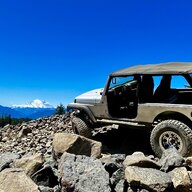
 
Those fog lights look like perfect replacements for the OEM! I like the OEM fog lights a lot and those look like great replacements!


It does look like that's a Durango Alternator.

Unless it becomes an issue, I'd say run it. But most of us, myself included, who run the Durango (mine is a NAPA rebuild) just use a cutoff wheel and remove that extra ear.

I figure - when I need to replace it, the auto store counter guy won't even check my core other than to confirm it's an alternator and not rocks in the box... That's all I did when I worked at an auto store years back.

You did better than me working the fitment - mine was a really tight fit - I just used a deadblow to get it seated. Luckily - it did slide up/outward easy enough when using prybar to get it aligned (so I'm hoping not an issue for a full removal down the line).

Anyway - my tips on what you've installed. Never heard of the Ohio option but I wish & hope they've given you a great rebuild - will store them off as an option ;)

I've been very happy with the KCs so far. None of the more modern options appealed to me (not for a TJ at least) and they're as bright as I'd ever want fog lights to be. They are quite a bit larger than the Apollos (I think) that I replaced, but don't look out of place IMO.

I will likely run the alternator as is. I debated cutting it down as you mentioned, but kind of figured it won't hurt anything and gives me a possible mounting point should I find a need for it.

I'm cautiously optimistic, Ohio Gen has been around a long time and has a pretty good reputation from what I know. I'll be sure to update in the future with how it performs long term. Thanks for the feedback!
 
  • Like
Reactions: FarFire70 and JMT
Fun read. Nice job! Ready for the sound system upgrades. You’ve come a long way in a year! Congrats on finally getting a TJ. You’ve completely turned it around. That thing was an atrocious mess.
 
Novak Conversions Jeep Wrangler TJ radiator