

You are using an out of date browser. It may not display this or other websites correctly.
You should upgrade or use an alternative browser.
You should upgrade or use an alternative browser.

What other projects are you working on?
- Thread starter Farmergreg
- Start date
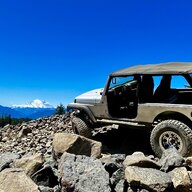
Right when it warmed up so I could get some Jeep projects done before Moab, my wife came up with a series of projects. I didn’t want to get these done, but I wasn’t really up for it at the time.
Anyway, here’s our front patio. Cost about $1500 just to do this on my own. I will now need about three back surgeries and two knee surgeries to recover.
Just need some more plants and mulch now.


Anyway, here’s our front patio. Cost about $1500 just to do this on my own. I will now need about three back surgeries and two knee surgeries to recover.
Just need some more plants and mulch now.
Last edited:

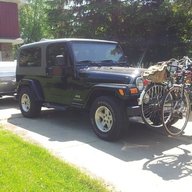
I started on the rebuild of a friends Zenith carb for his 1934 Packard.


This was taking a bit more time than a normal rebuild as I was doing a deep clean. It's also a busy carb, lot's o' parts. I still planned on finishing it yesterday until...mounting the throttle body to the fuel bowl. One of the bolts just kept turning. Sunuva...I did mention to the guy that one of the threads looked dicey before I started to put it back together. He told me to "Dowhatchagottado". The bolts are 1/4-28. That's a UNF thread and a special Helicoil kit. All I have is UNC or Metric kits. If it was my carb, it would be 1/4-20 thread and I'd call it done. It's not my carb and it's going on a Packard, so I bit the bullet and bought the kit. I moved the finish date back to Sunday.
This was taking a bit more time than a normal rebuild as I was doing a deep clean. It's also a busy carb, lot's o' parts. I still planned on finishing it yesterday until...mounting the throttle body to the fuel bowl. One of the bolts just kept turning. Sunuva...I did mention to the guy that one of the threads looked dicey before I started to put it back together. He told me to "Dowhatchagottado". The bolts are 1/4-28. That's a UNF thread and a special Helicoil kit. All I have is UNC or Metric kits. If it was my carb, it would be 1/4-20 thread and I'd call it done. It's not my carb and it's going on a Packard, so I bit the bullet and bought the kit. I moved the finish date back to Sunday.
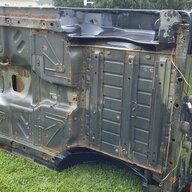
'91 'vette.
This wasn't even the starting point. I removed the aftermarket security system before this pic was snapped. The previous owner likely bypassed the factory Blows, err Bose, audio system which is most of the hanging down crap you see here.

After the haircut. Many add-ons were removed. Ran though a roll of Tesa tape bundling everything and tucking wires away from moving bits. Not seen are ~18 wires that at one time were tap spliced and not repaired after the taps were removed. the right side bundle hanging down is the diag port that attaches to the knee panel. The thin white wire is connected to the parking brake and will get concealed by carpet.
After spending 5hrs, yes 5hrs, removing mouse nests, the 3 inhabitants that died sometime ago, and all OEM carpet jute, I installed Amazon sound deadener in the passenger area and covered the tunnel in 3M thinsulate. Fortunately I have the car on a 4-post lift. I sat on the lift runner and leaned on to the car which was tolerable.

This wasn't even the starting point. I removed the aftermarket security system before this pic was snapped. The previous owner likely bypassed the factory Blows, err Bose, audio system which is most of the hanging down crap you see here.
After the haircut. Many add-ons were removed. Ran though a roll of Tesa tape bundling everything and tucking wires away from moving bits. Not seen are ~18 wires that at one time were tap spliced and not repaired after the taps were removed. the right side bundle hanging down is the diag port that attaches to the knee panel. The thin white wire is connected to the parking brake and will get concealed by carpet.
After spending 5hrs, yes 5hrs, removing mouse nests, the 3 inhabitants that died sometime ago, and all OEM carpet jute, I installed Amazon sound deadener in the passenger area and covered the tunnel in 3M thinsulate. Fortunately I have the car on a 4-post lift. I sat on the lift runner and leaned on to the car which was tolerable.

Putting detailed digital mapping data, software, and a USB-GPS on a Lenovo 2-in-1 laptop. No, it's not Windoze, Yes it's Ubuntu. The map tiles take up about 3.2 gig of space.
Next up, an A/V/Data server for the trailer. 12v power. It'll be a headless unit that plays / serves audio, video, pictures, and map tiles. Altogether about 15 Terra-bytes of data. The server box is about 3-1/2" x 3-1/2" x 2".
Next up, an A/V/Data server for the trailer. 12v power. It'll be a headless unit that plays / serves audio, video, pictures, and map tiles. Altogether about 15 Terra-bytes of data. The server box is about 3-1/2" x 3-1/2" x 2".

Putting detailed digital mapping data, software, and a USB-GPS on a Lenovo 2-in-1 laptop. No, it's not Windoze, Yes it's Ubuntu. The map tiles take up about 3.2 gig of space.
What software, etc are you using?
What software, etc are you using?
Hi @Zorba
Right now it's looking like Jellyfin for the Media stuff, PostgreSQL and PostGIS extensions with additional utilities and tools for the tiling and tile rendering on the mapping tile server, Apache for serving up the tiles...
The software on the laptop is Viking maps, KDE Marble, MakeMKV, and ffMPEG / Shutter Encoder for video work, and GIMP / Shotwell for photo work.
There's some specialty software for astrophotography and digital photography using a cell phone camera and a spotting scope.
But who knows what it'll actually have once it's up and running.
Edited to add: the mini-PC is something like one of these...
https://www.amazon.com/stores/page/E246FEFB-6897-4A1F-806F-5165C66A24DE?tag=wranglerorg-20
Last edited:
...
Edited to add: the mini-PC is something like one of these...
https://www.amazon.com/stores/page/E246FEFB-6897-4A1F-806F-5165C66A24DE?tag=wranglerorg-20
How are you getting 15TB in that?
Will it fit 2 8TB NVME drives?
Or using an external TB enclosure?
How are you getting 15TB in that?
Will it fit 2 8TB NVME drives?
Or using an external TB enclosure?
LOL, no, I've got 2 x 5TB drives partitioned out in 2TB and 1 TB partitions hung off the back of a Samsung smart TV right now. Let's just say wading through 6 partitions looking for a movie kind of kills the joy. It'll be an external drive(s) of some sort. Fast SSD's if I find a good sale or external SATA USB boxes if not. I need something tough and not very power hungry. Throughput demands are not very onerous. I could probably buy a NAS box and use that too...we'll see.
Last edited:
Hi @Zorba
Right now it's looking like Jellyfin for the Media stuff, PostgreSQL and PostGIS extensions with additional utilities and tools for the tiling and tile rendering on the mapping tile server, Apache for serving up the tiles...
The software on the laptop is Viking maps, KDE Marble, MakeMKV, and ffMPEG / Shutter Encoder for video work, and GIMP / Shotwell for photo work.
There's some specialty software for astrophotography and digital photography using a cell phone camera and a spotting scope.
But who knows what it'll actually have once it's up and running.
Edited to add: the mini-PC is something like one of these...
https://www.amazon.com/stores/page/E246FEFB-6897-4A1F-806F-5165C66A24DE?tag=wranglerorg-20
I'm gonna have to look up Viking maps (and KDE Marble, although I'm running Gnome on my main box).
I'm gonna have to look up Viking maps (and KDE Marble, although I'm running Gnome on my main box).
Viking Maps is more lightweight, Marble is in the repositories, and has a lot of complexity. I'm using OpenTopoMaps on both. I have a sneaking suspicion that the tiles are identical, and the directory structures are the same or similar. That isn't verified. If everything is the same on the data end, I'm going to point Viking and Marble at the same directory structure for data. no use having the same maps in two places, right?
My GLONASS / GPS dongle showed up today, so I've been beating up on that.

A project more important than the LJ build (I know - say it ain't so!) is taking up most of my free time these days. The aquifer under my property was once prolific, but I'm on the upstream end of it, and as it's been draining from unsustainable pumping rates, the wells, which are about 800 feet deep, in my area are drying up. This isn't a surprise - I've known about it since the drought of 2011-2012, and I've been working on Plan B while monitoring the water level, and watching it drop every year. There's no public water supply anywhere near our homestead, which would be the easiest solution for us to get water. As it is today, I have three choices:
Over the last five years, I've put 1,600 feet of pipe and conduit in the ground (solid rock, mostly cut with an 80,000 lb rock saw), put up a 30,000 gallon tank, and put gutters on four buildings. I already had a 2,500 gallon tank for well water. When I had the 30,000 gallon tank installed, I forgot to install a fire department connection. Out here, wildfire is a real threat every summer, and since the local volunteer fire department has a 15 mile round trip to fill their 2,500 gallon tanker, it's always good to have water on hand to save the house!
Currently, I've got about 4,000 gallons in the 30,000 gallon tank, and I needed to put it somewhere in order to have an empty tank required to install the fire department connection. I can't afford to waste that much water. I've planned on adding additional tanks to the system, but hadn't purchased them, yet. The need to empty the big tank changed that. Last week, I bought three more tanks. A 2,500 gallon tank for holding more rain water, a 1,550 gallon tank for holding unpotable water for the garden, and a 305 gallon tank for holding unpotable water from a structure that's not connected to the collection system (water from there will be pumped to the garden tank after each rain event.)
This weekend, I plumbed the three new tanks to pump water with a new transfer pump from the big tank to those three new tanks. I don't yet have power run to the big tank for the transfer pump, so I put the pump on a skid, and loaded it and my 11kW generator onto the forks for my tractor:

Then, I tested it by putting just a few inches into the three new tanks to keep them from blowing away if the winds pick up. The three new tanks are the black plastic tanks, and the big 30,000 gallon tank is the steel one in the photo below:

Normally, the tanks would be set on a leveled pad of sand, but since these are in place just temporarily, I put them on a somewhat-level spot, and to protect the bottom of the tanks from sharp rock (chirt is prevalent in these parts), I put down some chip-board to set the tanks on.
The test was successful. The 240VAC pump pumped about 60 gpm, so it'll take a little over an hour to drain the big tank. I couldn't do it, yet, because I don't want to leave it empty for any longer than necessary because, like the plastic tanks, it is not anchored to the ground and will blow away in moderate winds without some water in it. The fittings needed for the fire department connection won't be delivered for about a week.
The rainwater collection system has two separate systems. One collects water from the house and detached garage, and the other collects water from the shop and the well tank/tractor house. The collection pipes are underground, so they never drain completely. To prevent that water from going bad sitting in those pipes for up to three months between rain events, I'll have a pump for each collection pipe at the low end, and I'll pump it via a garden hose to the garden holding tank after every rain. I plumbed those two pumps today:

I also built two cleanout caps from which these pumps will draw the water:

I'm getting very close to having this system up and running - five years coming! I still have to build the pump house next to the big tank, build a steel platform for the garden tank, plumb the 305 gallon tank into the gutters from which it collects, and finish out the plumbing in the main well tank house. That's still a lot of work, but I'm closer every day!
- Drill a deeper well, down to the lowest water-bearing area, about 1,300' down,
- Pay to have water trucked in to fill my 2500 gallon holding tank, at a cost of about $350 per 2,000 gallon truckload, or
- Build a rain water collection and purifying system and live off rain water.
Over the last five years, I've put 1,600 feet of pipe and conduit in the ground (solid rock, mostly cut with an 80,000 lb rock saw), put up a 30,000 gallon tank, and put gutters on four buildings. I already had a 2,500 gallon tank for well water. When I had the 30,000 gallon tank installed, I forgot to install a fire department connection. Out here, wildfire is a real threat every summer, and since the local volunteer fire department has a 15 mile round trip to fill their 2,500 gallon tanker, it's always good to have water on hand to save the house!
Currently, I've got about 4,000 gallons in the 30,000 gallon tank, and I needed to put it somewhere in order to have an empty tank required to install the fire department connection. I can't afford to waste that much water. I've planned on adding additional tanks to the system, but hadn't purchased them, yet. The need to empty the big tank changed that. Last week, I bought three more tanks. A 2,500 gallon tank for holding more rain water, a 1,550 gallon tank for holding unpotable water for the garden, and a 305 gallon tank for holding unpotable water from a structure that's not connected to the collection system (water from there will be pumped to the garden tank after each rain event.)
This weekend, I plumbed the three new tanks to pump water with a new transfer pump from the big tank to those three new tanks. I don't yet have power run to the big tank for the transfer pump, so I put the pump on a skid, and loaded it and my 11kW generator onto the forks for my tractor:
Then, I tested it by putting just a few inches into the three new tanks to keep them from blowing away if the winds pick up. The three new tanks are the black plastic tanks, and the big 30,000 gallon tank is the steel one in the photo below:
Normally, the tanks would be set on a leveled pad of sand, but since these are in place just temporarily, I put them on a somewhat-level spot, and to protect the bottom of the tanks from sharp rock (chirt is prevalent in these parts), I put down some chip-board to set the tanks on.
The test was successful. The 240VAC pump pumped about 60 gpm, so it'll take a little over an hour to drain the big tank. I couldn't do it, yet, because I don't want to leave it empty for any longer than necessary because, like the plastic tanks, it is not anchored to the ground and will blow away in moderate winds without some water in it. The fittings needed for the fire department connection won't be delivered for about a week.
The rainwater collection system has two separate systems. One collects water from the house and detached garage, and the other collects water from the shop and the well tank/tractor house. The collection pipes are underground, so they never drain completely. To prevent that water from going bad sitting in those pipes for up to three months between rain events, I'll have a pump for each collection pipe at the low end, and I'll pump it via a garden hose to the garden holding tank after every rain. I plumbed those two pumps today:
I also built two cleanout caps from which these pumps will draw the water:
I'm getting very close to having this system up and running - five years coming! I still have to build the pump house next to the big tank, build a steel platform for the garden tank, plumb the 305 gallon tank into the gutters from which it collects, and finish out the plumbing in the main well tank house. That's still a lot of work, but I'm closer every day!


A project more important than the LJ build (I know - say it ain't so!) is taking up most of my free time these days. The aquifer under my property was once prolific, but I'm on the upstream end of it, and as it's been draining from unsustainable pumping rates, the wells, which are about 800 feet deep, in my area are drying up. This isn't a surprise - I've known about it since the drought of 2011-2012, and I've been working on Plan B while monitoring the water level, and watching it drop every year. There's no public water supply anywhere near our homestead, which would be the easiest solution for us to get water. As it is today, I have three choices:
About five years ago, I chose option three. Option 1 is no good due to cost and sustainability. A well that deep is almost six figures in cost, and that layer of the aquifer is disappearing, too. Option 2 is just too expensive, plus, I have to depend on a water trucking company to have water (or buy a truck and haul my own.) So that left option 3. It's sustainable as long as the system is designed to handle the crazy rain situation we have here - very few rains, but when we get it, it really rains. It's not uncommon to get a 4" rain event. To take advantage of infrequent, high-volume rains, the system needs a lot of storage and big pipes to move it as quickly as it falls. That means 6" collection pipes and over 35,000 gallons of storage.
- Drill a deeper well, down to the lowest water-bearing area, about 1,300' down,
- Pay to have water trucked in to fill my 2500 gallon holding tank, at a cost of about $350 per 2,000 gallon truckload, or
- Build a rain water collection and purifying system and live off rain water.
Over the last five years, I've put 1,600 feet of pipe and conduit in the ground (solid rock, mostly cut with an 80,000 lb rock saw), put up a 30,000 gallon tank, and put gutters on four buildings. I already had a 2,500 gallon tank for well water. When I had the 30,000 gallon tank installed, I forgot to install a fire department connection. Out here, wildfire is a real threat every summer, and since the local volunteer fire department has a 15 mile round trip to fill their 2,500 gallon tanker, it's always good to have water on hand to save the house!
Currently, I've got about 4,000 gallons in the 30,000 gallon tank, and I needed to put it somewhere in order to have an empty tank required to install the fire department connection. I can't afford to waste that much water. I've planned on adding additional tanks to the system, but hadn't purchased them, yet. The need to empty the big tank changed that. Last week, I bought three more tanks. A 2,500 gallon tank for holding more rain water, a 1,550 gallon tank for holding unpotable water for the garden, and a 305 gallon tank for holding unpotable water from a structure that's not connected to the collection system (water from there will be pumped to the garden tank after each rain event.)
This weekend, I plumbed the three new tanks to pump water with a new transfer pump from the big tank to those three new tanks. I don't yet have power run to the big tank for the transfer pump, so I put the pump on a skid, and loaded it and my 11kW generator onto the forks for my tractor:
View attachment 615083
Then, I tested it by putting just a few inches into the three new tanks to keep them from blowing away if the winds pick up. The three new tanks are the black plastic tanks, and the big 30,000 gallon tank is the steel one in the photo below:
View attachment 615082
Normally, the tanks would be set on a leveled pad of sand, but since these are in place just temporarily, I put them on a somewhat-level spot, and to protect the bottom of the tanks from sharp rock (chirt is prevalent in these parts), I put down some chip-board to set the tanks on.
The test was successful. The 240VAC pump pumped about 60 gpm, so it'll take a little over an hour to drain the big tank. I couldn't do it, yet, because I don't want to leave it empty for any longer than necessary because, like the plastic tanks, it is not anchored to the ground and will blow away in moderate winds without some water in it. The fittings needed for the fire department connection won't be delivered for about a week.
The rainwater collection system has two separate systems. One collects water from the house and detached garage, and the other collects water from the shop and the well tank/tractor house. The collection pipes are underground, so they never drain completely. To prevent that water from going bad sitting in those pipes for up to three months between rain events, I'll have a pump for each collection pipe at the low end, and I'll pump it via a garden hose to the garden holding tank after every rain. I plumbed those two pumps today:
View attachment 615085
I also built two cleanout caps from which these pumps will draw the water:
View attachment 615087
I'm getting very close to having this system up and running - five years coming! I still have to build the pump house next to the big tank, build a steel platform for the garden tank, plumb the 305 gallon tank into the gutters from which it collects, and finish out the plumbing in the main well tank house. That's still a lot of work, but I'm closer every day!
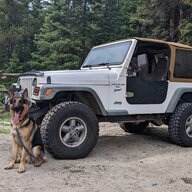
Great Job ! I deal with water issues since I live at high elevation in the Rockies . When we built the house we were pretty poor , I couldn't gamble the money on a well that may 400' post hole. I hauled water for 12 years , It was okay until the temp fell to <20F. Then it was a pain , and once it got below 0F. it was a giant P.I.A . We get by with a 426' well and a 840 tank system in our 1st floor. 4 years ago I had to supplement the low production from the well because of drought. In true "get er done" fashion , I ended up using our 99 TJ and a 50 gal. poly tank.
Great Job ! I deal with water issues since I live at high elevation in the Rockies . When we built the house we were pretty poor , I couldn't gamble the money on a well that may 400' post hole. I hauled water for 12 years , It was okay until the temp fell to <20F. Then it was a pain , and once it got below 0F. it was a giant P.I.A . We get by with a 426' well and a 840 tank system in our 1st floor. 4 years ago I had to supplement the low production from the well because of drought. In true "get er done" fashion , I ended up using our 99 TJ and a 50 gal. poly tank.
View attachment 615096
Fortunately, we don't have to worry too much about below-freezing weather, for the most part. We have had some crazy cold spells the last few years, but we were able to prepare for them each time...
A project more important than the LJ build (I know - say it ain't so!) is taking up most of my free time these days. The aquifer under my property was once prolific, but I'm on the upstream end of it, and as it's been draining from unsustainable pumping rates, the wells, which are about 800 feet deep, in my area are drying up. This isn't a surprise - I've known about it since the drought of 2011-2012, and I've been working on Plan B while monitoring the water level, and watching it drop every year. There's no public water supply anywhere near our homestead, which would be the easiest solution for us to get water. As it is today, I have three choices:
About five years ago, I chose option three. Option 1 is no good due to cost and sustainability. A well that deep is almost six figures in cost, and that layer of the aquifer is disappearing, too. Option 2 is just too expensive, plus, I have to depend on a water trucking company to have water (or buy a truck and haul my own.) So that left option 3. It's sustainable as long as the system is designed to handle the crazy rain situation we have here - very few rains, but when we get it, it really rains. It's not uncommon to get a 4" rain event. To take advantage of infrequent, high-volume rains, the system needs a lot of storage and big pipes to move it as quickly as it falls. That means 6" collection pipes and over 35,000 gallons of storage.
- Drill a deeper well, down to the lowest water-bearing area, about 1,300' down,
- Pay to have water trucked in to fill my 2500 gallon holding tank, at a cost of about $350 per 2,000 gallon truckload, or
- Build a rain water collection and purifying system and live off rain water.
Over the last five years, I've put 1,600 feet of pipe and conduit in the ground (solid rock, mostly cut with an 80,000 lb rock saw), put up a 30,000 gallon tank, and put gutters on four buildings. I already had a 2,500 gallon tank for well water. When I had the 30,000 gallon tank installed, I forgot to install a fire department connection. Out here, wildfire is a real threat every summer, and since the local volunteer fire department has a 15 mile round trip to fill their 2,500 gallon tanker, it's always good to have water on hand to save the house!
Currently, I've got about 4,000 gallons in the 30,000 gallon tank, and I needed to put it somewhere in order to have an empty tank required to install the fire department connection. I can't afford to waste that much water. I've planned on adding additional tanks to the system, but hadn't purchased them, yet. The need to empty the big tank changed that. Last week, I bought three more tanks. A 2,500 gallon tank for holding more rain water, a 1,550 gallon tank for holding unpotable water for the garden, and a 305 gallon tank for holding unpotable water from a structure that's not connected to the collection system (water from there will be pumped to the garden tank after each rain event.)
This weekend, I plumbed the three new tanks to pump water with a new transfer pump from the big tank to those three new tanks. I don't yet have power run to the big tank for the transfer pump, so I put the pump on a skid, and loaded it and my 11kW generator onto the forks for my tractor:
View attachment 615083
Then, I tested it by putting just a few inches into the three new tanks to keep them from blowing away if the winds pick up. The three new tanks are the black plastic tanks, and the big 30,000 gallon tank is the steel one in the photo below:
View attachment 615082
Normally, the tanks would be set on a leveled pad of sand, but since these are in place just temporarily, I put them on a somewhat-level spot, and to protect the bottom of the tanks from sharp rock (chirt is prevalent in these parts), I put down some chip-board to set the tanks on.
The test was successful. The 240VAC pump pumped about 60 gpm, so it'll take a little over an hour to drain the big tank. I couldn't do it, yet, because I don't want to leave it empty for any longer than necessary because, like the plastic tanks, it is not anchored to the ground and will blow away in moderate winds without some water in it. The fittings needed for the fire department connection won't be delivered for about a week.
The rainwater collection system has two separate systems. One collects water from the house and detached garage, and the other collects water from the shop and the well tank/tractor house. The collection pipes are underground, so they never drain completely. To prevent that water from going bad sitting in those pipes for up to three months between rain events, I'll have a pump for each collection pipe at the low end, and I'll pump it via a garden hose to the garden holding tank after every rain. I plumbed those two pumps today:
View attachment 615085
I also built two cleanout caps from which these pumps will draw the water:
View attachment 615087
I'm getting very close to having this system up and running - five years coming! I still have to build the pump house next to the big tank, build a steel platform for the garden tank, plumb the 305 gallon tank into the gutters from which it collects, and finish out the plumbing in the main well tank house. That's still a lot of work, but I'm closer every day!
This is awesome. I think you are only allowed to have 2x55gal tanks out here for rainwater. It was only made legal at all recently. 30k+ gallons is huge.
That is correct. We considered a move to CO a few years ago, right after they changed that law. Water rights was just one reason we didn’t move. In Texas, groundwater, rainwater, and even surface water (until it enters a watercourse) are all owned by the property owner, which is the way it should be, if you ask me!This is awesome. I think you are only allowed to have 2x55gal tanks out here for rainwater. It was only made legal at all recently. 30k+ gallons is huge.
That is correct. We considered a move to CO a few years ago, right after they changed that law. Water rights was just one reason we didn’t move. In Texas, groundwater, rainwater, and even surface water (until it enters a watercourse) are all owned by the property owner, which is the way it should be, if you ask me!
Agree! The water rights are so stupid. Can't even use my water to grow plants. It reallyy grinds my gears that I technically can't use my well to wash my cars... But then there is a commercial car wash nearby


Agree! The water rights are so stupid. Can't even use my water to grow plants. It reallyy grinds my gears that I technically can't use my well to wash my cars... But then there is a commercial car wash nearby
Yeah it's dumb. I see people hosing down their RVs in the neighborhood so I'm clearly not the only one that thinks that
That is correct. We considered a move to CO a few years ago, right after they changed that law. Water rights was just one reason we didn’t move. In Texas, groundwater, rainwater, and even surface water (until it enters a watercourse) are all owned by the property owner, which is the way it should be, if you ask me!
Yea, I heard about that crap in Colorado when we were there for a visit. Fuck that.
Similar threads

- Replies
- 16
- Views
- 1,419

- Replies
- 139
- Views
- 9,514

- Replies
- 905
- Views
- 70,529


- Replies
- 5
- Views
- 1,212
