Novak Conversions Jeep Wrangler TJ radiator
This was my thoughts exactly. Is the cantilever geometry reducing or increasing the leverage on the spring? It may want a softer spring with more preload to be able to work the spring

This was my thoughts exactly. Is the cantilever geometry reducing or increasing the leverage on the spring? It may want a softer spring with more preload to be able to work the spring

The cantilever is absolutely increasing the leverage on the spring. its a 7:10 ratio... so the lever on the spring is 7.25 from the center pivot, and the lever on the axle is 10.25. So... 0.7?

originally I had a 10" lower 150lb spring and an 8" 100lb upper. That should be a combined rate of 75. I found there wasn't enough adjustment to make this work, the rear end was sagging about 2 inches too low at max adjustment. I happened to have a 10" 100lb spring that I swapped in for the upper to get the ride height I was looking for. but even with the longer spring it needs 3" of preload, which I've read is too much. So I may need a 150lb 8" upper. The ride is actually very nice even though the shocks are not tuned yet.

I'll eventually get in touch with Alltech motorsports and get their thoughts on spring rates and have them work their magic on the tune.
 
Last edited:
The cantilever is absolutely increasing the leverage on the spring. its a 7:10 ratio... so the lever on the spring is 7.25 from the center pivot, and the lever on the axle is 10.25. So... 0.7?

originally I had a 10" lower 150lb spring and an 8" 100lb upper. That should be a combined rate of 75. I found there wasn't enough adjustment to make this work, the rear end was sagging about 2 inches too low at max adjustment. I happened to have a 10" 100lb spring that I swapped in for the upper to get the ride height I was looking for. but even with the longer spring it needs 3" of preload, which I've read is too much. So I may need a 150lb 8" upper. The ride is actually very nice even though the shocks are not tuned yet.

I'll eventually get in touch with Alltech motorsports and get their thoughts on spring rates and have them work their magic on the tune.

You may not have a linear leverage ratio with your cantilever setup. If you have a progressive leverage ratio curve through your suspension travel, you end up with more force required to compress the suspension the further you get in the suspension path. Similar effect to a nonlinear rate spring. Usually a desirable feature on a bike suspension to avoid bottom out but it would limit flex at low speed.
 
  • Like
Reactions: Tob
You may not have a linear leverage ratio with your cantilever setup. If you have a progressive leverage ratio curve through your suspension travel, you end up with more force required to compress the suspension the further you get in the suspension path. Similar effect to a nonlinear rate spring. Usually a desirable feature on a bike suspension to avoid bottom out but it would limit flex at low speed.

I don't have the engineering knowledge to measure force throughout the suspension cycle.

But I did design it in a way that the speed of the shock shaft collapsing, relative to the speed of the wheel moving up, increases the closer to full bump it gets. Since shocks are speed sensitive and NOT position sensitive, this adds to greater damping near full compression. its very very minor though, less than 10% speed increase if I remember correctly.

I did my best to have a linear rate. From my research as long as the speed of the shock shaft doesn't slow down (relative to the speed of the wheel moving up) as the suspension nears full bump, you should be golden.
 
I don't have the engineering knowledge to measure force throughout the suspension cycle.

But I did design it in a way that the speed of the shock shaft collapsing, relative to the speed of the wheel moving up, increases the closer to full bump it gets. Since shocks are speed sensitive and NOT position sensitive, this adds to greater damping near full compression. its very very minor though, less than 10% speed increase if I remember correctly.

I did my best to have a linear rate. From my research as long as the speed of the shock shaft doesn't slow down (relative to the speed of the wheel moving up) as the suspension nears full bump, you should be golden.

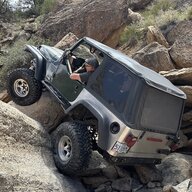
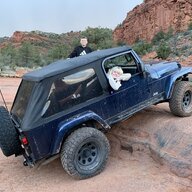
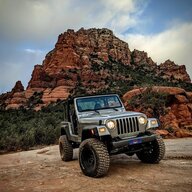
Congrats on getting the engine worked out. Amazing pics of it out and about, plus on the trail!

You designed a new suspension. Trial and error will be part of the game. Stay with it, you get it dialed it!
 
I don't have the engineering knowledge to measure force throughout the suspension cycle.

But I did design it in a way that the speed of the shock shaft collapsing, relative to the speed of the wheel moving up, increases the closer to full bump it gets. Since shocks are speed sensitive and NOT position sensitive, this adds to greater damping near full compression. its very very minor though, less than 10% speed increase if I remember correctly.

I did my best to have a linear rate. From my research as long as the speed of the shock shaft doesn't slow down (relative to the speed of the wheel moving up) as the suspension nears full bump, you should be golden.
Measuring shock travel vs wheel travel through your suspension gives you the info you need so not missing anything there. I think even 10% difference would be noticeable although it does sound close enough to linear that I doubt it’s a problem. Bikes have different needs so not the best comparison but in that world, +20% is generally considered high progression, 10-20% is moderate and less than 10% is low.
 
Congrats on getting the engine worked out. Amazing pics of it out and about, plus on the trail!

You designed a new suspension. Trial and error will be part of the game. Stay with it, you get it dialed it!

Thanks, getting the engine running was a challenge, I learned a lot.

Looking forward to getting the suspension dialed in, honestly, it already performs great, but I can do better.
 
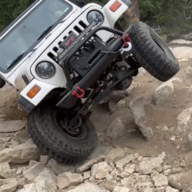
But does it flex?


Lil bit

PXL_20250822_161700061~2.jpg


PXL_20250822_161640453~2.jpg
 
Just pay no attention to the puddle of gasoline under the Jeep. That was uh, someone else.

It's absolutely wild to see a Willys that flexes better in the front than most TJs I see running around in my area. The rear is a whole different level. I sent your video to my best friend, who is a very talented fabricator, mechanic, and body and paint guy, and he was blown away by the suspension.
 
Manual brakes and high gearing. They were not really meant for this. I think I need to bed the brakes, they leave a lot to be desired

As I’m sure you know, low (numerically high) gears are a huge advantage on rocks. So much more control. Moving quickly can lead to trouble quickly. If you are really going to wheel that rig (which I support!), consider a cage even though it doesn’t look period correct.
 
Wow you were hauling ass down that!
It’s much steeper than it looks.
But it did fine, so that’s cool. A granny low would be great, but is there room?
 
  • Like
Reactions: kmas0n
How hard is it to swap a 4 speed in place of the 3 speed(t90?)

What gearing do the axles have?

How hard is it to swap a 4 speed in place of the 3 speed(t90?)

What gearing do the axles have?

The T 90 is about 3" longer than the T 84 thats in my jeep now. Would require new driveshafts... but the biggest problem is the rear suspension. A 3" shorter drive shaft would bind at the double cardon earlier, so I would have to limit the rear droop an inch or two. Not the end of the world I guess. It would be great to have to super deep 1st gear.

The axles are 4:88. Thats the highest ratio I could source.
 
  • Like
Reactions: FarFire70
Novak Conversions Jeep Wrangler TJ radiator