Novak Conversions Jeep Wrangler TJ radiator

Radiator fan

Miamoser228

New Member
Original poster
Joined
Jul 25, 2025
Messages
4
Location
Leesburg
Hi! I’m rebuilding a 2000 jeep TJ, I have replaced the radiator but I’m looking for a fan that has for blades because the engine runs hot. Is there any recommendations for a new replacement fan with more blades? That anyone would recommend and mind sharing with me!

Thank you.
 
Unfortunately you'll need to do a little more diagnosing of the issue than installing a fan with more blades. Can you describe how it's overheating currently? What temps is it reaching? Is it overheating worse while moving or at idle?

You could have a bad thermostat, bad fan clutch, or maybe need to clean up the coolant and flush the engine out if it's gotten nasty with sludge from old coolant being in there. Or maybe even the temperature sender is going bad and reporting false high temps.
 
Hi! I’m rebuilding a 2000 jeep TJ, I have replaced the radiator but I’m looking for a fan that has for blades because the engine runs hot. Is there any recommendations for a new replacement fan with more blades? That anyone would recommend and mind sharing with me!

Thank you.

"for blades"? Four? More?

Do you have the standard five blade fan?

There are several other things to do to fix a hot running engine, but changing the fan is probably the wrong answer. Coolant flush, coolant top up, coolant replacement, water pump, thermostat, fan clutch...
 
Unfortunately you'll need to do a little more diagnosing of the issue than installing a fan with more blades. Can you describe how it's overheating currently? What temps is it reaching? Is it overheating worse while moving or at idle?

You could have a bad thermostat, bad fan clutch, or maybe need to clean up the coolant and flush the engine out if it's gotten nasty with sludge from old coolant being in there. Or maybe even the temperature sender is going bad and reporting false high temps.
We just bought it and what happened on the way down to Ashland. It was running hot while idling, it was teaching temperatures of 225+. I turned on the heat to pull the air out. It’s at a trusted shop and they are going to replace the radiator, hoses, thermostat, water-pump and the fan. If you have an fan suggestion for a fan that would be amazing, it was recommended to upgrade to an Ford Explorer fan as TJs are know to run hot when its hot out and you are driving slow.
 
 
  • Like
Reactions: jeepguy03
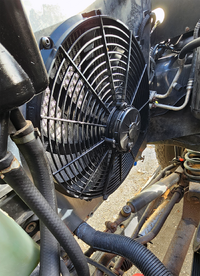
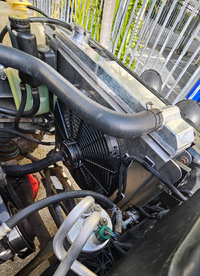
7 months ago, I upgraded the 19-year-old OEM fan to a new SPAL 16" 2,500 cfm puller — added the Champion Radiator aluminum shroud.

Radical difference. WOW.

Standing in front of the grill with a loose shirt, you can feel it pulling the shirt. Crazy.

Part number: SPU-IX-30102113 | https://www.summitracing.com/parts/spu-ix-30102113#overview

Add'l peace of mind for anyone that lives in Surface-of-the-Sun-Land South Florida, Arizona, Texas, my new home in New Mexico (and given climate change... hello... anywhere)
 

Attachments

  • SPAL1.png
    SPAL1.png
    6.5 MB · Views: 67
  • SPAL2.png
    SPAL2.png
    6.1 MB · Views: 77
7 months ago, I upgraded the 19-year-old OEM fan to a new SPAL 16" 2,500 cfm puller — added the Champion Radiator aluminum shroud.

Radical difference. WOW.

Standing in front of the grill with a loose shirt, you can feel it pulling the shirt. Crazy.

Part number: SPU-IX-30102113 | [URL]https://www.summitracing.com/parts/spu-ix-30102113#overview[/URL]

Add'l peace of mind for anyone that lives in Surface-of-the-Sun-Land South Florida, Arizona, Texas, my new home in New Mexico (and given climate change... hello... anywhere)

The fact that you have a 4cyl is probably an important factor, don't you think?
 
We just bought it and what happened on the way down to Ashland. It was running hot while idling, it was teaching temperatures of 225+. I turned on the heat to pull the air out. It’s at a trusted shop and they are going to replace the radiator, hoses, thermostat, water-pump and the fan. If you have an fan suggestion for a fan that would be amazing, it was recommended to upgrade to an Ford Explorer fan as TJs are know to run hot when its hot out and you are driving slow.

If it's reaching 225 while driving I would assume it needs a new thermostat...but more diagnosis would be needed to know for sure.. I would suggest keeping the stock fan, when everything is functioning properly a higher blade count is really not necessary and may not even offer any tangible benefit at all.

Let the shop do what they're going to do and see how it runs after. If you can find an OEM fan clutch, that would be ideal over any of the aftermarket options.
 
  • Like
Reactions: JMT
The fact that you have a 4cyl is probably an important factor, don't you think?

No. The old OEM fan lasted 19+ years in the blazing tropical heat and sun of South Florida — I replaced the fan not because I had to but because: #1, I replaced the old radiator with a new aluminum Champion, #2, the old fan was nearly 20 years old and #3, I was moving to the high desert of New Mexico.
 
No. The old OEM fan lasted 19+ years in the blazing tropical heat and sun of South Florida — I replaced the fan not because I had to but because: #1, I replaced the old radiator with a new aluminum Champion, #2, the old fan was nearly 20 years and #3, I was moving to the high desert of New Mexico.

I think you might have missed his point.
 
"for blades"? Four? More?

Do you have the standard five blade fan?

There are several other things to do to fix a hot running engine, but changing the fan is probably the wrong answer. Coolant flush, coolant top up, coolant replacement, water pump, thermostat, fan clutch...

"for blades"? Four? More?

Do you have the standard five blade fan?

There are several other things to do to fix a hot running engine, but changing the fan is probably the wrong answer. Coolant flush, coolant top up, coolant replacement, water pump, thermostat, fan clutch...

"for blades"? Four? More?

Do you have the standard five blade fan?

There are several other things to do to fix a hot running engine, but changing the fan is probably the wrong answer. Coolant flush, coolant top up, coolant replacement, water pump, thermostat, fan clutch...

We need to remove more heat from the radiator. We replaced the radiator, hoses, and thermostat, among other components,
for a refresh. Does anyone have experience with swapping a Ford Explorer 11-blade fan into a 2000 TJ? If so, would you please share the part number for the fan and the clutch?
 
We need to remove more heat from the radiator. We replaced the radiator, hoses, and thermostat, among other components,
for a refresh. Does anyone have experience with swapping a Ford Explorer 11-blade fan into a 2000 TJ? If so, would you please share the part number for the fan and the clutch?

I'm having trouble getting this message across: if everything is working in stock form, you do not need to upgrade or change anything. These Jeeps have zero problems staying cool when the parts work as designed. If you are overheating, the Ford fan blade is not going to solve your problem. You need to do further diagnostic and figure out what is going on...you might have a blown head gasket or maybe your temp sensor is malfunctioning and reporting false high temps.

2000-2001s are also known for cracking the cylinder head between #3 and #4. Look through the oil fill cap. If you have a cracked head that can cause issues that lead to overheating also. 2000 implemented the 0331 cylinder head model which was too weak between #3 and #4. 2002 cylinder heads got a strength upgrade in the casting at that area and were labeled "TUPY" to indicate being built to the newer standard to prevent that issue. So look into that and see if you have a cracked head.

If everything was working properly, you do not need to remove more heat from the radiator than the stock fan is capable of removing.

In other words, I or others can give you the part number for the 11 blade fan, but you are still going to have trouble after, so there is no point.
 
Last edited:
My suggestion is; before you replace everything to acid wash the system to get the rusty fuzz out of the block. That will clean all the insulation out and put you back close to new. It sounds like your shop is a good parts change but lacking a bit with diagnosing causes.

A stock system works quite adequately.
 
I think you might have missed his point.

RE: "...if everything is working in stock form, you do not need to upgrade or change anything".

That said, my OEM radiator finally shit the bed after 19 years in the South Florida heat — the plastic housing cracked by the filler cap; I wasn't going to drop in a new radiator and leave the 19-year-old stock fan (rated at 1,250 to 1,400 +- CFM), hence the desire for preventive maintenance (as well as a major upgrade to 2,500-2,599 CFM).

. . .

FWIW — something to additionally think about (yes, I'm a bit of a tech/climate nerd): the 1997-2006 model was originally designed and developed in the early-mid '90s, with the design finalized in 1993, and production beginning in 1996.

From NOAA records:

— the annual mean temperature for the United States in 1993 was approximately 50.3 °F

— in May 2025, the CONUS (contiguous United States) average temperature was 61.7 °F, or ~1.5 °F above 20th‑century norms

— in June 2025, it rose to 71.2 °F, about 2.8 °F above the long‑term average

— the most recent analysis indicates 2025 is on track to be one of the top‑three warmest years on record for global temperature trends

Point: Our climate is not the same as when the TJ design was finalized — parts designed 32+ years ago weren't designed for 2025 environmental tolerances.

 
RE: "...if everything is working in stock form, you do not need to upgrade or change anything".

That said, my OEM radiator finally shit the bed after 19 years in the South Florida heat — the plastic housing cracked by the filler cap; I wasn't going to drop in a new radiator and leave the 19-year-old stock fan (rated at 1,250 to 1,400 +- CFM), hence the desire for preventive maintenance (as well as a major upgrade to 2,500-2,599 CFM).

The points relating to your post were that you have a 4 cylinder and not the 4.0L. OP has a 4.0L which comes with a very powerful mechanical fan in factory form. The 2.4L you have gets by with an electric fan and already has one in stock form. It is not a good idea to swap to a 2500 cfm e-fan in the 4.0L Jeeps. This person already has some sort of issue leading to overheating, guaranteed a 2500 cfm electric fan will be worse than their stock mechanical fan that their 4.0 jeep already has.

In other words, your advice in your case, while well intentioned, is irrelevant to what the OP is experiencing because they’re different engines with different cooling setups.

FWIW — something to additionally think about (yes, I'm a bit of a tech/climate nerd): the 1997-2006 model was originally designed and developed in the early-mid '90s, with the design finalized in 1993, and production beginning in 1996.

From NOAA records:

— the annual mean temperature for the United States in 1993 was approximately 50.3 °F

— in May 2025, the CONUS (contiguous United States) average temperature was 61.7 °F, or ~1.5 °F above 20th‑century norms

— in June 2025, it rose to 71.2 °F, about 2.8 °F above the long‑term average

— the most recent analysis indicates 2025 is on track to be one of the top‑three warmest years on record for global temperature trends

Point: Our climate is not the same as when the TJ design was finalized — parts design

As far as this goes, if global temps are rising, then that’s even more reason not to stray from the stock setup because far too often, aftermarket is significantly worse.

None of that really matters anyways, because we are keeping the engines held constant at much higher temps than ambient. Regardless of what the mean temp is and whether or not it’s higher than it used to be, it is still far cooler than the 210° we keep the engines at and so it does just fine cooling the engine/radiator….unless parts are not functioning as intended or you have something like a bad head or head gasket adding extra heat straight into the coolant.
 
  • Like
Reactions: hear
it was recommended to upgrade to an Ford Explorer fan as TJs are know to run hot when its hot out and you are driving slow.
I'm having trouble getting this message across: if everything is working in stock form, you do not need to upgrade or change anything. These Jeeps have zero problems staying cool when the parts work as designed.
As someone who lives in an area with 115+ summer temperatures, I completely agree with this.

Mine has the original fan and an aftermarket replacement aluminum core / plastic tank replacement radiator and I daily drive in rush hour traffic with the AC on and have never overheated.
 
guaranteed a 2500 cfm electric fan will be worse

In addition, what is the static cfm? 2500 might be achievable in open spaces, say hanging from the ceiling in the middle of the garage. But what about when tucked up right behind the restrictive radiator? Does it drop to 800???

Yes, stock. Even with that odd ball sized blade and the mis-spacing they are the best.
 
In addition, what is the static cfm? 2500 might be achievable in open spaces, say hanging from the ceiling in the middle of the garage. But what about when tucked up right behind the restrictive radiator? Does it drop to 800???

Yes, stock. Even with that odd ball sized blade and the mis-spacing they are the best.

There was just a discussion here about how the oddball spacing did something to control the overall noise from the fan.
 
  • Like
Reactions: MountaineerTom
The points relating to your post were that you have a 4 cylinder and not the 4.0L. OP has a 4.0L which comes with a very powerful mechanical fan in factory form. The 2.4L you have gets by with an electric fan and already has one in stock form. It is not a good idea to swap to a 2500 cfm e-fan in the 4.0L Jeeps. This person already has some sort of issue leading to overheating, guaranteed a 2500 cfm electric fan will be worse than their stock mechanical fan that their 4.0 jeep already has.

In other words, your advice in your case, while well intentioned, is irrelevant to what the OP is experiencing because they’re different engines with different cooling setups.


As far as this goes, if global temps are rising, then that’s even more reason not to stray from the stock setup because far too often, aftermarket is significantly worse.

None of that really matters anyways, because we are keeping the engines held constant at much higher temps than ambient. Regardless of what the mean temp is and whether or not it’s higher than it used to be, it is still far cooler than the 210° we keep the engines at and so it does just fine cooling the engine/radiator….unless parts are not functioning as intended or you have something like a bad head or head gasket adding extra heat straight into the coolant.

Irrelevant to the thread subject but relative to your statement (paraphrasing) Stock setup is best/far too often, aftermarket is significantly worse.

1: Aftermarket, as often, can be significantly better than OEM — modern technology/design vs. 3+ decades ago.

2. "Regardless of what the mean temp is and whether or not it’s higher than it used to be...":

Endurance Warranty’s analysis* (July 24, 2025) notes that as extreme heat becomes more common, traditional vehicle systems—including cooling systems—are seeing increased repair frequency and earlier failure. Even simpler: I'm seeing more radiator/cooling system failure threads in the forum as well as several on FB I follow.

* "How Climate Change is Influencing Car Repair Trends" - https://www.endurancewarranty.com/l...mate-change-is-influencing-car-repair-trends/

"Climate change is making car repairs more frequent and expensive. Extreme heat, freezing cold, flooding, and poor air quality are putting new stress on vehicle systems, from batteries and electronics to cooling and suspension. These conditions are causing parts to fail sooner and increasing the likelihood of costly breakdowns."

Simpler: I'm seeing more radiator/cooling system issue threads on TJ online forums and several TJ groups I follow on FB.

Summary: stock is not always better.
 
Simpler: I'm seeing more radiator/cooling system issue threads on TJ online forums and several TJ groups I follow on FB.

It has nothing to do with "global warming". I've seen overheating issues for the past 20 years on every old car site I frequent. If my old vehicles with factory cooling systems can drive around in 115+ summer temperatures without exploding, people in cooler locations should be able to do the same thing.
 
Novak Conversions Jeep Wrangler TJ radiator