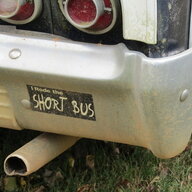
Oh, a bird on each side would be cool! But no, no birds on this. She don’t have the go to back up the look, lol.
Neither do the late '70s T/As.



Oh, a bird on each side would be cool! But no, no birds on this. She don’t have the go to back up the look, lol.

Neither do the late '70s T/As.
She does 0-60 in....eventually.

I have my harness project complete. Started with a Speedway Motors 22 Circuit kit.
https://www.speedwaymotors.com/22-C...ve-Aftermarket-Wiring-Harness-Kit,229874.html
I decided to go this route because it fits the original pass thru already installed in the firewall. Bonus is that my signal flashers are now relocated to the fuse box, instead of hiding up under the dash. With the extra space, I also added a couple extra circuits. One for my power mirrors (Ramco's), I added extra wiring for a modern radio (they all take a 12V batt feed and a 12V Ign or Acc feed), pulled in a tach signal wire and a Trans Temp Signal wire.
I was intending on replacing the entire harness, however it was not quite long enough to get what I needed. So, the bulk of the work was in splicing new wires in where I needed to. I basically replaced anything that looked questionable or that had previously been cut and spliced. So, this is now a mix of old and new. The speedway kit was nice, because the provided a LOT of the special connectors terminals and connector housings that GM was using at the time our coaches were built. Pack-Con and Packard Series 56 if you're looking for terminals and what not. A lot of that stuff is still available, if you know what to look for.
One other step I took was to eliminate the soldered splices that GM used. They were probably fine (most everything worked when this coach came apart) but for "peace of mind" I used butt splices and heat shrink vs the soldered crimp rings and nasty, sticky, black tape GM used.
Once the wires were all spliced in, I wrapped the harness in non-adhesive vinyl tape (which is what GM originally used). First time I've worked with this stuff and its pretty nice. Its easy to stretch and wrap around the breakouts, its clingy enough to not unravel (think saran wrap), and you can bundle the wires up tightly with it.
View attachment 605069
This is where GM left it. I took it another step, and added a braided split loom over the vinyl wrap. Just a little extra protection, plus it looks nice (not that anyone will see it). Tesa Cloth tape at the joints to help hold them together, and its ready to go back in. I will need to daisy chain a couple extra gage lights and a voltage feed once my dash is complete, but that is really easy to do and won't violate the rest of the harness.
View attachment 605068
I have my harness project complete. Started with a Speedway Motors 22 Circuit kit.
https://www.speedwaymotors.com/22-C...ve-Aftermarket-Wiring-Harness-Kit,229874.html
I decided to go this route because it fits the original pass thru already installed in the firewall. Bonus is that my signal flashers are now relocated to the fuse box, instead of hiding up under the dash. With the extra space, I also added a couple extra circuits. One for my power mirrors (Ramco's), I added extra wiring for a modern radio (they all take a 12V batt feed and a 12V Ign or Acc feed), pulled in a tach signal wire and a Trans Temp Signal wire.
I was intending on replacing the entire harness, however it was not quite long enough to get what I needed. So, the bulk of the work was in splicing new wires in where I needed to. I basically replaced anything that looked questionable or that had previously been cut and spliced. So, this is now a mix of old and new. The speedway kit was nice, because the provided a LOT of the special connectors terminals and connector housings that GM was using at the time our coaches were built. Pack-Con and Packard Series 56 if you're looking for terminals and what not. A lot of that stuff is still available, if you know what to look for.
One other step I took was to eliminate the soldered splices that GM used. They were probably fine (most everything worked when this coach came apart) but for "peace of mind" I used butt splices and heat shrink vs the soldered crimp rings and nasty, sticky, black tape GM used.
Once the wires were all spliced in, I wrapped the harness in non-adhesive vinyl tape (which is what GM originally used). First time I've worked with this stuff and its pretty nice. Its easy to stretch and wrap around the breakouts, its clingy enough to not unravel (think saran wrap), and you can bundle the wires up tightly with it.
View attachment 605069
This is where GM left it. I took it another step, and added a braided split loom over the vinyl wrap. Just a little extra protection, plus it looks nice (not that anyone will see it). Tesa Cloth tape at the joints to help hold them together, and its ready to go back in. I will need to daisy chain a couple extra gage lights and a voltage feed once my dash is complete, but that is really easy to do and won't violate the rest of the harness.
View attachment 605068

This is the best "tight-access" tool I've found. Not cheap, but it doesn't require much "head room":
https://www.amazon.com/dp/B005MVBGAU/?tag=wranglerorg-20
Well, the Allen head bolt idea won’t work. Still too tight to get in there.

I think he's alluded to them doing it prior to installing the windshield glass.@Mike_H any idea how the factory did it?
Let's hope not. Like he's doing, I'd explore every creative solution before removing a decades-old windshield. A windshield that's been in place that long would likely break during removal, and I'm guessing that's some pricey glass, if it's even available...I would guess that's how they did it. It might be how he has to do it too.
I'm guessing that's some pricey glass, if it's even available...