
You are using an out of date browser. It may not display this or other websites correctly.
You should upgrade or use an alternative browser.
You should upgrade or use an alternative browser.

Dyno Testing Bolt-ons On The 4.0
- Thread starter Jezza
- Start date


Maybe those 4 hole fuel injectors that some people rave about and other people scoff at. Preferably after you've already cleaned the stock injectors and gotten those numbers.
When the fuel hits the hot intake valve, the gas drops atomize. So not seeing a benefit for them.



When the fuel hits the hot intake valve, the gas drops atomize. So not seeing a benefit for them.
I think the theory is more even distribution and a more complete burn, which sounds logical, but in reality this is port injection and it probably doesn't mean anything real either way. Direct injection would likely be different.

I think the theory is more even distribution and a more complete burn, which sounds logical, but in reality this is port injection and it probably doesn't mean anything real either way. Direct injection would likely be different.
I wonder if IAT is higher temp then the actual fuel that the better atomization of a multi hole injector aids/quenches making a lower overall temperature of the air fuel charge going into the chamber. Just a bench top hypotheses on that one.
I wonder if IAT is higher temp then the actual fuel that the better atomization of a multi hole injector aids/quenches making a lower overall temperature of the air fuel charge going into the chamber. Just a bench top hypotheses on that one.
So I've read and seen stuff with carbs always making slightly more power than EFI (standard port injection) in controlled apples-to-apples test, and the theory is the effect of latent heat between the carb body and cylinder cools the charge just enough, but with port injection there is not enough time for any significant cooling since the injector sits directly in front of the intake valve. Having said that, I don't think multi-hole vs single hole injectors will have any measurable differences in a port injection application. If we were talking throttle body or direct injection, then I could see potential differences.
Yeah I could see time being a factor, or in this case the lack of time for anything meaningful to take place.

I think the theory is more even distribution and a more complete burn, which sounds logical, but in reality this is port injection and it probably doesn't mean anything real either way. Direct injection would likely be different.
I wonder if IAT is higher temp then the actual fuel that the better atomization of a multi hole injector aids/quenches making a lower overall temperature of the air fuel charge going into the chamber. Just a bench top hypotheses on that one.
the fuel has to atomize, emulsify in the air, and then vaporize. If the 1 hole does the job just fine, then the extra holes won't make a difference. If the 1 hole injector isn't atomizing it well enough to emulsify and vaporize, then the extra holes would make a difference, but I would be surprised if this was the case due to the impact that would have with emissions and driveability....but I'm willing to entertain the possibility of being surprised because I haven't personally done the testing or reviewed the data.
As to why the extra holes exist to begin with, it's entirely possible that another engine needed the extra help due to port geometry, etc, and it may very well get used on an engine that doesn't need it because it makes more financial sense to buy 5 million 4 hole injectors than it does to split it up with different hole patterns if the flow rate is close enough.
The resulting charge temperature from a given mass of gasoline and a given mass of air is essentially fixed, regardless of how long the process takes. * - asterisk to be addressed below.
So I've read and seen stuff with carbs always making slightly more power than EFI (standard port injection) in controlled apples-to-apples test, and the theory is the effect of latent heat between the carb body and cylinder cools the charge just enough, but with port injection there is not enough time for any significant cooling since the injector sits directly in front of the intake valve. Having said that, I don't think multi-hole vs single hole injectors will have any measurable differences in a port injection application. If we were talking throttle body or direct injection, then I could see potential differences.
I've heard this as well but I think if it was truly just a result of having more time to atomize, mix, and vaporize, manufacturers would have started putting the injectors farther upstream of the port, rather than as close as they can possibly get it to the point that nowadays they're just putting it right inside the cylinder.
* from a charge temperature perspective, it actually favors the port fuel injection, because if you cool the charge at the carburetor, it's going to have a larger temperature difference vs the runner and therefore pick up more heat. If you let it be hot down the runner and inject (cool) at the last possible second, assuming the process still completes, the end result will be a cooler charge.
I'd love to see how that test was done and how they controlled all the other variables. It would have to be the same number of the same size throttle plates, on the same manifold, same fuel temp, same IAT measured at the same location, with wideband O2 data to back up that it was the same AFR. I'd be even more interested if they also tested a TBI setup, as that should have the carbs advantages from an atomization standpoint...yet no one has made a TBI in 30ish years...
all that said, if it's true and the tests were truly adequately controlled, I have no idea why the carb would make more power.
I've heard this as well but I think if it was truly just a result of having more time to atomize, mix, and vaporize, manufacturers would have started putting the injectors farther upstream of the port, rather than as close as they can possibly get it to the point that nowadays they're just putting it right inside the cylinder.
That answer is well established, that was for event timing and individual cylinder control. Throttle body injection = every cylinder has a pull from a common plenum. Port injection has more refined control, but other cylinders can still effect an individual cylinder. Direct injection shuts out the other cylinders.
I'd love to see how that test was done and how they controlled all the other variables. It would have to be the same number of the same size throttle plates, on the same manifold, same fuel temp, same IAT measured at the same location, with wideband O2 data to back up that it was the same AFR. I'd be even more interested if they also tested a TBI setup, as that should have the carbs advantages from an atomization standpoint...yet no one has made a TBI in 30ish years...
all that said, if it's true and the tests were truly adequately controlled, I have no idea why the carb would make more power.
Carb vs EFI, there have been plenty of people show this, Hot Rod, Weingartner Racing, Engine Masters etc., but I don't think I’ve seen carb vs TBI since TBIs have very limited support, especially at big power levels. I think what it comes down to is air density and air flow. You work with air, so answer this; is it easier to flow cooler more dense air than hot in a given volume like a tube? I assume it is. So given a length of tube, say 12", is it easier to flow the cooler charge through the entire tube, or cool the air at the last 1", which will result in better flow?

I recently purchased a 1997 TJ (4.0 32RH) for some projects I am working on. I am planning to do some tuning sessions on it to get some base files for my tuning business. As part of that process I am going to be on the dyno in a number of different configurations with different mods. As a part of this process I will be able to get dyno data from a range of different engine mods. This is a list of the mods and configurations I am planning on testing.
Dyno 1 - Stock Un-modified
Dyno 2 - Stock With Tune-up Done (Plugs, Wires, Cap, Rotor, Clean Injectors, Filers)
Dyno 3 - Add Windstar Filter
Dyno 4 - Locked Up Fan Clutch
Dyno 5 - E-Fan
Dyno 6 - HP Tuners Tune, All Further Mods Will Have Tunes Optimized For The Mod
Dyno 7 - Add Header
Dyno 8 - Add Bored Throttle Body
Dyno 9 - Add Exhaust
Dyno 10 - Add Headgasket, Milled Head and Cam
If there are any other modifications that anyone would like to see, let me know. I don't want to spend lots of money on this testing, so things like the Edelbrock head and roller rockers I'm not planning on testing, unless someone is willing to donate them.
Also, if there are any specific methods of testing that I should consider feel free to mention them as well. I won't be able to do it all in one day, so there may be some temperature differences and such. I think overall it will still give a good overview of whether or not these mods are worthwhile, as well as giving me data for base tune files.
View attachment 531522

This should be interesting. Always nice to have actual data for the arguments that pop up about this stuff. But, more importantly, does your purchase of a '97 platform mean a turbo kit compatible with a '97 is on the horizon??


But, more importantly, does your purchase of a '97 platform mean a turbo kit compatible with a '97 is on the horizon??
Don't you have other things to spend money on?


Don't you have other things to spend money on?
what's your point?

That answer is well established, that was for event timing and individual cylinder control. Throttle body injection = every cylinder has a pull from a common plenum. Port injection has more refined control, but other cylinders can still effect an individual cylinder. Direct injection shuts out the other cylinders.
Carb vs EFI, there have been plenty of people show this, Hot Rod, Weingartner Racing, Engine Masters etc., but I don't think I’ve seen carb vs TBI since TBIs have very limited support, especially at big power levels. I think what it comes down to is air density and air flow. You work with air, so answer this; is it easier to flow cooler more dense air than hot in a given volume like a tube? I assume it is. So given a length of tube, say 12", is it easier to flow the cooler charge through the entire tube, or cool the air at the last 1", which will result in better flow?
Aren't a few of the efi conversions for classics tbi? Idk if they are geared towards high hp. But they are out there
Aren't a few of the efi conversions for classics tbi? Idk if they are geared towards high hp. But they are out there
They are TBI, but they're limited to 500-600 hp N/A. Also, they really hate overlap/tight LSA, but that's a different issue.
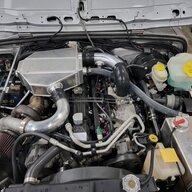
This should be interesting. Always nice to have actual data for the arguments that pop up about this stuff. But, more importantly, does your purchase of a '97 platform mean a turbo kit compatible with a '97 is on the horizon??
Ya never know.

The under hood temp has plenty of heat to prepare gas to turn to vapor. Couple that with every exhaust port is next to an intake port. Some intake ports have an exhaust on both sides. Vaporization should not be a problem.
That answer is well established, that was for event timing and individual cylinder control. Throttle body injection = every cylinder has a pull from a common plenum. Port injection has more refined control, but other cylinders can still effect an individual cylinder. Direct injection shuts out the other cylinders.
Sure, but a perfectly tuned carb should be equivalent to a TBI in that regard. So if it's going to outperform port FI, it has to do it against that disadvantage from the start.
For the record, I had no plans or interest in getting into a carb vs EFI discussion and don't remember how it happened, I guess just as a tangent to whether single, 4 and 12 port injectors offer any difference in the completeness of the atomization and evaporation process. I still think probably no but a dyno can tell us for sure.
Carb vs EFI, there have been plenty of people show this, Hot Rod, Weingartner Racing, Engine Masters etc.,
I've definitely heard/read it, I just havent every been interested in putting a carburetor on anything in the past 20 years so never paid much attention.
I did some googling but what I found that seemed truly apples to apples didn't come to the same conclusions.
This is what I came across that actually compared port EFI vs carb with the same manifold.
Inconclusive as the performance was very similar. They did bring up the charge cooling thing in the text
https://www.motortrend.com/how-to/carburetor-vs-fuel-injection-we-put-both-to-the-test-on-ls-engine/
EFI makes 20+ over carb
https://www.enginelabs.com/engine-t...-efi-carb-delete-n-a-race-engine-exposes-all/
Here's one where the carb makes more, but it's a carb on performance intakes against a completely different EFI intake.
but I don't think I’ve seen carb vs TBI since TBIs have very limited support, especially at big power levels. I think what it comes down to is air density and air flow. You work with air, so answer this; is it easier to flow cooler more dense air than hot in a given volume like a tube? I assume it is. So given a length of tube, say 12", is it easier to flow the cooler charge through the entire tube, or cool the air at the last 1", which will result in better flow?
The viscosity of air is so low there's hardly any difference in the frictional losses in a temperature change of this magnitude (we're talking ballpark, 25-30°F drop) and a duct this short - It's about a 5% change in viscosity but it's 5% of a couple of thousandths of a psi. Losses in runs of HVAC duct work are expressed in usually single digit inches of water column, which is 1/27th of a psi.
As I've researched my response to this I've come across no shortage of claims that the carb cools the charge more because of the reasons discussed here, and I don't disagree...if you take a charge temperature measurement in the manifold then yes, it's going to be cooler on the carb'd engine than the EFI because you're measuring it after the fuel has cooled it, vs before. My argument is simply that the cooling affect is of equal magnitude, it just happens as it enters the cylinder instead of before it goes down the runner. It's not an easy thing to confirm though, unless you drill a hole somewhere and place a temp sensor inside the cylinder without it being smashed by the piston, and have it actually respond quick enough to get a reading at the right instant in a process that lasts milliseconds. If it's possible then it's probably only by the sort of instrumentation you find at CERN. Therefore, my approach has to break it down into simple heat transfer.
A big note here - We're getting well beyond the gnats ass at this point, I doubt any of it is significant enough to show up on a dyno test, but just as an academic exercise...
Process 1 - TBI/carburetor
air enters throttle body at ~150ish IAT
fuel injected, atomizes and vaporizes, cools charge by ~25°
125° charge moves through 200° manifold, picking up heat from what starts as a 75° temperature difference
Process 2 - port EFI
air enters throttle body at ~150ish IAT
moves through 200° manifold, picking up heat from what starts as a 50° temperature difference
fuel injected, cools charge by ~25°
Exactly how much temperature is picked up in the runner is unknown in either case, but it can be inferred that Process 1 will pick up about 50% more than Process 2 because it has 50% more temperature difference. Best case for the EFI is that the air picks up ALL the heat from the manifold and both end up hitting the port at 200, before the EFI gets the cooling and it ends up 200 vs 175 for a 5% density advantage. If the carb picks up 30 and the EFI picks up 20, then the charge ends up 155 carb vs 145 EFI - about a 3% advantage in density. Best case for the carb is that my understanding of modernish EFI is completely wrong and the intake valve closes on a mixture that hasn't fully vaporized, and that would extend to the same possibly being true in the injector argument.
Pre vs post 2000 intake. The log manifold just looks less

For the record, I had no plans or interest in getting into a carb vs EFI discussion and don't remember how it happened, I guess just as a tangent to whether single, 4 and 12 port injectors offer any difference in the completeness of the atomization and evaporation process. I still think probably no but a dyno can tell us for sure.
It's funny how that happens. I guess we should take it PM and stop muddying this thread if you want to keep talking. Maybe you can explain the mechanics of carb & TBI throttle blade icing.
 I assume it has something to do with a pressure drop. Maybe that also cools the charge, but I'm wondering away from the thread again.
 Similar threads
- Replies
- 59
- Views
- 1,865

- Replies
- 10
- Views
- 573

- Replies
- 17
- Views
- 2,051

- Replies
- 28
- Views
- 3,115


- Replies
- 8
- Views
- 1,279