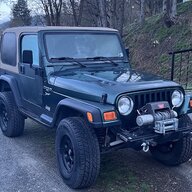
Going to a larger alternator i can see a benefit.
What size wire did the Durangos with the 160amp alternator use?


Going to a larger alternator i can see a benefit.
I mean yes, if your goal was saving money, then you would probably stick with 4ga. And for what it's worth, that kit is $107 from Jeep Cables. Hard to see much room for savings on doing that yourself.
And for what it's worth, 4ga is probably enough for 90%+ of TJ applications. 2ga is what it defaults to on their website so I was just using that as a middle of the road (price wise) example.
Well im going to look into it and find out if its worth it cost wise.
160a durango alternator
250a ANL fuse
2g battery cables and military terminals

100% of TJs rolled off the assembly line with 6awg cables.
What did Dodge use for that alternator?
I never said they didn't. I'm saying "stick with" in the sense that it's the lowest tier their company offers. If you're going to replace the all of the cables at once, you're probably not going to replace them with the same 6ga.
What is the justification to increase the wire size in the first place?
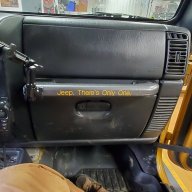
Going to a larger alternator i can see a benefit.
Depending on what accessories someone is running, what alternator they're running, and such you may want to decrease the strain on the system. If someone is running a high output alternator, a fridge, a tablet, a winch, a compressor and multiple of these things are going at a time, you could see a voltage drop. Again, not needed for most, but some people also just get peace of mind from knowing something has been upgraded and is not a factor. Pretty cheap peace of mind considering the things we spend money on.
My only point is that it is silly to put 2awg wire on any TJ electrical system. Especially when no one can offer an objective justification for doing so beyond feelings that bigger is better
 Maybe if you were swapping to a 24v Cummins in your TJ?
If the cables can't carry the current, it doesn't matter how big of an alternator you install. This is critical if you have a winch.
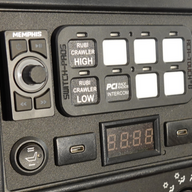
I can tell you from an extremely expensive lesson in cable size that large cables hooked to the small studs on alternators need a really spiffy amount of strain relief to support the cable. Otherwise, vibration and the weight of the cable can cause the stud to fail or the cable lug to fail.Yea, the 2ga is probably too much. But hell, they even offer 2/0 for those that really want to go all out!
However, this still goes back to my original point, that I don't know how much money one would really save (especially at 4ga=$107) by doing it themselves.


Dont have to cobble stuff together if we got the correct measurements and parts needed to assemble a kit. And it cost a good bit less than buying a “kit”.
Maybe after you buy the kit you can update this thread with all the measurements?

Here some of the stuff I made
View attachment 620814
View attachment 620815
View attachment 620816
View attachment 620817
If you find yourself low on entertainment, join a few of the solar DIY groups and post up those crimps. In short order, there will be a herd of "experts" show up who are more than glad to tell you that you did it wrong. (the crimp, length of gap, lug style, COO, etc) I'm fine with what you're doing with 2 minor changes. I prefer tinned copper lugs to slow down corrosion and your heat shrink looks to be single wall non adhesive lined. The dual wall adhesive lined keeps out moisture better and the melted glue adds some strain relief to the connection. (personal preferences)Yeah Class K welding cable is what you want. That's good stuff. Some of those kits would make me question where the copper is coming from, the quality of the wire. Then again if buying in bulk maybe the margin works out if they sell enough.
Making nice cables is a useful skill.
View attachment 620835
View attachment 620836