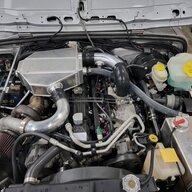
2004 Wrangler Sport 4.0 M/T
Hello, Thought maybe with all the info in this forum i could solve my issue buy to no avail so here i am! my dad starting noticing the jeep losing some power & hesitating on his 30mi one way to work, its had the TPS P0122 code for awhile i would just clear it & it would go away, it would run fine around town until last week it shut down on the highway & wouldnt start so had to get it towed. the next morning fired right up & drove fine around town but dad decided it was the fuel pump so before i could test the fuel pressure he already dropped the tank & got a new pump, put the pump in fires right up, its holding about 50psi, so all was good until it wasnt same senario shut down on the highway except this time i got 3 codes P0122, P0340 & P1391 so i cleared them drove around town now only the P0122 has come back, i dont have a scope just my multimeter so i just started checking the wiring, so with the key on i pulled the connector off the cam sensor & im reading 5v on both the reference & signal wire so i left the connector off & checked the crank & throttle position sensor wiring connectors same thing 5 volts to both wires i didnt think the signal wires should have any voltage unless they were hooked up to the sensors an sending a signal back to the PCM ! i finally found a schematic & pinout & it seems i forgot to check the map sensor since it uses the same 5v reference circuit but i assume it will be the same i just want to know if that signal wire should have voltage when not connected to the sensors so thats where im at i dont want to start throwing expensive mopar sensors at it unlssvim pretty sure of the problem, somebody even menioned plugged cats but i would think it would run like crap all the time if that was the case, anyways sorry so long but im just trying to describe this the best i know any help would be appreciated trust me lol ive read some of the nightmares ppl have & i can sympathize with thm! Thanks
Hello, Thought maybe with all the info in this forum i could solve my issue buy to no avail so here i am! my dad starting noticing the jeep losing some power & hesitating on his 30mi one way to work, its had the TPS P0122 code for awhile i would just clear it & it would go away, it would run fine around town until last week it shut down on the highway & wouldnt start so had to get it towed. the next morning fired right up & drove fine around town but dad decided it was the fuel pump so before i could test the fuel pressure he already dropped the tank & got a new pump, put the pump in fires right up, its holding about 50psi, so all was good until it wasnt same senario shut down on the highway except this time i got 3 codes P0122, P0340 & P1391 so i cleared them drove around town now only the P0122 has come back, i dont have a scope just my multimeter so i just started checking the wiring, so with the key on i pulled the connector off the cam sensor & im reading 5v on both the reference & signal wire so i left the connector off & checked the crank & throttle position sensor wiring connectors same thing 5 volts to both wires i didnt think the signal wires should have any voltage unless they were hooked up to the sensors an sending a signal back to the PCM ! i finally found a schematic & pinout & it seems i forgot to check the map sensor since it uses the same 5v reference circuit but i assume it will be the same i just want to know if that signal wire should have voltage when not connected to the sensors so thats where im at i dont want to start throwing expensive mopar sensors at it unlssvim pretty sure of the problem, somebody even menioned plugged cats but i would think it would run like crap all the time if that was the case, anyways sorry so long but im just trying to describe this the best i know any help would be appreciated trust me lol ive read some of the nightmares ppl have & i can sympathize with thm! Thanks