Novak Conversions Jeep Wrangler TJ radiator

Lockers

Copying this from the Cherokee Forum so we don't lose it!


So you want to know more about your XJ front differential?

Or you want to keep and upgrade your XJ Dana 30 front axle?

But you’re not sure what to do, what type of locker? Selectable, Lunch box style, Detroit Locker, ARB, Limited Slip?, Etc..

What Gears and ratio?

Selectable Hubs?

I hope this information helps!!

Let's start with some basic terms

High Pinion (or HP) refers to an axle that the pinion enters the axle above the axle tube centerline. These axles use a Reverse Spiral cut gears and derive alot of additional strength from that Reverse Spiral cut of the gears. They also give more ground clearance because of their higher pinion design.

Low Pinion (or LP) refers to an axle that the pinion enters the axle below the tube center line, the ring and pinion gears in these axles actually run with the weakest side of the gears propelling the vehicle forward


There are 3 front axles found in XJ's (all 3 are Dana 30 or “Dana 30” differentials in either the HP or LP design)

Credit should be given to Crash for much of this information

All of them use an outer Unit Bearing style hub assembly (the bearings are built into the hub and the hub and bearings are replaced as a unit) The hub is always turning the outer axle shaft that is bolted thru the Unit Bearing and the shaft is what keeps the Unit Bearing from separating and falling apart. (Useful to know if you have u-joint or shaft failure on the trail, you cannot just remove the entire shaft and drive the vehicle with nothing bolted thru the center of the unit bearing, it will fall apart)

1984 to 1992 XJ's came equipped with a HP30 vacuum disconnect front axle that has an intermediate shaft on the passenger side that physically disconnects from the outer shafts, saving on gas and wear and tear on the drive train. The vacuum shift is shifted by the transfer case.

1993 to 1999 XJ's came equipped with a HP30 front axle (non-disco) that has one piece inner axles and rotates the differential and front drive shaft whenever the vehicle is moving.

2000 and 2001 have a low pinion Dana 30 front axle (sometimes referred to as the TJ axle)


Strengths and weaknesses

Axle Joints:

Some 1984 to 1986 XJ's came equipped with CV (Constant Velocity) axle shafts. These are higher maintenance, hard to find, and most people swap them out for U-Joint shafts.

1986 to 1994 XJ's came equipped with the small (260 series) u-joint, EXCEPT All ABS and NP242 equipped XJ's came with the 297 size joint.

1995-2001 had 297 sized (larger and stronger) u-joints. 297 sized joints are the strongest of the three!

Housings:
The earlier disco housing has a two part tube on the right side with a separate cast piece pressed in the middle for the disco assembly, it is generally considered a slightly weaker housing then the non-disco housing and is much more difficult to install a truss onto. All disco housings have smaller 260 series u-joints and a three piece right axle shaft. (However it is possible to install a 2 piece axle shaft from a non-disco housing if the carrier is removed and a special seal is installed for the right side.)

The non-disco housing is the preferred housing stock, or as an upgrade to the disco housing and the Low Pinion housing. It is the easiest to install a truss system onto and very strong for it’s size. Many people have run 35’s with this housing by upgrading to Alloy axle shafts.

The Low Pinion housing is arguably the weakest of the three, and more prone to ring and pinion failure IMHO.


Upgrades:

Gears:

Ratios from 3.07 to 4.88 are available for all three of these axles. There is a carrier break at ratio 3.73, so any gear replacement on 3.73 or numerically higher gears, requires a different carrier to be replaced with the gears. All High Pinion axles require Reverse Spiral cut gears and are not interchangeable with standard cut gears. However low pinion and high pinion axles do use the same carriers, so they are interchangeable.

Selectable hubs: (AKA lock out hubs)

There are several kits available that replace the unit bearing etc. with parts and hubs that can be locked or unlocked at the hub itself. These kits are fairly expensive but do have advantages in fuel economy and give more options for locker installation.

Lockers: (not to be confused with selectable or lock out hubs)

A locker refers to a device installed inside the housing that locks both front wheels together when power is applied; this eliminates spider gears in stock open carriers, which only allow power to be applied to one front wheel when power is applied.

There are many different styles of lockers available for these axles.

Lunchbox Style: (one of the cheaper options)

A lunchbox style locker is installed inside the stock carrier, it replaces the spider gears with gears that lock together when applied but still can ratchet or disengage when the vehicle is cornering. These style lockers are very noticeable and noisy when driving on the road and can have some adverse effects to drivability, they are generally not recommended on an HP30 with no selectable hubs in place.

Full Locker:
(non- selectable)
A full locker like a Detroit Locker for instance, replaces the entire carrier with a new unit that is a stronger assembly than a lunchbox locker, and does the same job of locking the two wheels together when power is applied, and ratchets when the vehicle is cornering. They are generally a more durable and less noisy locker, but they also are generally not recommended on an HP30 with no selectable hubs in place.

Selectable Locker:

A selectable locker can be disengaged when normal driving is desired and then engaged for off road driving and have the same fully locked characteristics of a lunchbox or full locker. They are more expensive than the lunchbox or Detroit lockers, but a much better safer choice for on road drivability. An ARB or an OX for instance, are totally unlocked when disengaged and perform the same as stock open carriers, but when engaged are fully locked. The ARB uses an airline and compressor to engage the locker, an OX uses a cable to engage the locker and also comes with a very strong differential cover

There are also selectable lockers that use electrical power to engage them, such as the Auburn and the Eaton

Limited slip:
Another option for these axles is to install a Limited slip style carrier, like the Detroit Tru-Trac Limited Slip, this style uses a special gear style that helps apply power to both wheels when needed, but it is not locked, if one wheel is not in contact with the ground, all power will transfer to that wheel and loose traction, it is effective in mud and racing applications, but has limited effectiveness in rock crawling if one front wheel leaves the ground. They are considered to be mostly transparent for on road driving.

There are also clutch style limited slip differentials from the factory and aftermarket, but I don’t believe any are available for Dana 30’s. So I won’t go into those.

Spools:
These replace the stock carrier with a spool that locks both front wheels together at all times and has no provision for ratcheting or disengaging on corners. Generally considered for use in trail only vehicles.

Trusses:
A truss like the TNT truss for instance, is a metal structure that attaches across the housing and is welded to the axle tubes on both sides. It is an excellent upgrade and adds a lot of strength to the housing to prevent bending the housing, it also adds strength to the control arm and track bar mounts and also helps limit gear deflection that occurs under high torque situations. A skilled welder should install a truss and take care not to warp the housing from excessive weld heat.


Quick reference:

HP Dana 30 – 27 spline inner, Carrier break at 3.55/3.73, Gears available in 3.07, 3.54, 3.73, 4.10, 4.56, 4.88

LP Dana 30 – 27 spline inner, carrier break at 3.55/3.73, Gears available in 3.07, 3.54, 3.73, 4.10, 4.27, 4.56, 4.88, 5.38

Stock ratios:
As a general rule - the axle ratios are as follows:
4.0L - Manual Transmission - 3.07
4.0L - Auto Transmission - 3.55
2.5L - Manual Transmission - 4.11
2.5L - Auto Transmission - 4.56
BUT! Towing packages and other un-explained variations came with different weird gearing options - so be sure to check!

Tire size to gear ratio:
As a general rule for preferred performance & fuel economy:
31’s to 32’s = 4.10 ratio
33’s to 34’s = 4.56 ratio
35’s to 36’s = 4.88 ratio
 
slightly different take here, I'd first be sure you're substantially invested in wheeling before spending the money on selectable lockers because they're expensive, whatever source actuates them. Maybe slap a lunchbox locker up front & wheel it a few times to see where that gets you, cheap as hell and you can probably slap it in yourself.

Just saying, I went wheeling once shortly after getting my TJ in 2016 and immediately put in 30 spline Super35/Super30 with air lockers plus a bunch of other nonsense, wheeled it pretty religiously for 3 years then all the air came out of the balloon (figuratively) & lost I all interest, spent the past 5 years un-building it, aesthetically anyway as all the performance shit is still underneath, and using it as a convertible street queen. In hindsight I could've saved thousands by leaving it largely intact but adding a lunchbox up front & maybe a Detroit in the rear with stronger shafts.

If you're sure you want/need the big daddy lockers, I'm pretty sure they'll all serve your purposes very effectively.

Ummm, about that super 30/35...😁

Dave Chappelle Omg GIF
 
slightly different take here, I'd first be sure you're substantially invested in wheeling before spending the money on selectable lockers because they're expensive, whatever source actuates them. Maybe slap a lunchbox locker up front & wheel it a few times to see where that gets you, cheap as hell and you can probably slap it in yourself.

Just saying, I went wheeling once shortly after getting my TJ in 2016 and immediately put in 30 spline Super35/Super30 with air lockers plus a bunch of other nonsense, wheeled it pretty religiously for 3 years then all the air came out of the balloon (figuratively) & lost I all interest, spent the past 5 years un-building it, aesthetically anyway as all the performance shit is still underneath, and using it as a convertible street queen. In hindsight I could've saved thousands by leaving it largely intact but adding a lunchbox up front & maybe a Detroit in the rear with stronger shafts.

If you're sure you want/need the big daddy lockers, I'm pretty sure they'll all serve your purposes very effectively.

Selectables are amazing, in part, because they don’t exist unless you want them to.

I wouldn’t want a Detroit or any lunchbox locker in a vehicle that wasn’t dedicated for Offroad use. Even then, I’d rather pay for selectables so I’m not always locked in 4WD.
 
  • Like
Reactions: CMBD and Rickyd
Selectables are amazing, in part, because they don’t exist unless you want them to.

I wouldn’t want a Detroit or any lunchbox locker in a vehicle that wasn’t dedicated for Offroad use. Even then, I’d rather pay for selectables so I’m not always locked in 4WD.

I'm not saying selectables aren't the superior locker, of course they are. Just saying they're very expensive by comparison & unless you're going to actually use them they're not justifiable. And I'm only using myself as an example; in hindsight I would have been better off saving the dough on a far cheaper alternative for the brief stint I needed them. As it stands today I'm driving on the street only on axles that are way overbuilt for those purposes.

Ummm, about that super 30/35...😁

View attachment 561553

what about them?
 
  • Like
Reactions: srimes
As it stands today I'm driving on the street only on axles that are way overbuilt for those purposes.

I understand. I know you are bummed about the money, but are you sure you'd be happy driving around on pavement with a Detroit in the rear...or a lunchbox in the front while in 4WD in snowy conditions? I'd gladly pay extra to not deal with that.

I believe your general advice to OP is to "know why you are building it before you make your choices." That's something I think all of us can get behind.
 
I understand. I know you are bummed about the money, but are you sure you'd be happy driving around on pavement with a Detroit in the rear...or a lunchbox in the front while in 4WD in snowy conditions? I'd gladly pay extra to not deal with that.

I believe your general advice to OP is to "know why you are building it before you make your choices." That's something I think all of us can get behind.

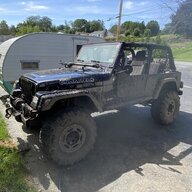
exactly, and of course it didn't stop with the lockers, a whole lot of other bs that fits the same mold is bolted under there too. I got way too excited way too fast after one day on the trails... Judging by today's prices for all this stuff it's a substantially heftier commitment too so it's best to know what you're getting into when jumping down the rabbit hole.

As for snow & other automatic locker issues, at least in my case it wouldn't be an issue as it's never seen snow/ice, hasn't even been in 4WD since 2020 so the front wouldn't be an issue under any circumstances, she only comes out on bright sunny dry days.

This reminds me, I've got a $1,200 Warn Zeon bolted to a few hundred bucks worth of Motobilt bumper & all the necessary accoutrements currently holding down a few ceramic tiles in a closet :ROFLMAO:
 
...or a lunchbox in the front while in 4WD in snowy conditions? I'd gladly pay extra to not deal with that.
I have yet (besides what I read) been able to have any issues driving in the snow with a lunchbox or Detroit in the front axle. My YJ I drove many winter in 4wdH with a front Detroit and either lunchbox or limited slip in the rear.
So far that adds up to 4 cents
🇺🇸
 
I have yet (besides what I read) been able to have any issues driving in the snow with a lunchbox or Detroit in the front axle. My YJ I drove many winter in 4wdH with a front Detroit and either lunchbox or limited slip in the rear.
So far that adds up to 4 cents
🇺🇸

Do you find that if you slip sideways the lockers let you give it gas to straighen out where open doesn't?
 
Do you find that if you slip sideways the lockers let you give it gas to straighen out where open doesn't?

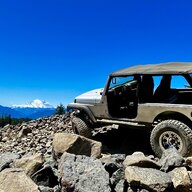
In theory that seems correct but it real life I honestly don’t think there’s a noticeable difference in real snow or ice. When there is low traction you either slow down to gain traction or speed up and slide there. But i think snow is east to drive in. It’s traffic that’s dangerous 😉

 
  • Like
Reactions: Rickyd and JMT
In theory that seems correct but it real life I honestly don’t think there’s a noticeable difference in real snow or ice. When there is low traction you either slow down to gain traction or speed up and slide there. But i think snow is east to drive in. It’s traffic that’s dangerous 😉

I agree. Lunchbox in snow and ice for 5- winters. Just take corners slow and keep going. I think Jerry B would have a heart attack right now, but I don’t think he ever drove in the snow or ice with a lunchbox. If he did he didn’t do it enough to learn their manners. It’s like anything. You figure it out.
 
  • Like
Reactions: Zorba and Weasellee
In theory that seems correct but it real life I honestly don’t think there’s a noticeable difference in real snow or ice. When there is low traction you either slow down to gain traction or speed up and slide there. But i think snow is east to drive in. It’s traffic that’s dangerous 😉

I was thinking without needing to hit switches and buttons some application of the throttle might help pull through an off camber slip. At least it did when I had a lunchbox in the back of a ranger.but I don't get much snow and ice unless i go looking for it.
I hear you though.if you're sliding too much it probably means slowing down is called for
 
  • Like
Reactions: Weasellee
Selectables are amazing, in part, because they don’t exist unless you want them to.

I wouldn’t want a Detroit or any lunchbox locker in a vehicle that wasn’t dedicated for Offroad use. Even then, I’d rather pay for selectables so I’m not always locked in 4WD.

An automatic locker in the rear is not the devil :D I have several hundred thousand street miles running rear Detroits in many things and wouldnt have it any other way. And selectable in the front to not kill turning radius.

I question anyone that would choose run an auto locker in the front of anything. That is truly terrible.
 
An automatic locker in the rear is not the devil :D I have several hundred thousand street miles running rear Detroits in many things and wouldnt have it any other way. And selectable in the front to not kill turning radius.

I question anyone that would choose run an auto locker in the front of anything. That is truly terrible.

Don't question tj wisdom... as far as these guys are concerned you run an autolocker in the front rather than the rear.
 
I question anyone that would choose run an auto locker in the front of anything. That is truly terrible.

But why. John Currie runs a Detroit in front and a selectable in the rear in all his builds. It works most excellent. Last time in the trail w my LJ it was lunchbox front and limited slip rear. A front Detroit or lunchbox is just fine up front. I know from experience.
🇺🇸
 
  • Like
Reactions: JMT and L J
Novak Conversions Jeep Wrangler TJ radiator