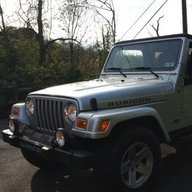
Chrome is a great way to start some nice galvanic corrosion here in the winter. The chrome won't rust, but everything connected to it will


Dammit! And I just dropped my frame off at the plater's, too!Chrome is a great way to start some nice galvanic corrosion here in the winter. The chrome won't rust, but everything connected to it will


Since it appears that I will still be welcome I will send a picture after I have installed it. Maybe a week. Speaking of waiting and of chrome I put in an order in on a 2020 car that I should receive this November or December that the only chrome it has is the tail pipes. But I don't think I will have a problem adjusting to it.


 )
)
Generally the OEM manufacturers find a way to electrically isolate the chrome from the steel. I imagine that's typically done with paper, tape, rubber, plastic fasteners, etc.Dammit! And I just dropped my frame off at the plater's, too!
So, seriously, is that a concern? I don't even know how those things are held on. Would there be a way to add a protective coating between the factory grill's paint and the chrome overlay's backside? Or is the chrome shell held on with adhesive, or something, that wouldn't adhere to whatever you added in between?
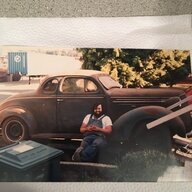
'36 Dodge. Like my hair color, it's long gone!Hey @Squatch (in keeping with the master detailer ) is that a 36 Chev or Dodge in your profile....Add some spats and it would make a smooth looking tail-dragger.
*EDIT and a chrome grill ( Phew !! I managed to tie in this message with the thread
Thank you for such a detailed reply. There are many things stated that I never realized. The one that really jumps out at me is regarding the use of stainless fasteners. I never stopped to consider that while the fastener might never corrode, the material around it does at an accelerated rate. Wow!Generally the OEM manufacturers find a way to electrically isolate the chrome from the steel. I imagine that's typically done with paper, tape, rubber, plastic fasteners, etc.
If it's hooked up to a galvanized piece of steel, the steel will still be protected by the galvanization, but the zinc coating will be eroded more quickly.
Stainless steels are also great at accelerating corrosion on carbon steel and aluminum. The stainless itself is protected, but it creates a battery with the exposed steel and aluminum and creates a galvanic cell.
The rate of corrosion also depends on the exposed surface areas of each component. So stainless fasteners in aluminum may accelerate the corrosion of the aluminum, but if the surface area ratio of stainless to aluminum is large enough, the effect won't be noticeable. But if you used carbon steel bolts in a stainless base, they would rust incredibly fast and ultimately fail.
Carbon steel and aluminum are generally close enough on the galvanic series that they don't create significant galvanic corrosion except in the most extreme environments.
The reason galvanization works is because the zinc coating is sacrificial. It creates a galvanic cell with the steel if both are exposed, and the zinc corrodes and flakes off while the steel does nothing.
You'll see the sane thing on metal boats, where a bunch of zinc anodes are bolted to the hull below the waterline. If any paint flakes off the steel, a galvanic cell is created between the steel and the zinc, and the zinc quickly corrodes while the steel is mostly untouched.

It will be far more durable than paint....I know it not desired with Jeep owners and that is why I ask. I am just old and enjoy chrome.

2020 Corvette?Since it appears that I will still be welcome I will send a picture after I have installed it. Maybe a week. Speaking of waiting and of chrome I put in an order in on a 2020 car that I should receive this November or December that the only chrome it has is the tail pipes. But I don't think I will have a problem adjusting to it.
Great idea. An all chrome TJ would be fantastic.It will be far more durable than paint....
Correct. How did you know? Is it the only car you can buy and not get?2020 Corvette?
I see people on a Corvette forum ( I have an 81) saying they are finally getting theirs. What color and specs did you go with?Correct. How did you know? Is it the only car you can buy and not get?
The easy way to compare the compatibility of metals is with a chart called the Galvanic Series:Thank you for such a detailed reply. There are many things stated that I never realized. The one that really jumps out at me is regarding the use of stainless fasteners. I never stopped to consider that while the fastener might never corrode, the material around it does at an accelerated rate. Wow!
Wow! Sounds like politics!Metals on the Anodic side (top end) are attacked by metals on the Cathodic (bottom) side. The greater the difference, the greater the rate of attack.

very nice it would match my TJ. I would love a convertible 2020 although the hard top ones look like a cool Hot Wheel! Congrats.Orange and Ito many specs. A base unit would be great but but it is impossible not to order so many extras with so many great extras.
Again, thank you! It's way beyond anything I was aware of.The easy way to compare the compatibility of metals is with a chart called the Galvanic Series:
View attachment 191562
Metals on the Anodic side (top end) are attacked by metals on the Cathodic (bottom) side. The greater the difference, the greater the rate of attack. So aluminum will cause a small amount of corrosion on plain steel, but not enough to notice in most cases. But stainless steel will cause significant attack on carbon steel.
In order for galvanic corrosion to occur, a circuit must be completed. Half of this circuit is a direct electrical connection between the two materials, such as a bolted connection. The other half is made up of the electrolyte, or the (typically) liquid (or gas) reacting with the metals.
If there is no connection or no electrolyte, there is no corrosion. A boat is immersed in an electrolyte, so rapid corrosion can occur. A car in the desert is exposed to very little electrolyte, and is not generally subject to significant galvanic corrosion.
But it doesn't just have to be immersed in an electrolyte: it can occur at small scales, particularly when salt water splashes in your car off the road. The entire vehicle isn't immersed in a continuous electrolyte, but little spots have created independent galvanic cells. You can even get galvanic corrosion in dry air, particularly salty air. (Think of an old car rusting away near a beach.)
That mini-cell versus immersed cell is why cathodic protection isn't used on cars - you would have to place a zinc every inch or so to be effective. But you can dip the metal - via galvanization and get uniform coverage of the anode. Meanwhile, the guy with the boat can just stick a few zincs on the back and call it done.
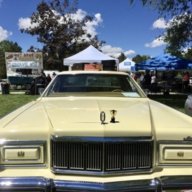
I always loved the looks of chrome until I bought a Harley with LOTS of chrome. Then I got really tired of polishing it constantly. Never want chrome on a vehicle again. No problems with the looks, its the upkeep that I hate.
View attachment 191552
Generally the OEM manufacturers find a way to electrically isolate the chrome from the steel. I imagine that's typically done with paper, tape, rubber, plastic fasteners, etc.
If it's hooked up to a galvanized piece of steel, the steel will still be protected by the galvanization, but the zinc coating will be eroded more quickly.
Stainless steels are also great at accelerating corrosion on carbon steel and aluminum. The stainless itself is protected, but it creates a battery with the exposed steel and aluminum and creates a galvanic cell.
The rate of corrosion also depends on the exposed surface areas of each component. So stainless fasteners in aluminum may accelerate the corrosion of the aluminum, but if the surface area ratio of stainless to aluminum is small enough, the effect won't be noticeable. But if you used carbon steel bolts in a stainless base, they would rust incredibly fast and ultimately fail.
Carbon steel and aluminum are generally close enough on the galvanic series that they don't create significant galvanic corrosion except in the most extreme environments.
The reason galvanization works is because the zinc coating is sacrificial. It creates a galvanic cell with the steel if both are exposed, and the zinc corrodes and flakes off while the steel does nothing.
You'll see the sane thing on metal boats, where a bunch of zinc anodes are bolted to the hull below the waterline. If any paint flakes off the steel, a galvanic cell is created between the steel and the zinc, and the zinc quickly corrodes while the steel is mostly untouched.


