I have a FSM for the Jeep but I'm not able to find a "troubleshooting tree" for testing of TCCS. Does anyone have any idea if one exists, I'm sure that one does, and would be willing to share? I'm getting a P0743 code on my TJ and it's driving me nuts. Thank you.

You are using an out of date browser. It may not display this or other websites correctly.
You should upgrade or use an alternative browser.
You should upgrade or use an alternative browser.

TCCS testing procedures
- Thread starter Blue 2000 TJ
- Start date


I have a FSM for the Jeep but I'm not able to find a "troubleshooting tree" for testing of TCCS. Does anyone have any idea if one exists, I'm sure that one does, and would be willing to share? I'm getting a P0743 code on my TJ and it's driving me nuts. Thank you.
Check the Transmission Fluid: First, ensure that the fluid level is correct and that it’s in good condition—dirty or burnt fluid can cause issues with the TCC.
Inspect the Wiring and Connectors: Examine the wiring harness leading to the TCC solenoid. Look for any signs of damage, such as frayed wires or corroded connectors. Poor connections can lead to erroneous codes.
Test the Solenoid: If everything looks good visually, you can test the solenoid itself. Disconnect the wiring harness from the solenoid and use a multimeter to check for continuity. If there's an open circuit, the solenoid is likely faulty and needs replacing.
Check for Other Codes: Sometimes, other codes can lead to TCC issues. Make sure to scan for any additional DTCs and address those.
Look Into the PCM: If all else fails, it might be worthwhile to check the PCM for any faults, as it controls the TCC operation. @Wranglerfix can test it for you if you reach out.
Good luck, and I hope this helps to get you on the right track!

I have a FSM for the Jeep but I'm not able to find a "troubleshooting tree" for testing of TCCS. Does anyone have any idea if one exists, I'm sure that one does, and would be willing to share? I'm getting a P0743 code on my TJ and it's driving me nuts. Thank you.
What year is your Jeep?
Thank you for your input. My 2000 TJ has a new reman motor, rebuilt transmission and new solenoid, and Wrangler Fix PCM. The wiring was checked via a scan tool being able to engage the solenoid which stalled the idling motor. Thoughts and further suggestions?

if the scan tool was able to engage the TCC, then the signal path to the solenoid is ok, since it activates by the PCM switched ground. If it stalled the engine it proves the lockup works.
That's basically the whole works, I'm not sure why it would throw a code here.
But I also did not know you could trigger the TCC lockup from the OBDII port. I would like to know more about that.
That's basically the whole works, I'm not sure why it would throw a code here.
But I also did not know you could trigger the TCC lockup from the OBDII port. I would like to know more about that.
if the scan tool was able to engage the TCC, then the signal path to the solenoid is ok, since it activates by the PCM switched ground. If it stalled the engine it proves the lockup works.
That's basically the whole works, I'm not sure why it would throw a code here.
But I also did not know you could trigger the TCC lockup from the OBDII port. I would like to know more about that.
Thank you for the confirmation of the results to what we've done so far. I have an appointment with the mechanic helping on the wiring side of things Thursday so I'll get some more info on how it was done, locking up the convertor via scanner. I'll get back with you. I'm just wondering if the connector plug on transmission was turned around if that would change the wiring from the connector to the solenoid thus correcting a bare wire inside the case. I stumbled across a post somewhere stating the person did that and it solved his similar problem. Does that make any sense to anyone?
The TCC plug on the transmission is (I beleive) the only non-keyed plug on the TJ; it will fit & work in either direction. The solenoid itself doesn't have a polarity so the plug orientation doesn't matter. One side is 12V through fuse #11 (pretty sure) and the other side is a switched ground from the PCM. As long as the solenoid sees a 12V drop across it, it will fire.
Interestingly, that flexibility can allow it to work one way and not another if you've got the right type of wiring issue. I had a problem where I had some shorts in my harness and one orientation would work fine while the other would blow a fuse. Turns out one wire was worn bare and was touching the transmission case, so when the PCM would turn on it would short out and blow the fuse. Flipped the other way, the short was just a new ground path.
Interestingly, that flexibility can allow it to work one way and not another if you've got the right type of wiring issue. I had a problem where I had some shorts in my harness and one orientation would work fine while the other would blow a fuse. Turns out one wire was worn bare and was touching the transmission case, so when the PCM would turn on it would short out and blow the fuse. Flipped the other way, the short was just a new ground path.

might've been mine, lol.I stumbled across a post somewhere stating the person did that and it solved his similar problem.
might've been mine, lol.
I thought it may have been one of yours. Goes to show you that when you share your wisdom and experiences it will bear fruit one day. Thank you sir for all your sharing and helping of others in their pursuit of working on their vehicles. GOOD JOB.
usually it's just a live look at me imitating a story I heard once involving a monkey and a football.

usually it's just a live look at me imitating a story I heard once involving a monkey and a football.
I sometime practice that same thing. Another question: If when the solenoid was changed and the wires were cut to allow for a different plug and they were not put back correctly orientated + and - would that allow for it solenoid to work but trip P0743 code?
The wiring on the inside of the transmission uses one of two different style connectors, neither of which has a polarity. One style of the inside connectors is literally the exact same thing as the outside connector. TL;DR - Solenoid gonna solenoid; it cares not for how you connect it up. Now if there is a short or something somewhere, then the polarity can sort of overcome it, potentially.
Are you referring to Howard Cosell and Alvin Garrett?usually it's just a live look at me imitating a story I heard once involving a monkey and a football.
Are you referring to Howard Cosell and Alvin Garrett?
lol, no. Referring to the phrase "looks like a monkey fucking a football" to I suppose describe anything where the (noun) doesn't really have any clue how to (verb).
if the scan tool was able to engage the TCC, then the signal path to the solenoid is ok, since it activates by the PCM switched ground. If it stalled the engine it proves the lockup works.
That's basically the whole works, I'm not sure why it would throw a code here.
But I also did not know you could trigger the TCC lockup from the OBDII port. I would like to know more about that.
Ok went to my appointment today spoke with the tech who showed me the scanner, Autel, they use and I saw and heard the TCCS engage. Apparently his scanner is able to real time energize different sensors etc. Pretty cool option.
That's impressive. Also impressive that you heard it engage. It's a tiny click, on top of the valve body. They would have had to have heard it through the pan, through the fluid, through the valve body. MAYBE if you used a stethoscope. But you said you saw it engage, so I'm not sure what that even means. If you've seen the parts in question, you'll understand why I'm skeptical of the claims.
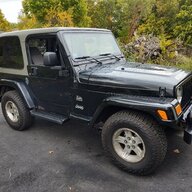
Ok went to my appointment today spoke with the tech who showed me the scanner, Autel, they use and I saw and heard the TCCS engage. Apparently his scanner is able to real time energize different sensors etc. Pretty cool option.
I have an Autel scanner, i'm definitely going to look for this menu.
That's impressive. Also impressive that you heard it engage. It's a tiny click, on top of the valve body. They would have had to have heard it through the pan, through the fluid, through the valve body. MAYBE if you used a stethoscope. But you said you saw it engage, so I'm not sure what that even means. If you've seen the parts in question, you'll understand why I'm skeptical of the claims.
Yeah, I agree with this. Now, if it stalled the jeep, I get that as confirmation that it engaged.
Similar threads

- Replies
- 1
- Views
- 135


- Replies
- 1
- Views
- 342

- Replies
- 1
- Views
- 443


- Replies
- 5
- Views
- 836

- Replies
- 2
- Views
- 276