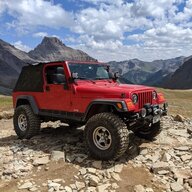
Morning all. I'm seeing more and more radiator-related threads in TJ forums and groups. TMI for a Saturday morning but what the hell:
I recently relocated from 19 years in the extreme tropical heat of South Florida to the dry heat of the high desert in New Mexico;
I've been curious to understand the issues and stresses on the TJ's cooling system between sea level vs 5300' — FWIW (analyzed by the latest version of ChatGPT 5 - I'm 71, old school, trust but with a future-looking eye towards technology's tools):
1. Air Density & Cooling Efficiency
Sea Level:
- Air is denser, meaning more molecules per cubic foot are flowing through your radiator.
- This higher density improves heat transfer efficiency, so the radiator can shed heat faster — if the ambient temperature doesn’t overwhelm it.
High Altitude:
- Air is thinner, with ~17% less oxygen and mass per volume compared to sea level.
- Thinner air removes heat less effectively, so the radiator loses some cooling power even if the air temperature is lower than Miami’s.
- Fans have to work harder to move enough mass of air across the fins.
2. Boiling Point of Coolant
- At higher altitudes, atmospheric pressure is lower, which lowers the boiling point of water-based fluids.
Example: At sea level, water boils at 212 °F (100 °C); at 5,300 ft it’s closer to ~202 °F (94.5 °C).
- In a sealed, pressurized cooling system, this effect is partially offset by the radiator cap’s pressure rating (usually 13–16 psi), but you still lose a small margin before boil-over.
- This means in Albuquerque, your cooling system has less headroom before coolant starts flashing to steam in hot spots — particularly around the cylinder head.
3. Engine Load & Air Intake Temperature
Miami:
- High humidity and high ambient temperature stress the radiator because incoming air is already heat-saturated.
- Humidity slightly reduces combustion efficiency but doesn’t hurt cooling directly.
Albuquerque:
- Dry air = better evaporative heat transfer in the radiator, if air density were the same. But the reduced density cancels out much of this gain.
- Thin air also means less engine power output for naturally aspirated engines, which slightly reduces heat generation — but turbocharged or supercharged engines can run hotter because boost compensates for thin air.
4. Real-World Stress Patterns
Miami summer (95–100 °F + high humidity):
- Radiator efficiency is capped by already-hot, moisture-laden air.
- Heat soak is a bigger issue in stop-and-go traffic because ambient heat plus lack of airflow makes the cooling system run at its limits for long stretches.
- Electric fans cycle longer; A/C condenser heat adds even more load.
Albuquerque summer (90–100 °F, dry):
- Even in dry heat, radiator performance is reduced by thin air at altitude.
- The real danger here is climbing long grades or towing, because less air density + lower coolant boiling point means you can spike temps faster than expected.
- Recovery from overheating can take longer because each pass of air removes less heat.
Key Stresses & Potential Issues - sea level vs elevation
| Factor | Miami | Albuquerque
| ————————————- | ———————————————- | ——————————————————
| Air density: | High (better cooling) | Lower (less effective cooling)
| Coolant boiling point: | Higher (more margin) | Lower (less margin before boil-over)
| Ambient temp effect: | High temp + humidity traps heat | High temp + thin air slows cooling
| Traffic heat soak: | Major problem | Less severe unless hot day + uphill
| Grade climbing/towing: | Easier on cooling | Much harder on cooling
I recently relocated from 19 years in the extreme tropical heat of South Florida to the dry heat of the high desert in New Mexico;
I've been curious to understand the issues and stresses on the TJ's cooling system between sea level vs 5300' — FWIW (analyzed by the latest version of ChatGPT 5 - I'm 71, old school, trust but with a future-looking eye towards technology's tools):
1. Air Density & Cooling Efficiency
Sea Level:
- Air is denser, meaning more molecules per cubic foot are flowing through your radiator.
- This higher density improves heat transfer efficiency, so the radiator can shed heat faster — if the ambient temperature doesn’t overwhelm it.
High Altitude:
- Air is thinner, with ~17% less oxygen and mass per volume compared to sea level.
- Thinner air removes heat less effectively, so the radiator loses some cooling power even if the air temperature is lower than Miami’s.
- Fans have to work harder to move enough mass of air across the fins.
2. Boiling Point of Coolant
- At higher altitudes, atmospheric pressure is lower, which lowers the boiling point of water-based fluids.
Example: At sea level, water boils at 212 °F (100 °C); at 5,300 ft it’s closer to ~202 °F (94.5 °C).
- In a sealed, pressurized cooling system, this effect is partially offset by the radiator cap’s pressure rating (usually 13–16 psi), but you still lose a small margin before boil-over.
- This means in Albuquerque, your cooling system has less headroom before coolant starts flashing to steam in hot spots — particularly around the cylinder head.
3. Engine Load & Air Intake Temperature
Miami:
- High humidity and high ambient temperature stress the radiator because incoming air is already heat-saturated.
- Humidity slightly reduces combustion efficiency but doesn’t hurt cooling directly.
Albuquerque:
- Dry air = better evaporative heat transfer in the radiator, if air density were the same. But the reduced density cancels out much of this gain.
- Thin air also means less engine power output for naturally aspirated engines, which slightly reduces heat generation — but turbocharged or supercharged engines can run hotter because boost compensates for thin air.
4. Real-World Stress Patterns
Miami summer (95–100 °F + high humidity):
- Radiator efficiency is capped by already-hot, moisture-laden air.
- Heat soak is a bigger issue in stop-and-go traffic because ambient heat plus lack of airflow makes the cooling system run at its limits for long stretches.
- Electric fans cycle longer; A/C condenser heat adds even more load.
Albuquerque summer (90–100 °F, dry):
- Even in dry heat, radiator performance is reduced by thin air at altitude.
- The real danger here is climbing long grades or towing, because less air density + lower coolant boiling point means you can spike temps faster than expected.
- Recovery from overheating can take longer because each pass of air removes less heat.
Key Stresses & Potential Issues - sea level vs elevation
| Factor | Miami | Albuquerque
| ————————————- | ———————————————- | ——————————————————
| Air density: | High (better cooling) | Lower (less effective cooling)
| Coolant boiling point: | Higher (more margin) | Lower (less margin before boil-over)
| Ambient temp effect: | High temp + humidity traps heat | High temp + thin air slows cooling
| Traffic heat soak: | Major problem | Less severe unless hot day + uphill
| Grade climbing/towing: | Easier on cooling | Much harder on cooling