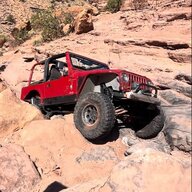
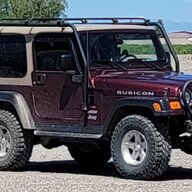
Technical discussion. MCs new steering. My currie drag link and BMB tierod are not going anywhere.
https://metalcloak.com/blog/metalcloak-vs-currie
This article breaks down the differences between three steering setups commonly found on Jeep TJs and LJs: the stock Y-link steering, the Currie/RockJock Currectlync (often incorrectly called CorrectLink), and the MetalCloak Heavy Duty (HD) Steering System. It walks through how each design behaves as you lift your Jeep and cycle the suspension, why toe change matters, and how the T-link approach solves problems that become noticeable on the trail.
When you're ready to upgrade, choose a system that addresses both durability and dynamic behavior. It's your rig, only better.
Learn more about the Metalcloak Heavy Duty Steering System for the TJ here: https://metalcloak.com/7694-tj-lj-wrangler-metalcloak-heavy-duty-steering-system.html
https://metalcloak.com/blog/metalcloak-vs-currie
Introduction — a closer look from MetalCloak
This article breaks down the differences between three steering setups commonly found on Jeep TJs and LJs: the stock Y-link steering, the Currie/RockJock Currectlync (often incorrectly called CorrectLink), and the MetalCloak Heavy Duty (HD) Steering System. It walks through how each design behaves as you lift your Jeep and cycle the suspension, why toe change matters, and how the T-link approach solves problems that become noticeable on the trail.
Why steering upgrades matter
Steering isn't just about strength — it's about predictable handling, consistent toe, and minimizing unwanted feedback as the suspension moves. When you lift your Jeep and add larger tires, small design issues in a steering system can become amplified. That means wandering, inconsistent steering feel, and an uncomfortable driving experience both on- and off-road.Understanding the two basic designs: Y-Link vs. T-Link
There are two common approaches to link steering systems used on Jeep platforms:- Y-Link (stock and many upgraded factory-style systems) — The tie rod is split and attaches left and right to the knuckles. One tie rod end moves up and down as the suspension cycles, which causes the tie rod to change angle and the wheels to move in and out (toe change).
- T-Link (MetalCloak HD) — Uses a single-piece true link (one continuous tie rod) across the axle, with the drag link attached separately. This design decouples the tie rod motion from the drag link, eliminating toe changes caused by suspension movement.
How the stock Y-link performs
The stock configuration is a classic Y-link design. At stock ride height with small tires, the movement is minimal and not terribly noticeable. But once you lift the vehicle, fit larger wheels and tires, and start cycling the suspension, you see significant up-and-down movement at the tie rod end that changes toe. The result is steering that can feel vague, nervous, and inconsistent as the suspension articulates.What Currie’s Currectlync gives you
The Currie/RockJock Currectlync system is a notable upgrade over the tiny stock components. It uses larger-diameter components than OE and strengthens the overall assembly, but it remains a Y-link design. That means while you gain strength, you still have the same fundamental issue: the tie rod still moves up and down with suspension travel and still produces toe change and negative feedback to the steering.Why we built the MetalCloak Heavy Duty Steering System
We designed the MetalCloak HD steering system to address both strength and dynamic performance. Instead of a Y-link, our T-link system uses a true link tie rod — a single-piece tie rod that runs all the way across the axle — and the drag link is attached to it independently. The benefits are real and measurable when you cycle the suspension:- Zero toe change through the suspension cycle — the knuckle ends do not move inboard/outboard as the suspension articulates.
- No negative input to the steering from suspension movement — your steering feel remains consistent and predictable.
- Anti-flop drag link ends — virtually eliminates drag link flop, a common issue on lifted Jeeps.
Key features of the MetalCloak HD steering system
When you compare components, the MetalCloak HD system brings a full package focused on performance and durability:- True T-link design with a true link tie rod — separates the tie rod from the drag link for zero negative feedback.
- Massive diameter tubing for ultimate strength and resistance to bending.
- One-ton, high-clearance tie rod ends — built to handle the load and obstacles you encounter off-road.
- Anti-flop drag link ends — reduce or eliminate drag link flop when you overshoot a bump or hit a rock.
- Double-adjustable — easy to set alignment (toe and drag link correction) so you can dial your steering precisely.
- Grease boots and zerk fittings — serviceable articulation points for long life.
- Gold zinc chromate finish — looks great and resists corrosion.
Real-world effect: what you'll feel on the trail
Here’s the practical outcome you’ll notice when you move from a Y-link setup to a MetalCloak T-link:- Smoother steering through articulation: No sudden toe changes as wheels move; steering tracks cleaner over rough terrain.
- Reduced steering wander: Less constant correction needed during off-camber travel or when one wheel cycles up or down.
- Stronger hardware: Larger tubing and one-ton ends reduce the risk of component deformation or breakage when you hit something hard.
Which steering system should you choose?
When choosing an upgrade you have options:- Go slightly larger than factory — minimal improvement; still a Y-link.
- Go with a reinforced Y-link like Currie’s Currectlync — stronger but still retains the Y-link behavior (toe change with suspension travel).
- Choose a MetalCloak Heavy Duty T-link — the strongest, most stable option that eliminates toe change, minimizes flop, and gives you a dialed-in steering feel.
"Why would you choose anything else than the MetalCloak heavy duty steering system?"
Compatibility and availability
The MetalCloak Heavy Duty steering system is available now for TJ and LJ Wranglers and also fits XJ, ZJ, and MJ platforms. It’s a direct upgrade designed for lifted and trail-focused Jeeps, delivered with serviceability and trail durability in mind.Conclusion
Upgrading your steering system is about more than brute strength — it’s about maintaining consistent steering geometry through suspension travel. Stock Y-link systems are fine at OEM heights, and beefed-up Y-links like Currie’s offer added strength. But if you want true off-road performance with no toe change, reduced drag link flop, and components built to last, a T-link design like the MetalCloak HD steering system is the clear choice.When you're ready to upgrade, choose a system that addresses both durability and dynamic behavior. It's your rig, only better.
Learn more about the Metalcloak Heavy Duty Steering System for the TJ here: https://metalcloak.com/7694-tj-lj-wrangler-metalcloak-heavy-duty-steering-system.html





 Talk amongst yourselves.