Hi all,
I am a mechanic who specializes in European vehicles, but many of my customers also drive Jeeps, so I often service and repair them. In fact, last summer/fall I did much of the mechanical work on a frame-off restoration of an '83 CJ-7. i appreciate the WranglerTJForum and in the past I have made good use of information posted by the knowledgeable members here. This is my first post, however, because I've got a mystery on my hands. I'm sure it's something simple, but I haven't figured it out and could use your help. I apologize in advance for the length of this post, but I hope to provide as complete picture as I can and to save others from suggesting tests I've already performed.
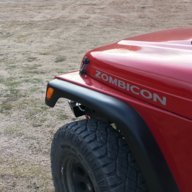
This 97 Wrangler Sport Rubicon 4.0L Auto 4WD with 220K miles was brought to me with a long list of problems, mostly of the "inconvenient" sort, such as doors that were difficult to open, turn signals that wouldn't cancel, and poor heat in the passenger cabin. The battery was also suspect, so I started by testing it with my Midtronics analyzer which found its charge to be low. The cable terminals were corroded so I cleaned them, reconnected the battery and connected a charger overnight. Testing the battery again, the analyzer found it could only supply about half of its rated CCA, so I marked it for replacement.
I moved on to diagnosing the poor heat in the passenger cabin. I drove the vehicle until the engine reached full operating temperature, then tested the heating system. The blower motor ran on all three speeds, though air flow out of the vents was not exceptional. As far as I could tell, the blend doors seemed to change position correctly, but the air coming from the vents was lukewarm at best.
I checked the blend door under the glovebox and it changed position as the temperature control slider was moved end to end. I moved the lever by hand, and the resistance felt seemed to indicate that the lever was intact and connected to the blend door and moving properly.
I removed the trim and crash plate below the steering wheel to check the vacuum actuators on the left side, but could not see them due to a rats nest of wiring, much of which appears to be due to aftermarket alarm and stereo installations. So I laid on my back over the door sill and slid under the dash to check the actuators. Moving the vent control slider caused all three actuators to operate in turn, so I disconnected each actuator from its lever. I checked for broken levers but all seemed intact and firmly connected to their respective blend doors. I checked this by running the engine and blower fan and confirming that when I moved each lever, the air flow was redirected accordingly. All seemed well so I reconnected the actuators.
I now turned my attention to the heater core. With the engine running, I felt the inlet and outlet heater hoses. The inlet hose was hot, but the outlet hose was barely lukewarm. So I disconnected the heater hoses at the thermostat housing, inserted the inlet hose into a catch jug and used compressed air to blow the coolant out of the core. The "coolant" that emerged was thick, dark and sludgelike, so the next step was to clean and backflush the core. I started by running distilled water through the core to flush out as much of the sludge as I could, then I filled the core with CLR and tied the hose ends up to the hood to let it soak for an hour or more.
I used that time to remove the battery and take it with me to purchase a new one. When I got back to the shop, I cleaned the battery pan and sprayed some rust converter on the corrosion, cleaned the battery mounting J-bolts and nuts, applied rubber protectant to the coated top bar and installed the new battery, an Exide NASCAR Extreme rated at 800 CCA (the Exide battery it replaced was rated at 650 CCA).
I completed the heater core flush with distilled water and compressed air until the water that emerged was clean, then reconnected the heater hoses. In the process, I spilled a little distilled water here and there on the engine, mostly on the front and right side of the engine, but no great quantity. I checked the coolant level in the radiator and reservoir but it hadn't dropped, so I proceeded to start the engine so I could top up the coolant and warm it up to check the heat.
But the engine cranked and cranked, but would not start.
I checked the battery connections and voltage, which was 12.8V. The engine cranked like a champ, so I assumed the new battery was fine and moved on.
I checked all the electrical connectors in the engine bay for any signs of wetness, but all appeared dry. I removed the distributor cap and it was clean and dry inside. The electrical connector for the coolant temperature sensor was affixed to the sensor with black electrical tape because the latch was broken. I removed the tape, cleaned the connector, reconnected it to the sensor and secured it with two small zip ties.
I turned the key ON to confirm that the Check Engine Light illuminated briefly, then extinguished, and it did so, presumably indicating that the PCM is functioning at least to that degree.
I checked for a security lamp on the instrument cluster but do not see one. The key has a small plastic head and does not appear to be a transponder type.
I watched the tachometer while cranking and it read 0 rpm. I don't know if that is normal in this model but I made a note to consider the crankshaft position sensor.
I checked for vacuum leaks and noticed the crankcase breather hose elbow that connects the valve cover to the air intake pipe was cracked at both ends. I found a right-angle hose of similar I.D. in my pile, cut it to length and installed it. Still cranked but wouldn't start.
I tried starting with the transmission in Neutral in case a Park/Neutral switch was malfunctioning but no go.
I spritzed some starting fluid into the throttle body and cranked it but still no start.
I did a visual check of the rats nest of wiring under the steering wheel in case I had disturbed something, but could not see anything I might have disconnected.
I pulled the king lead off of the distributor, connected a spark tester, connected test leads to the starter terminals, turned the key to ON, and while watching the spark tester I touched the ends of the test leads together, cranking the engine. Spark was present and seemed "reasonably" strong, jumping the large gap in my spark tester. This seemed to tell me that the crankshaft and camshaft position sensors were working.
I connected a gauge to the Schrader valve on the fuel rail, turned the key ON without starting the engine, and checked the pressure at the gauge, which read 42 psi. I cleared the gauge and cranked the engine. Fuel pressure while cranking was 40 psi.
I checked the air filter, which appeared new.
I checked all the fuses in the fuse boxes in the engine bay and behind the glove box, but all were intact and tested good with a test light.
I swapped the Horn relay for the Automatic Shutdown Relay and cranked the engine, but still no go.
I pulled the cylinder 2 spark plug and it was corroded with electrodes worn to a huge gap. I marked the plugs for replacement and subsequently replaced them with matching Champions, along with new Belden plug wires.
So far no change.
I searched this forum for similar symptoms but the only threads I could find with a resolution came down to a bad crank sensor or a weak battery, but since I had spark I didn't think this condemned our CPS, and our battery was new and strong.
I used a noid light to test for plausible signal to the cylinder 1 fuel injector connector and it looked good.
I connected my Autel MaxiSys Elite scan tool using the adapter for older Chrysler products connected to the OBDII Data Link Connector and scanned for Diagnostic Trouble Codes. No codes were present, which isn't necessarily surprising given the recent battery disconnection. I checked Live Data and could see plausible voltages for most of the sensors, including the Throttle Position Sensor voltage, which swung higher as I depressed the accelerator pedal.
I checked Live Data while cranking and could see signals from the crankshaft and camshaft position sensors as well as the MAP.
The Autel noted two sensor items in red numbers: the Oil Pressure Sensor voltage reads 5 Volts when not cranking (according to the Autel it should read 0 - 4.98 V). However, while cranking, it reads just over 1V. Also, the transmission temperature sensor reads -40 degrees Fahrenheit, and it was probably about 70F in my shop.
Trying again to see if the engine might be flooded, I cranked it for an extended period with the accelerator pedal depressed to the floor. I noticed that the instrument cluster voltage meter would read around 11V for a few seconds, then fall to 9V and the "Check Gauges" lamp would illuminate. Thinking about voltage drop, I inspected the engine ground strap and noted that it was corroded at both ends. I removed it and cleaned the eyelet terminals on the strap as well as the screws, stud and nut, along with surface of the inner wheel well and coil mount bracket where the eyelet terminals mount. But still no start.
Still wondering about flooding I tried starting with the pedal to the floor a few more times, allowing the starter motor to cool down between tries, but no go.
Thinking about that rats nest of aftermarket wiring, I manipulated the nests on each side of the steering wheel while cranking the engine, to see if I could find an intermittent connection, but nothing made a difference.
Wondering about the possibility of bore wash, I checked the compression on cylinders 2, 3, 4 and 5, and it was around 115 psi in each cylinder. I added 10cc of engine oil to each of those cylinders before reinstalling the spark plugs just to see if it might help, but the engine still will not start.
Is it possible for a problem with the trans temp sensor to cause a cranks but won't start condition? This one reads -40F.
Is it possible I could have dripped distilled water/coolant onto something in the engine bay that is causing this issue? I've checked and cleaned most of the electrical connectors except the individual fuel injectors, the MAP sensor and TPS.
If the problem is in the rats nest of aftermarket wiring, what circuits in the steering column area could cause a cranks but won't start condition?
When I pulled the new plugs to check compression, they were wet with fuel, so perhaps the spark is weak or intermittent. Could I have damaged the coil by spilling some water or coolant on it? That is my next line of inquiry.
Is there a reset procedure required after battery replacement?
What have I forgotten?
Thank you for reading such a long post and thank you in advance for any suggestions.
Cheers,
Don
I am a mechanic who specializes in European vehicles, but many of my customers also drive Jeeps, so I often service and repair them. In fact, last summer/fall I did much of the mechanical work on a frame-off restoration of an '83 CJ-7. i appreciate the WranglerTJForum and in the past I have made good use of information posted by the knowledgeable members here. This is my first post, however, because I've got a mystery on my hands. I'm sure it's something simple, but I haven't figured it out and could use your help. I apologize in advance for the length of this post, but I hope to provide as complete picture as I can and to save others from suggesting tests I've already performed.
This 97 Wrangler Sport Rubicon 4.0L Auto 4WD with 220K miles was brought to me with a long list of problems, mostly of the "inconvenient" sort, such as doors that were difficult to open, turn signals that wouldn't cancel, and poor heat in the passenger cabin. The battery was also suspect, so I started by testing it with my Midtronics analyzer which found its charge to be low. The cable terminals were corroded so I cleaned them, reconnected the battery and connected a charger overnight. Testing the battery again, the analyzer found it could only supply about half of its rated CCA, so I marked it for replacement.
I moved on to diagnosing the poor heat in the passenger cabin. I drove the vehicle until the engine reached full operating temperature, then tested the heating system. The blower motor ran on all three speeds, though air flow out of the vents was not exceptional. As far as I could tell, the blend doors seemed to change position correctly, but the air coming from the vents was lukewarm at best.
I checked the blend door under the glovebox and it changed position as the temperature control slider was moved end to end. I moved the lever by hand, and the resistance felt seemed to indicate that the lever was intact and connected to the blend door and moving properly.
I removed the trim and crash plate below the steering wheel to check the vacuum actuators on the left side, but could not see them due to a rats nest of wiring, much of which appears to be due to aftermarket alarm and stereo installations. So I laid on my back over the door sill and slid under the dash to check the actuators. Moving the vent control slider caused all three actuators to operate in turn, so I disconnected each actuator from its lever. I checked for broken levers but all seemed intact and firmly connected to their respective blend doors. I checked this by running the engine and blower fan and confirming that when I moved each lever, the air flow was redirected accordingly. All seemed well so I reconnected the actuators.
I now turned my attention to the heater core. With the engine running, I felt the inlet and outlet heater hoses. The inlet hose was hot, but the outlet hose was barely lukewarm. So I disconnected the heater hoses at the thermostat housing, inserted the inlet hose into a catch jug and used compressed air to blow the coolant out of the core. The "coolant" that emerged was thick, dark and sludgelike, so the next step was to clean and backflush the core. I started by running distilled water through the core to flush out as much of the sludge as I could, then I filled the core with CLR and tied the hose ends up to the hood to let it soak for an hour or more.
I used that time to remove the battery and take it with me to purchase a new one. When I got back to the shop, I cleaned the battery pan and sprayed some rust converter on the corrosion, cleaned the battery mounting J-bolts and nuts, applied rubber protectant to the coated top bar and installed the new battery, an Exide NASCAR Extreme rated at 800 CCA (the Exide battery it replaced was rated at 650 CCA).
I completed the heater core flush with distilled water and compressed air until the water that emerged was clean, then reconnected the heater hoses. In the process, I spilled a little distilled water here and there on the engine, mostly on the front and right side of the engine, but no great quantity. I checked the coolant level in the radiator and reservoir but it hadn't dropped, so I proceeded to start the engine so I could top up the coolant and warm it up to check the heat.
But the engine cranked and cranked, but would not start.
I checked the battery connections and voltage, which was 12.8V. The engine cranked like a champ, so I assumed the new battery was fine and moved on.
I checked all the electrical connectors in the engine bay for any signs of wetness, but all appeared dry. I removed the distributor cap and it was clean and dry inside. The electrical connector for the coolant temperature sensor was affixed to the sensor with black electrical tape because the latch was broken. I removed the tape, cleaned the connector, reconnected it to the sensor and secured it with two small zip ties.
I turned the key ON to confirm that the Check Engine Light illuminated briefly, then extinguished, and it did so, presumably indicating that the PCM is functioning at least to that degree.
I checked for a security lamp on the instrument cluster but do not see one. The key has a small plastic head and does not appear to be a transponder type.
I watched the tachometer while cranking and it read 0 rpm. I don't know if that is normal in this model but I made a note to consider the crankshaft position sensor.
I checked for vacuum leaks and noticed the crankcase breather hose elbow that connects the valve cover to the air intake pipe was cracked at both ends. I found a right-angle hose of similar I.D. in my pile, cut it to length and installed it. Still cranked but wouldn't start.
I tried starting with the transmission in Neutral in case a Park/Neutral switch was malfunctioning but no go.
I spritzed some starting fluid into the throttle body and cranked it but still no start.
I did a visual check of the rats nest of wiring under the steering wheel in case I had disturbed something, but could not see anything I might have disconnected.
I pulled the king lead off of the distributor, connected a spark tester, connected test leads to the starter terminals, turned the key to ON, and while watching the spark tester I touched the ends of the test leads together, cranking the engine. Spark was present and seemed "reasonably" strong, jumping the large gap in my spark tester. This seemed to tell me that the crankshaft and camshaft position sensors were working.
I connected a gauge to the Schrader valve on the fuel rail, turned the key ON without starting the engine, and checked the pressure at the gauge, which read 42 psi. I cleared the gauge and cranked the engine. Fuel pressure while cranking was 40 psi.
I checked the air filter, which appeared new.
I checked all the fuses in the fuse boxes in the engine bay and behind the glove box, but all were intact and tested good with a test light.
I swapped the Horn relay for the Automatic Shutdown Relay and cranked the engine, but still no go.
I pulled the cylinder 2 spark plug and it was corroded with electrodes worn to a huge gap. I marked the plugs for replacement and subsequently replaced them with matching Champions, along with new Belden plug wires.
So far no change.
I searched this forum for similar symptoms but the only threads I could find with a resolution came down to a bad crank sensor or a weak battery, but since I had spark I didn't think this condemned our CPS, and our battery was new and strong.
I used a noid light to test for plausible signal to the cylinder 1 fuel injector connector and it looked good.
I connected my Autel MaxiSys Elite scan tool using the adapter for older Chrysler products connected to the OBDII Data Link Connector and scanned for Diagnostic Trouble Codes. No codes were present, which isn't necessarily surprising given the recent battery disconnection. I checked Live Data and could see plausible voltages for most of the sensors, including the Throttle Position Sensor voltage, which swung higher as I depressed the accelerator pedal.
I checked Live Data while cranking and could see signals from the crankshaft and camshaft position sensors as well as the MAP.
The Autel noted two sensor items in red numbers: the Oil Pressure Sensor voltage reads 5 Volts when not cranking (according to the Autel it should read 0 - 4.98 V). However, while cranking, it reads just over 1V. Also, the transmission temperature sensor reads -40 degrees Fahrenheit, and it was probably about 70F in my shop.
Trying again to see if the engine might be flooded, I cranked it for an extended period with the accelerator pedal depressed to the floor. I noticed that the instrument cluster voltage meter would read around 11V for a few seconds, then fall to 9V and the "Check Gauges" lamp would illuminate. Thinking about voltage drop, I inspected the engine ground strap and noted that it was corroded at both ends. I removed it and cleaned the eyelet terminals on the strap as well as the screws, stud and nut, along with surface of the inner wheel well and coil mount bracket where the eyelet terminals mount. But still no start.
Still wondering about flooding I tried starting with the pedal to the floor a few more times, allowing the starter motor to cool down between tries, but no go.
Thinking about that rats nest of aftermarket wiring, I manipulated the nests on each side of the steering wheel while cranking the engine, to see if I could find an intermittent connection, but nothing made a difference.
Wondering about the possibility of bore wash, I checked the compression on cylinders 2, 3, 4 and 5, and it was around 115 psi in each cylinder. I added 10cc of engine oil to each of those cylinders before reinstalling the spark plugs just to see if it might help, but the engine still will not start.
Is it possible for a problem with the trans temp sensor to cause a cranks but won't start condition? This one reads -40F.
Is it possible I could have dripped distilled water/coolant onto something in the engine bay that is causing this issue? I've checked and cleaned most of the electrical connectors except the individual fuel injectors, the MAP sensor and TPS.
If the problem is in the rats nest of aftermarket wiring, what circuits in the steering column area could cause a cranks but won't start condition?
When I pulled the new plugs to check compression, they were wet with fuel, so perhaps the spark is weak or intermittent. Could I have damaged the coil by spilling some water or coolant on it? That is my next line of inquiry.
Is there a reset procedure required after battery replacement?
What have I forgotten?
Thank you for reading such a long post and thank you in advance for any suggestions.
Cheers,
Don
Last edited: