
I am 2 of the 3! Guess which 2?!!
That went sideways in a hurry!!!


I am 2 of the 3! Guess which 2?!!

I am 2 of the 3! Guess which 2?!!

I am 2 of the 3! Guess which 2?!!


Close to it..... OK not that they were common in 1976-77 but this was a computer back then.
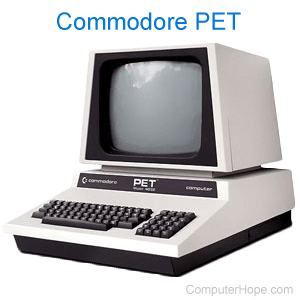
What were computers like in the 1970s?
At the beginning of the 1970s there were essentially two types of computers. There were room-sized mainframes, costing hundreds of thousands of dollars, that were built one at a time by companies such as IBM and CDC.
There also were smaller, cheaper, mass-produced minicomputers, costing tens of thousands of dollars, that were built by a handful of companies, such as Digital Equipment Corporation and Hewlett-Packard Company, for scientific laboratories and businesses.
Still, most people had no direct contact with either type of computer, and the machines were popularly viewed as impersonal giant brains that threatened to eliminate jobs through automation. The idea that anyone would have his or her own desktop computer was generally regarded as far-fetched. Nevertheless, with advances in integrated circuit technology, the necessary building blocks for desktop computing began to emerge in the early 1970s.

You’d have to be on some STROOONG stuff to move one of those by yourself…
Yea - those fucking "entertainment centers". Longer than a whore's dream, heavier than an elephant turd. Had to help lug a few of those damn things back in my TV repair days...
I had a 30" or 32" Sony Trinitron TV.
It had to weigh 150+.
It was still working great when I got rid of it.
The big tube tv’s that followed weren’t light either.