Hey Everybody,
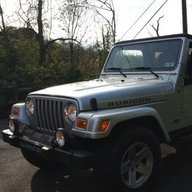
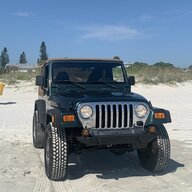
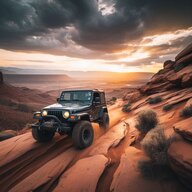
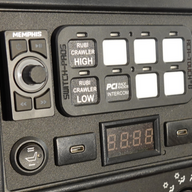
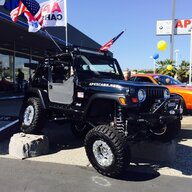
I have a modified 99 Jeep Tj. Basically everything has been replaced over the past 6-7 years. New 6 cyl. high performance motor, new automatic transmission, Atlas transfer case, Dynatrac axles. ARB lockers, Rubicon Express 6" long arm lift and so on. Drive shafts, steering and nearly everything else is also new. The only components ignored were the heart of the braking system with the original master cylinder being retained. New axles did come with upgraded disc brakes from Dynatrac. We attempted to cross the Rubicon trail this last weekend with a group. Believe it or not this was the first real off road outing for this Jeep (long story). To date it has only seen regular around town and freeway driving with no significant issues to report. At the last minute my other jeep developed an issue so I hitched up our "Chaser" trailer to the TJ (1600-1800 pounds fully loaded) and off we went.
Go ahead with the comments, I deserve them. The TJ isn't really set up to handle the trailer. The suspension is too soft for that amount of tongue weight and for a first time trip of this nature the Rubicon probably wasn't the smartest choice. We made it through relatively unscathed although pulling that trailer chunked the crap out of my tires with the excessive wheel spin needed to get up obstacles with a trailer in tow.
There was a significant issue uncovered on this trip that I need help with. Under load and especially when both axles were locked the brakes would fade on the UPHILL portions of the trail. No use of the brakes on the way up but as soon as I reached the top there was absolutely no pedal. Had to shift to neutral on nearly every occasion and pump the brakes to regain pedal pressure. When I say no brakes, I mean absolutely no resistance all the way to the floor. The problem got worse day by day. After the first day we bled the lines but there was no indication of air. As you know the Rubicon is a series of uphill and downhill sections. Even though the uphill braking issue seemed to get progressively worse the downhill portions seemed to function okay. When engaged in 4 wheel low the transmission wants to overpower the brakes, you can still adequately stop but shifting to neutral is the only way to stop normally. When you add lockers the brakes are no match for the forward motion that is being produced. Of course I switched off lockers on the downhill portions and out of uncertainty I let gravity bring me down the hill for much of the trail. The brakes seemed to resume normal operation with the transmission in neutral, even with the weight of the trailer behind. As we went further there were a few issues of the "soft pedal" beginning to happen on the flat sections of the trail and once while in reverse. My mind immediately goes to the Master Cylinder as the root of the problem but one of my mechanic friends questioned the ABS system, another friend said it sounds like I was loosing vacuum because of the significant rpms needed to get up the hills. Each time I shifted to neutral and pumped the brakes repeatedly the pressure and braking came back. I would appreciate ay insight anyone could offer before I tear into this issue. After this experience, I'm prepared to do whatever to fix the problem. Losing brakes on the trail with a trailer in tow was not fun.
Thanks,
Gary

I have a modified 99 Jeep Tj. Basically everything has been replaced over the past 6-7 years. New 6 cyl. high performance motor, new automatic transmission, Atlas transfer case, Dynatrac axles. ARB lockers, Rubicon Express 6" long arm lift and so on. Drive shafts, steering and nearly everything else is also new. The only components ignored were the heart of the braking system with the original master cylinder being retained. New axles did come with upgraded disc brakes from Dynatrac. We attempted to cross the Rubicon trail this last weekend with a group. Believe it or not this was the first real off road outing for this Jeep (long story). To date it has only seen regular around town and freeway driving with no significant issues to report. At the last minute my other jeep developed an issue so I hitched up our "Chaser" trailer to the TJ (1600-1800 pounds fully loaded) and off we went.
Go ahead with the comments, I deserve them. The TJ isn't really set up to handle the trailer. The suspension is too soft for that amount of tongue weight and for a first time trip of this nature the Rubicon probably wasn't the smartest choice. We made it through relatively unscathed although pulling that trailer chunked the crap out of my tires with the excessive wheel spin needed to get up obstacles with a trailer in tow.
There was a significant issue uncovered on this trip that I need help with. Under load and especially when both axles were locked the brakes would fade on the UPHILL portions of the trail. No use of the brakes on the way up but as soon as I reached the top there was absolutely no pedal. Had to shift to neutral on nearly every occasion and pump the brakes to regain pedal pressure. When I say no brakes, I mean absolutely no resistance all the way to the floor. The problem got worse day by day. After the first day we bled the lines but there was no indication of air. As you know the Rubicon is a series of uphill and downhill sections. Even though the uphill braking issue seemed to get progressively worse the downhill portions seemed to function okay. When engaged in 4 wheel low the transmission wants to overpower the brakes, you can still adequately stop but shifting to neutral is the only way to stop normally. When you add lockers the brakes are no match for the forward motion that is being produced. Of course I switched off lockers on the downhill portions and out of uncertainty I let gravity bring me down the hill for much of the trail. The brakes seemed to resume normal operation with the transmission in neutral, even with the weight of the trailer behind. As we went further there were a few issues of the "soft pedal" beginning to happen on the flat sections of the trail and once while in reverse. My mind immediately goes to the Master Cylinder as the root of the problem but one of my mechanic friends questioned the ABS system, another friend said it sounds like I was loosing vacuum because of the significant rpms needed to get up the hills. Each time I shifted to neutral and pumped the brakes repeatedly the pressure and braking came back. I would appreciate ay insight anyone could offer before I tear into this issue. After this experience, I'm prepared to do whatever to fix the problem. Losing brakes on the trail with a trailer in tow was not fun.
Thanks,
Gary