First off...it sounds like your surgery was successful. Heal up quickly.
Second, and I am going to ramble because I have no proof to back it up. I believe there is more to a booster than two bolts and a pushrod. The value of a booster is to transfer your foot pressure to the pushrod to the master cylinder.
Sorta, a booster is a direct connection between the brake pedal and the master. That means it will transfer foot pressure at any level of boost including engine off no vacuum.
The effectiveness of said booster is what is important. To me, there is a balance between foot force applied and brake pressure applied at a given vacuum number. But good luck finding this information.
Not a balance, it is a direct relationship based on number of diaphragms in the booster and surface area of each. Vacuum acts on the area in pounds per square in based on how much vacuum there is available. Max at high levels of vacuum is around 14 psi. Multiply that by the number of square inches of surface area the diaphragms have and that is your max available boost.
Getting back to boosters. Let's say you need a stronger booster because you installed bigger tires and now you have more unsprung mass. Let's say the stock booster can produce 800 lb braking force with 18 psi of vacuum (I totally made up values because I have no idea what they really are). How would you ever find a booster that produces 900 lbs? The companies won't tell you because they are interested in telling you how great their product is and how shiny it is out of the box.
Itis not even possible to compare a single diaphragm with a double diaphragm with an electric system with hydro system. It stands to reason that each one of these would produce greater braking force but nobody produces actual data.
Not one single aspect of that is true.
So, do your homework and make an educated purchase that fits your needs.
You just told everyone that there is no way to find the data to educate themselves but they should educate themselves and make an informed purchase. Do you even read what you write?
Back to the subject.
You're using the booster to define the rest of the system and it is only one part of the system that determines brake force. The booster size is determined by the master piston area into the caliper piston area versus pedal stroke.
I can take your stock TJ booster and drive the pressure into the calipers much higher simply by reducing the bore size in the master. That will come at the expense of adding pedal stroke until eventually the pedal will be on the floor. I can go the other way with a larger bore master and get you a high very hard pedal that only moves a couple of inches. The pressure into the calipers will be poor though.
I get contacted and see reference to near daily about a master cylinder "upgrade". There isn't one. The parts relationship as shown above have to be in that balance you were talking about, albeit poorly. Booster force versus bore size in master versus piston area in calipers versus pedal ratio.
You can increase the pressure out of the existing master a few ways. Hydroboost and a larger booster will both do that easily. The problem is the foundation of your system, the stock calipers, cast sliders, and the pad design won't live very long. Your premise of needing more brake force due to larger tires will quickly show the deficiencies in the stock foundation. You will get bent pad ears and bent sliders (cast reaction bars) when you start exceeding the design forces needed to stop big tires.
You're mixing up the forces in play and using that to try and find an answer that isn't able to be found.
You would benefit greatly by climbing down off of your high horse picking on companies that don't give you numbers you are not yet capable of understanding if they did. You want numbers, you have no clue how to even begin to apply them if they were given to you.






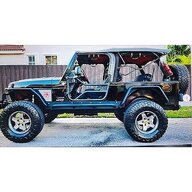


 My 60-0 is alot faster than my 0-60 With this new booster