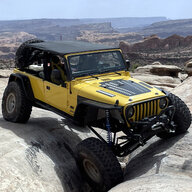
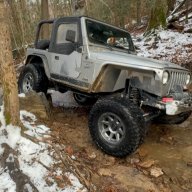
Anyone install hood vents?

Off the current topic of hood vents and heat dissipation, does anyone know the length of the 1/8” pop rivets for the Genright hood louver? I had the louver sitting around in my garage for a couple of months and misplaced the rivets. Buying three sets of 10 from gwnright will cost me $26 but shipping is $75!
I got stainless button head screws to put mine on with instead of using the rivets.

That's what I did. #4 stainless screws with nylock nuts.
 
  • Like
Reactions: Wildman
Off the current topic of hood vents and heat dissipation, does anyone know the length of the 1/8” pop rivets for the Genright hood louver? I had the louver sitting around in my garage for a couple of months and misplaced the rivets. Buying three sets of 10 from gwnright will cost me $26 but shipping is $75!

As has been said, I used stainless allen button head screws. Much better looking than aluminum pop rivets, and can be much more easily removed when necessary.
 
  • Like
Reactions: JMT and Wildman
Don't do it, the engine won't run any cooler.

I've already fitted a set , I'm taking my jeep to north Africa later this year . We've already checked the temperature under the hood before and after fitting them and there is quite a difference. Being a black truck we all know that it's going to attract more heat from the Sun raising the temperature of the engine bay. This actually works..

Screenshot_20240114-160734.png
 
  • Like
Reactions: 5632
I've already fitted a set , I'm taking my jeep to north Africa later this year . We've already checked the temperature under the hood before and after fitting them and there is quite a difference. Being a black truck we all know that it's going to attract more heat from the Sun raising the temperature of the engine bay. This actually works..

View attachment 491250

Jerry's point is that the coolant temps will not be affected by hood vents on a properly running cooling system.

Lower under hood temps do not equal lower coolant temps.
 
It's
Since I have a white Jeep, did I get the benefits of lower temps wleat with a white car

Jerry's point is that the coolant temps will not be affected by hood vents on a properly running cooling system.

Lower under hood temps do not equal lower coolant temps.

No, you're correct. But you're pulling slightly cooler air into the engine..
 
No, you're correct. But you're pulling slightly cooler air into the engine..

This is accurate. But pulling cooler air into the engine doesn't amount to anything perceivable. Especially after the PCM corrects for the cooler air and returns to stock parameters.
 
This is accurate. But pulling cooler air into the engine doesn't amount to anything perceivable. Especially after the PCM corrects for the cooler air and returns to stock parameters.

The PCM may correct it but the effects of cooler air are as. Cold air is more dense and so increases the charge into the cylinders thus more power. Many engines have some heating arrangement for inlet air while the engine is warming up to speed heating and reduce fuel condensation - after that cold and preferably moist air is better. More powerful turbocharged cars have intercoolers for precisely the reason that the hot air created by compression in the blower will give less charge and less power.
 
This is accurate. But pulling cooler air into the engine doesn't amount to anything perceivable. Especially after the PCM corrects for the cooler air and returns to stock parameters.

Vent's are not pulling cooler air into and through the radiator opening.

It's the same temp air in front of the car with or without vents.

All vents do, and it's questionable how well it works on a jeep, is allow more (flow/speed) of the same temp air through and venting the resulting air out the vents due to the pressure differences on the hood. The vent efficiency is dependent on placement relative to low pressure areas.
 
The PCM may correct it but the effects of cooler air are as. Cold air is more dense and so increases the charge into the cylinders thus more power. Many engines have some heating arrangement for inlet air while the engine is warming up to speed heating and reduce fuel condensation - after that cold and preferably moist air is better. More powerful turbocharged cars have intercoolers for precisely the reason that the hot air created by compression in the blower will give less charge and less power.

Not my first rodeo. It is well covered territory that the 4.0 does not have any perceivable changes when given a cold air intake. I have a real cold air intake through the cowl and I have hood vents. I even have 4 port fuel injectors. My 4.0 is still as unremarkable as any other.
 
  • Like
Reactions: maz
The PCM may correct it but the effects of cooler air are as. Cold air is more dense and so increases the charge into the cylinders thus more power. Many engines have some heating arrangement for inlet air while the engine is warming up to speed heating and reduce fuel condensation - after that cold and preferably moist air is better. More powerful turbocharged cars have intercoolers for precisely the reason that the hot air created by compression in the blower will give less charge and less power.

You are making assumptions about how airflow and engine power are related.

First, proper venting allows for more airflow, not cooler. I'd argue the air coming past the radiator into the engine bay is now hotter, because there is more heat transfer to the faster air. If any of that hotter air is captured by a stock or CAI, it would reduce performance, not increase it.

Cold air is more dense, but moist air is not. Cold and dry is the most dense.
 
I hate to to argue on this point but here in the UK my 4 .0 in the mornings when it's pretty moist damp air ,she flies much better when it's a hot day.

You wouldn't be the first to report that. And if this is true, it has nothing to do with hood vents or cold air intakes when those without these things also make similar reports.