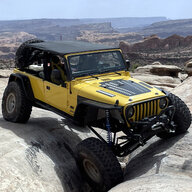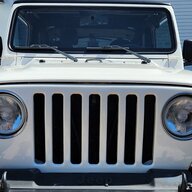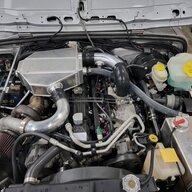
I added a flattie to the fleet

I think here in Texas you can go through a process with a bonded title and a waiting period to get a title. I have heard it's a pain, but can be done.
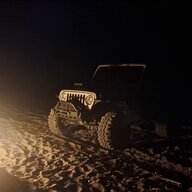
That's the best way to go about something like that Jeep. NC is a bitch to do title work in, and I've known a few people to go the bonded route. The other avenues, like out-of-state "bill of sale", are legal gray areas.
 
That's the best way to go about something like that Jeep. NC is a bitch to do title work in, and I've known a few people to go the bonded route. The other avenues, like out-of-state "bill of sale", are legal gray areas.

Is that basically putting money in an account to cover the cost of the vehicle in case someone else puts claim to it?
 
Is that basically putting money in an account to cover the cost of the vehicle in case someone else puts claim to it?

Yes, here in Texas it's a 3 year process where you get a temporary title and purchase a surety bond in the meantime. If no one else claims the vehicle in that time the title converts into a regular title. It's like $100 for most old vehicles.
 
  • Like
Reactions: Rickyd and BlueC
Is that basically putting money in an account to cover the cost of the vehicle in case someone else puts claim to it?

From what I understand, you are taking out an insurance policy and betting that no one with legal standing makes a claim toward the vehicle over the three-year period. When my dad did it, his insurance company wrote the bond in a $50,000 amount. That may vary state to state.
 
  • Like
Reactions: Rickyd
A couple more pics from this week. I got it inside and I'm making a list of things that need attention. It seems like the best plan is going to be pulling the tub off. There are channels that run under the body floor similar to the TJ torque boxes. Originally these were square tubes and had oak wood inside parts. The wood holds water and over time rots out that section. I want to patch up those sections for sure and fix a few other spots as well. It will also make it easier to pull the transmission and look over the frame.

20250328_174245.jpg


20250328_174310.jpg
 
Originally these were square tubes and had oak wood inside parts.

I don't know much about these old Jeeps, but I know a lot of pre-WWII vehicles used wood in various parts of the vehicle. What was the purpose of wood in these Jeeps? Does it seem to be structural or for assembly puropses?
 
  • Like
Reactions: srimes
I don't know much about these old Jeeps, but I know a lot of pre-WWII vehicles used wood in various parts of the vehicle. What was the purpose of wood in these Jeeps? Does it seem to be structural or for assembly puropses?

I was told they used the wood to help stiffen the floor without using more steel during the war. Not sure if that's 100% true, but it may be...
 
I was told they used the wood to help stiffen the floor without using more steel during the war. Not sure if that's 100% true, but it may be...

This seems likely , my 1936 International C-1 has oak framing around the doors and wooden floor boards. This was common in 1930's designs , easier and cheaper to cut wood than press steel into complex shapes .
 
  • Like
Reactions: BlueC
This seems likely , my 1936 International C-1 has oak framing around the doors and wooden floor boards. This was common in 1930's designs , easier and cheaper to cut wood than press steel into complex shapes .

I know Chevy trucks switched to all metal bodies in the mid-late '30s. Before that it was wood framing with metal skin, probably similar to how Internation did it, and Fords had wood floors and top sections at least through the Model A. We won't speak of the crazy British Morgans. :sneaky:
 
Yep, someone converted it at some point. They also ditched the generator for a GM DN10 style alternator.

While it will take away some of the original character, 12 volt will be easier to drive and work on. How did they handle the gauges and other electronics? (all 3 of them :LOL: )
 
While it will take away some of the original character, 12 volt will be easier to drive and work on. How did they handle the gauges and other electronics? (all 3 of them :LOL: )

No idea. The wiring is a mess. The only circuit working is the ignition to the coil. The starter I can say is 6v it goes weeeeeee when you hit the button.
 
The starter I can say is 6v it goes weeeeeee when you hit the button.

If I remember correctly, 12v to a 6v is fine, but not the opposite.

I know you have limited gauges and switches, but as far as I know there's only two safe ways to handle the change; 1 - use the 6v stuff with "steppers" or reducers like this https://vintageautogarage.com/12-volt-to-6-volt-oil-gas-temp-gauge-reducer/, or 2 - swap in 12v stuff.

If the wiring is a mess, someone probably had no idea what they were doing and just cobbled it together and nothing worked, but things became a hazard.

Also, if the horn doesn't quite want to work, you can lay on it with 12v, and she'll usually start working again. ;)
 
If I remember correctly, 12v to a 6v is fine, but not the opposite.

I know you have limited gauges and switches, but as far as I know there's only two safe ways to handle the change; 1 - use the 6v stuff with "steppers" or reducers like this https://vintageautogarage.com/12-volt-to-6-volt-oil-gas-temp-gauge-reducer/, or 2 - swap in 12v stuff.

If the wiring is a mess, someone probably had no idea what they were doing and just cobbled it together and nothing worked, but things became a hazard.

Also, if the horn doesn't quite want to work, you can lay on it with 12v, and she'll usually start working again. ;)

I had to fix one of the headlights that was falling out and it said 12v on the back. So, I feel that a least some of the parts are replaced. I'm going to just have to check everything. Part of the reason the wiring is a mess is because most of it is cloth insulation that is pretty brittle and frayed. Someone also relocated the ignition switch to the governor spot at some point which also required some "custom" wiring.
 
  • Like
Reactions: ColoJeep and BlueC