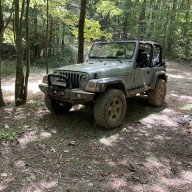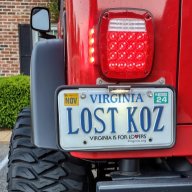
HA! I couldn't handle 1/10th of that bouncing and jolting!
My spine hurt just watching it.



HA! I couldn't handle 1/10th of that bouncing and jolting!
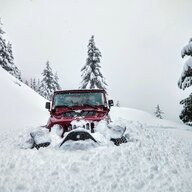
That's why you need a more stable XJ.
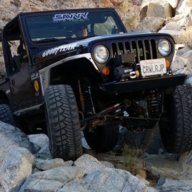
Now THAT is an example of a guy that just does NOT care!
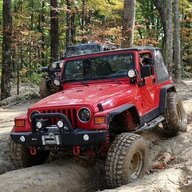
Today's thought .
They spent money to change the steering linkage from the TJ Y style to the JK/JL T style . If the TJ Y style is the greatest thing since sliced bread why the change ?
Ram ( Dodge ) trucks also changed to the T style after about 08 . Why ? , there has to be a reason , ( good or bad ) to spend money to change it.
My wife had the pleasure of meeting the chief engineer for Scrambler, Cherokee Chief, YJ and advised into TJ development. She connected us and it was really awesome to listen to his stories, albeit, bad health made the amount of knowledge transfer limited. The YJ was really the last Jeep that was built by engineer's and design team in a "workshop" and the TJ was a refinement of this model (4 link and round headlights?)
I have some literature he wrote, I will find and post, but not TJ related.
From what I can find:
I am going to begin the story of the Cherokee Chief. It's a pretty short story.
In 1974 Jeep introduced the 2 door Cherokee using the current Wagoneer Chassis. The Cherokee looked smaller and shorter, but in fact, it was the same length, width and height as the Wagoneer 4 door. Same offering of engine, transmission and 4 wheel drive systems.
Shortly after the Cherokee was introduced, Ivan Schatzka, who was an Executive Engineer at Jeep and has a long history with the corporation saw a picture in a magazine of a Cherokee where one of our dealers had bolted on a J10 pickup truck front end and front axle and grafted the rear wheel flares off the J10 on to the Cherokee. He referred to it as a Wide Trac. Ivan showed the photo around and we all agreed it looked neat. The dealer who did the modification was to the best of my knowledge, Brian Chachua who had a Jeep dealership in Placentia, California. Brian was noted for modifying Jeeps for racing and selling them as well as raced them himself. He also was active in early Corvette racing.
We called a meeting with the product planning guys and they liked the looks of it. There was no budget for a new vehicle since the Cherokee was only one year old. However, the right people saw it and we said it would be cheap to make since we had most of the parts already on line and the length stayed the same, so other than a few part numbers, it was a shoe in plus, truck sales were slow and we could use the capacity.
The only real tooling was a new rear quarter panel to accept the wheel flares. So, it was a low cost item. We could make it simple and only offer one tire on the package. So, we gave our old prototype to styling and they painted it up and put some stripes on it and Volla! we had our wide trac. It really did look good. So good in fact that the President of AMC at the time really liked it because he thought Jeeps were just too bland. With his endorsement, the program took off and the big debate was what to call it. Wide trac was pretty much dominated by Pontiac, so a new name was required. As usual, lots of names were floated and when someone suggested Cherokee Chief, there was a universal sigh of relief and a resounding yes.
In order to comprehend how things worked at Jeep Engineering in Toledo in 1974, we need to explain that Jeep was not your typical auto company. They Engineered and built the Jeep in the same location. Everybody was involved. There were little side operations scattered throughout the complex and they were so versatile that one particular area was referred to as "The Hobby Shop." There Jeeps were modified and built for a variety of reasons, notwithstanding making them more comfortable for some wives of executives. But mostly, they were modified for various agencies who bought the Jeep. Unlike the other automakers of the day, Jeep would accept small orders such as a CJ5 built with a dual wheel model 80 rear axle to tow semi trailers around parking lots or move them into place at loading docks. Or outfitted with wheels to allow them to be used on railroads and more. Often a celebrity would want a special Jeep with modifications such as the celebrity Jeep challenge with some name actors and they raced these Jeeps in the desert. Bill Harrah owned the largest Jeep dealership in Reno, NV and had his own shop to modify and restore cars. He often requested a special vehicle that he would further modify when he got it. One notable example is a CJ7 he had built for John Denver that he presented to him as a gift after he did several performances at his casino in Lake Tahoe. We built the Jeep and did some modifications and Harrah added some options like John Denver's name stitched in leather seats. I think Bobbi Gentry who was married to Bill Harrah presented John Denver with the Jeep at the end of his concert series in Lake Tahoe.
So, when it came to making a model of the Cherokee Wide Trac, it was a no brainer. Ivan took the picture and showed it to Jim Thornton who in turn showed it to Pete Johnson who was supervisor of the fabrication shop. Pete said, "I can make that." and we simply went away and let Pete go. I was assigned to work with Pete in the event he needed anything. The only thing Pete wanted from me was an occasional candy bar. Pete loved candy. So did I, so we got along just fine. To supervise Pete was to slow him down. There were no product meetings or drawings or even discussions. Pete saw the picture and took an old Cherokee we had and made a Wide Trac. He had access to the assembly plant and all the parts he needed. In very short order, he gave us a Wide Trac, which was a six cylinder manual transmission. That combination was never offered in the Cherokee Chief, but it looked the part. It was an old left over vehicle from the original Cherokee program and was destined for scrap.
It was an ugly green color, but it still looked the part. Mather spring company was next door and they made a set of springs to make it clear the tires and look good. Pete Johnson simply went to the plant and picked up the parts he needed and grafted them onto the Cherokee body. Somebody in the shop made the comment, "glad it's not a Quadratrac. Then you would have a wide trac quadratrac." A new name was in order. Too many trac's in the name.
We were not under the secrecy rules that apply today where prototypes have to be camouflaged to drive them on the road. The first person to drive the vehicle was the mechanic who bolted it together. After the mechanic deemed it safe, then he gave it to me and I drove it home that night. Surprisingly, it drove and rode pretty well considering no work had been done to make it ride good. The unsprung mass was heavier with the bigger axles and tires but the sprung mass was not much different. Only the additional sheet metal. The 258 engine with a 3 speed manual transmission was pretty lame, but acceptable since we did up the axle ratio when we converted to truck axles. With a 4 speed and a better low gear, it may have been OK. I don't recall if we offered the 6 cylinder in the Chief. If we did, it was to get the fuel economy numbers up, but I don't remember ever seeing a production Chief with the 6.
Others drove it and came back and said people really like this thing. So, with that in mind we called Jim Alexander and invited him to look at it. Jim was a product planning manager and his partner was Stu Meach or Meech. They came to Toledo and reviewed the Jeep. Their first impression was it looked neat and wanted to know who we built it for. I think it was Thornton that said "you." Jim Alexander and Jim Thornton were motorcycle buddies and often rode off road on the weekends. No further explanations were required. Jim Alexander got the message and likely had a grin on his face. I think he drove it back to Detroit to AMTEC that day, but not sure. AMTEC stood for American Motors Technical Center which was later named JTE for Jeep and Truck Engineering and then later PROC for Plymouth Road Office Complex. Everyone who saw it liked it and many suggested it become the Cherokee, but plans were already in the mill to make a 4 door Cherokee as a cheap version of the Wagoneer. From there it went over to styling where the Jeep guys said, "we can work with this."
We put our heads together and actually generated some numbers. Engineering costs, tooling, parts and manufacturing. Things like the modifications to the quarter panel and having two different quarter panels in the plant and storage and of course exhaust emissions certification since it was a different vehicle and weight all factored into the equation. I suspect we cooked the books a little, but the end result was a low cost addition to the Jeep line that everyone felt would succeed. We still only had one vehicle on wheels and to make this thing go, we needed more. We usually could get away with being sneaky, but it was time to fish or cut bait. We took our best shot and presented it to the product committee. Money was tight. It always was, but we were confident we could make a good profit and quickly. This was already well into 1974 production and hopefully we could sell it as a 1976 model and with luck a mid year 75 model. We compressed the schedule and went forward.
The product committee reviewed it and asked a few obvious questions like the profit margin and timing and cost. All were favorable. Jeep was the cash cow of the day and passenger cars were still bleeding money. The product committee agreed to get a quick answer which meant looking for money which meant cutting some programs on passenger cars that were in the planning stages. Obviously, anything that cut budgets for passenger cars was not smiled on favorably by the passenger car groups and especially Kenosha where they were struggling to keep the plant capacity up. We expected a battle since Jeep had got the full time quadratrac transfer case for 73 and a new vehicle the 2 door Cherokee for 74 and was already planning a new version of the CJ with an automatic transmission, The CJ7, for 76. Looks like Jeep was already taking more than its share of corporate resources. However, there were members of the product committee who were visionaries and could see the trends and it was not in the passenger car arena. Those are the people that went forward. They quickly found the money and said go. Go, go, go. There probably were battles, but we did not see them.
Now, during all this time, Roy Lunn, who usually was active in every decision made by Jeep was surprisingly quiet. He just smiled and let us go. This was his kind of Engineering and he recognized it. Roy was a hands on get it done person and had been very active in the GT 40 program and the Mustang at Ford where just this type of activity was his passion. Also, Roy and Ivan Schatzka were very close friends and I am sure Ivan kept him abreast of what was going on. He trusted Ivan implicitly. Ivan could do no wrong in Roy's eyes and he simply relaxed and let it happen. Ivan had a similar view of Jim Thornton and his crew. Jim was the master at getting things done quickly and efficiently from his days as one of the major players in the Ramchargers race team. Full speed ahead was his motto. Aim it between the fence posts and floor it was his theme.
When the product committee said go, it was like the green light on the count down clock at the drag strip. We went full throttle. We pulled manufacturing into the group and brought in all the vendors including Goodyear. We needed a tire and quick. Jerry Gaskill from Goodyear and his mates came through with the Goodyear Tracker AT tire which was the only tire we were offering on the Wide Trac. It looked great. I am not sure it did much else, but it looked the part.
We needed vehicles and fast. Pete Johnson from our fabrication shop agreed to make several sets of quarter panels and manufacturing agreed to weld them up on the assembly line on a Saturday so we could run the vehicles down the line on Monday. They built them with regular Cherokee Axles and we changed them in Engineering. We went from one or two cars to a nice fleet of wide trac's in a week. Different colors and a mix of 360's and 401 engines. One was yellow with a 401 engine and it became our 50,000 mile durability vehicle. We sent it to Nevada Automotive Test Center in Carson City Nevada where we did our Jeep durability testing. Jim Thornton and myself went out there to do the initial drive. Henry Hodges who owned NATC looked at it and said something to the effect that it was OK. From Henry, that was an endorsement. About as good as you got from Henry.
We slammed that poor car on our first drive and on one section of the course, Jim was going too fast, which was quite normal for Thunder Thornton and he jumped the vehicle so high that he thought he bent the front axle and he felt terrible. When we finished the day, we did in fact find he had slightly bent the axle. We rushed a new axle out there and changed it before running the test. The vehicle completed the 50,000 mile test without any issues that were directly related to the now newly Named "Cherokee Chief."
Finally, we had a real sit down with Roy Lunn and product planning and all the other players. Roy asked the obvious question. "How soon can you make it happen?" We had already compressed the schedule and shooting for a mid year 1975 introduction of the Cherokee Chief package. We proudly told Roy of our plan. Roy peeked over the end of his reading glasses with the famous "Roy Look" and said, "you guys are better than that." Frenchy LaVoie who was the Chief Body Engineer and had worked for Roy before and knew the look, said, "we will get right on it Roy." We all inhaled, but not sure when we exhaled. We made V2 production for 1975.
To much BS for this site.
You show me somebody who can wheel just about anything and I’ll show you somebody who’s not afraid to tear up their stuff
And I’m not saying that they’re trying to or that they don’t know what they’re doing….. but a little bit of don’t give a crap goes a long way
Heard this from a 4 wheeling friend MANY years ago. Apparently, they wheeled up somewhere in some mountain range somewhere - this was in California - pretty dicey getting up there, blah, blah, blah. When they got to the end or top, or whatever it was, there was another guy just leaving to go back home - in a Buick (sedan). He obviously didn't care...

Heard this from a 4 wheeling friend MANY years ago. Apparently, they wheeled up somewhere in some mountain range somewhere - this was in California - pretty dicey getting up there, blah, blah, blah. When they got to the end or top, or whatever it was, there was another guy just leaving to go back home - in a Buick (sedan). He obviously didn't care...
The funny part is a Buick would likely get further in 2 wd. than a Jeep in 2 wd.
Edumacate me please - why/how?
Edumacate me please - why/how?
A Buick sedan would likely have more weight on the rear axle , increasing traction . With a high torque V - 8 and switch pitch torque convertor plus a good driver it could do well off road for a car.
View attachment 655871

My wife had the pleasure of meeting the chief engineer for Scrambler, Cherokee Chief, YJ and advised into TJ development. She connected us and it was really awesome to listen to his stories, albeit, bad health made the amount of knowledge transfer limited. The YJ was really the last Jeep that was built by engineer's and design team in a "workshop" and the TJ was a refinement of this model (4 link and round headlights?)
I have some literature he wrote, I will find and post, but not TJ related.
From what I can find:
I am going to begin the story of the Cherokee Chief. It's a pretty short story.
In 1974 Jeep introduced the 2 door Cherokee using the current Wagoneer Chassis. The Cherokee looked smaller and shorter, but in fact, it was the same length, width and height as the Wagoneer 4 door. Same offering of engine, transmission and 4 wheel drive systems.
Shortly after the Cherokee was introduced, Ivan Schatzka, who was an Executive Engineer at Jeep and has a long history with the corporation saw a picture in a magazine of a Cherokee where one of our dealers had bolted on a J10 pickup truck front end and front axle and grafted the rear wheel flares off the J10 on to the Cherokee. He referred to it as a Wide Trac. Ivan showed the photo around and we all agreed it looked neat. The dealer who did the modification was to the best of my knowledge, Brian Chachua who had a Jeep dealership in Placentia, California. Brian was noted for modifying Jeeps for racing and selling them as well as raced them himself. He also was active in early Corvette racing.
We called a meeting with the product planning guys and they liked the looks of it. There was no budget for a new vehicle since the Cherokee was only one year old. However, the right people saw it and we said it would be cheap to make since we had most of the parts already on line and the length stayed the same, so other than a few part numbers, it was a shoe in plus, truck sales were slow and we could use the capacity.
The only real tooling was a new rear quarter panel to accept the wheel flares. So, it was a low cost item. We could make it simple and only offer one tire on the package. So, we gave our old prototype to styling and they painted it up and put some stripes on it and Volla! we had our wide trac. It really did look good. So good in fact that the President of AMC at the time really liked it because he thought Jeeps were just too bland. With his endorsement, the program took off and the big debate was what to call it. Wide trac was pretty much dominated by Pontiac, so a new name was required. As usual, lots of names were floated and when someone suggested Cherokee Chief, there was a universal sigh of relief and a resounding yes.
In order to comprehend how things worked at Jeep Engineering in Toledo in 1974, we need to explain that Jeep was not your typical auto company. They Engineered and built the Jeep in the same location. Everybody was involved. There were little side operations scattered throughout the complex and they were so versatile that one particular area was referred to as "The Hobby Shop." There Jeeps were modified and built for a variety of reasons, notwithstanding making them more comfortable for some wives of executives. But mostly, they were modified for various agencies who bought the Jeep. Unlike the other automakers of the day, Jeep would accept small orders such as a CJ5 built with a dual wheel model 80 rear axle to tow semi trailers around parking lots or move them into place at loading docks. Or outfitted with wheels to allow them to be used on railroads and more. Often a celebrity would want a special Jeep with modifications such as the celebrity Jeep challenge with some name actors and they raced these Jeeps in the desert. Bill Harrah owned the largest Jeep dealership in Reno, NV and had his own shop to modify and restore cars. He often requested a special vehicle that he would further modify when he got it. One notable example is a CJ7 he had built for John Denver that he presented to him as a gift after he did several performances at his casino in Lake Tahoe. We built the Jeep and did some modifications and Harrah added some options like John Denver's name stitched in leather seats. I think Bobbi Gentry who was married to Bill Harrah presented John Denver with the Jeep at the end of his concert series in Lake Tahoe.
So, when it came to making a model of the Cherokee Wide Trac, it was a no brainer. Ivan took the picture and showed it to Jim Thornton who in turn showed it to Pete Johnson who was supervisor of the fabrication shop. Pete said, "I can make that." and we simply went away and let Pete go. I was assigned to work with Pete in the event he needed anything. The only thing Pete wanted from me was an occasional candy bar. Pete loved candy. So did I, so we got along just fine. To supervise Pete was to slow him down. There were no product meetings or drawings or even discussions. Pete saw the picture and took an old Cherokee we had and made a Wide Trac. He had access to the assembly plant and all the parts he needed. In very short order, he gave us a Wide Trac, which was a six cylinder manual transmission. That combination was never offered in the Cherokee Chief, but it looked the part. It was an old left over vehicle from the original Cherokee program and was destined for scrap.
It was an ugly green color, but it still looked the part. Mather spring company was next door and they made a set of springs to make it clear the tires and look good. Pete Johnson simply went to the plant and picked up the parts he needed and grafted them onto the Cherokee body. Somebody in the shop made the comment, "glad it's not a Quadratrac. Then you would have a wide trac quadratrac." A new name was in order. Too many trac's in the name.
We were not under the secrecy rules that apply today where prototypes have to be camouflaged to drive them on the road. The first person to drive the vehicle was the mechanic who bolted it together. After the mechanic deemed it safe, then he gave it to me and I drove it home that night. Surprisingly, it drove and rode pretty well considering no work had been done to make it ride good. The unsprung mass was heavier with the bigger axles and tires but the sprung mass was not much different. Only the additional sheet metal. The 258 engine with a 3 speed manual transmission was pretty lame, but acceptable since we did up the axle ratio when we converted to truck axles. With a 4 speed and a better low gear, it may have been OK. I don't recall if we offered the 6 cylinder in the Chief. If we did, it was to get the fuel economy numbers up, but I don't remember ever seeing a production Chief with the 6.
Others drove it and came back and said people really like this thing. So, with that in mind we called Jim Alexander and invited him to look at it. Jim was a product planning manager and his partner was Stu Meach or Meech. They came to Toledo and reviewed the Jeep. Their first impression was it looked neat and wanted to know who we built it for. I think it was Thornton that said "you." Jim Alexander and Jim Thornton were motorcycle buddies and often rode off road on the weekends. No further explanations were required. Jim Alexander got the message and likely had a grin on his face. I think he drove it back to Detroit to AMTEC that day, but not sure. AMTEC stood for American Motors Technical Center which was later named JTE for Jeep and Truck Engineering and then later PROC for Plymouth Road Office Complex. Everyone who saw it liked it and many suggested it become the Cherokee, but plans were already in the mill to make a 4 door Cherokee as a cheap version of the Wagoneer. From there it went over to styling where the Jeep guys said, "we can work with this."
We put our heads together and actually generated some numbers. Engineering costs, tooling, parts and manufacturing. Things like the modifications to the quarter panel and having two different quarter panels in the plant and storage and of course exhaust emissions certification since it was a different vehicle and weight all factored into the equation. I suspect we cooked the books a little, but the end result was a low cost addition to the Jeep line that everyone felt would succeed. We still only had one vehicle on wheels and to make this thing go, we needed more. We usually could get away with being sneaky, but it was time to fish or cut bait. We took our best shot and presented it to the product committee. Money was tight. It always was, but we were confident we could make a good profit and quickly. This was already well into 1974 production and hopefully we could sell it as a 1976 model and with luck a mid year 75 model. We compressed the schedule and went forward.
The product committee reviewed it and asked a few obvious questions like the profit margin and timing and cost. All were favorable. Jeep was the cash cow of the day and passenger cars were still bleeding money. The product committee agreed to get a quick answer which meant looking for money which meant cutting some programs on passenger cars that were in the planning stages. Obviously, anything that cut budgets for passenger cars was not smiled on favorably by the passenger car groups and especially Kenosha where they were struggling to keep the plant capacity up. We expected a battle since Jeep had got the full time quadratrac transfer case for 73 and a new vehicle the 2 door Cherokee for 74 and was already planning a new version of the CJ with an automatic transmission, The CJ7, for 76. Looks like Jeep was already taking more than its share of corporate resources. However, there were members of the product committee who were visionaries and could see the trends and it was not in the passenger car arena. Those are the people that went forward. They quickly found the money and said go. Go, go, go. There probably were battles, but we did not see them.
Now, during all this time, Roy Lunn, who usually was active in every decision made by Jeep was surprisingly quiet. He just smiled and let us go. This was his kind of Engineering and he recognized it. Roy was a hands on get it done person and had been very active in the GT 40 program and the Mustang at Ford where just this type of activity was his passion. Also, Roy and Ivan Schatzka were very close friends and I am sure Ivan kept him abreast of what was going on. He trusted Ivan implicitly. Ivan could do no wrong in Roy's eyes and he simply relaxed and let it happen. Ivan had a similar view of Jim Thornton and his crew. Jim was the master at getting things done quickly and efficiently from his days as one of the major players in the Ramchargers race team. Full speed ahead was his motto. Aim it between the fence posts and floor it was his theme.
When the product committee said go, it was like the green light on the count down clock at the drag strip. We went full throttle. We pulled manufacturing into the group and brought in all the vendors including Goodyear. We needed a tire and quick. Jerry Gaskill from Goodyear and his mates came through with the Goodyear Tracker AT tire which was the only tire we were offering on the Wide Trac. It looked great. I am not sure it did much else, but it looked the part.
We needed vehicles and fast. Pete Johnson from our fabrication shop agreed to make several sets of quarter panels and manufacturing agreed to weld them up on the assembly line on a Saturday so we could run the vehicles down the line on Monday. They built them with regular Cherokee Axles and we changed them in Engineering. We went from one or two cars to a nice fleet of wide trac's in a week. Different colors and a mix of 360's and 401 engines. One was yellow with a 401 engine and it became our 50,000 mile durability vehicle. We sent it to Nevada Automotive Test Center in Carson City Nevada where we did our Jeep durability testing. Jim Thornton and myself went out there to do the initial drive. Henry Hodges who owned NATC looked at it and said something to the effect that it was OK. From Henry, that was an endorsement. About as good as you got from Henry.
We slammed that poor car on our first drive and on one section of the course, Jim was going too fast, which was quite normal for Thunder Thornton and he jumped the vehicle so high that he thought he bent the front axle and he felt terrible. When we finished the day, we did in fact find he had slightly bent the axle. We rushed a new axle out there and changed it before running the test. The vehicle completed the 50,000 mile test without any issues that were directly related to the now newly Named "Cherokee Chief."
Finally, we had a real sit down with Roy Lunn and product planning and all the other players. Roy asked the obvious question. "How soon can you make it happen?" We had already compressed the schedule and shooting for a mid year 1975 introduction of the Cherokee Chief package. We proudly told Roy of our plan. Roy peeked over the end of his reading glasses with the famous "Roy Look" and said, "you guys are better than that." Frenchy LaVoie who was the Chief Body Engineer and had worked for Roy before and knew the look, said, "we will get right on it Roy." We all inhaled, but not sure when we exhaled. We made V2 production for 1975.

Heard this from a 4 wheeling friend MANY years ago. Apparently, they wheeled up somewhere in some mountain range somewhere - this was in California - pretty dicey getting up there, blah, blah, blah. When they got to the end or top, or whatever it was, there was another guy just leaving to go back home - in a Buick (sedan). He obviously didn't care...

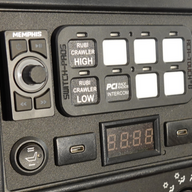
When we were working the short lead media launch of the JK on the Rubicon for Jeep Jamboree and Jeep, one of the media drivers yanked hard enough on the t-case shifter to break the cable's plastic end fitting. Fortunately we were able to get some wire and zip ties in place along with some instruction to get it shifted and on the way up the hill. So yes, they are cable shifters, no they are not very robust. Hopefully they tuned that up some.JKs come with cable shifters for the transfer case.
-Mac
I've always had a deep interest in economics and at a basic level you think, supply/demand will just sort this out. I learned a bit about the way the dealership side works, and I'm shocked anyone at all will work in the field. It's fairly well known the dealers make their money on maintenance, not the sale. It's less understood that warranties are equivalent to healthcare insurance. It's probably even less well known how the mechanics get paid. And if you know these 3 things, you'd be surprised anyone is left in the mechanic trade outside the armed forces.Finding a good mechanic is nearly impossible these days. It's going to become even more difficult as our population (and our civilization) collapses around us. The really tradesmen are becoming more-and-more scarce these days.
My recommendation is to learn to work on your vehicle yourself, as least as much as you can. It's a skill you'll be thankful to have in time.